
The Federal High Court in Abuja on Monday heard startling details of how a Benue community youth leader allegedly mobilised ammunition and explosives for a planned retaliation against suspected Fulani herders following years of violent attacks in parts of Benue State.
The revelations emerged during the trial of Silas Oloche, who is facing a six-count charge bordering on alleged unlawful possession of firearms, grenades and ammunition.
A witness from the Department of State Services, identified in court only as operative “XX,” told the court that Oloche was arrested on August 2, 2025, in Ogbasi community in Agatu Local Government Area with large quantities of ammunition and explosives allegedly recovered from him.
According to the witness, the DSS recovered 18 hand grenades, 683 rounds of 7.62 x 39mm ammunition, 62 rounds of 7.62 x 51mm ammunition and 136 live rounds of shotgun ammunition from the defendant.
The witness, who is attached to the DSS Security Investigation Department, said the accused was initially arrested in Benue State before being transferred to the DSS National Headquarters in Abuja for further investigation.
The court was told that during interrogation, Oloche allegedly confessed to purchasing the ammunition from a man identified as “Chocho” for more than N2 million.
The operative further stated that the defendant made the statement in the presence of a Legal Aid counsel.
According to the witness, Oloche voluntarily gave a written statement but requested that the investigator write it on his behalf because he could not write properly.
During proceedings, the prosecution tendered several items before the court, including the investigation report, the defendant’s written statement, recovered grenades and ammunition, as well as an audio-visual recording of the interrogation session.
Justice Joyce Abdumaliki admitted the materials into evidence.
A dramatic moment occurred during the open court playback of the video recording containing the defendant’s extra-judicial statement.
In the video played before the court, Oloche narrated years of violent attacks allegedly carried out against Agatu communities by suspected Fulani herders.
He identified himself as the youth leader of Agatu and claimed that the crisis in the area had persisted since 2013 due to repeated attacks on farming communities and destruction of crops by cattle.
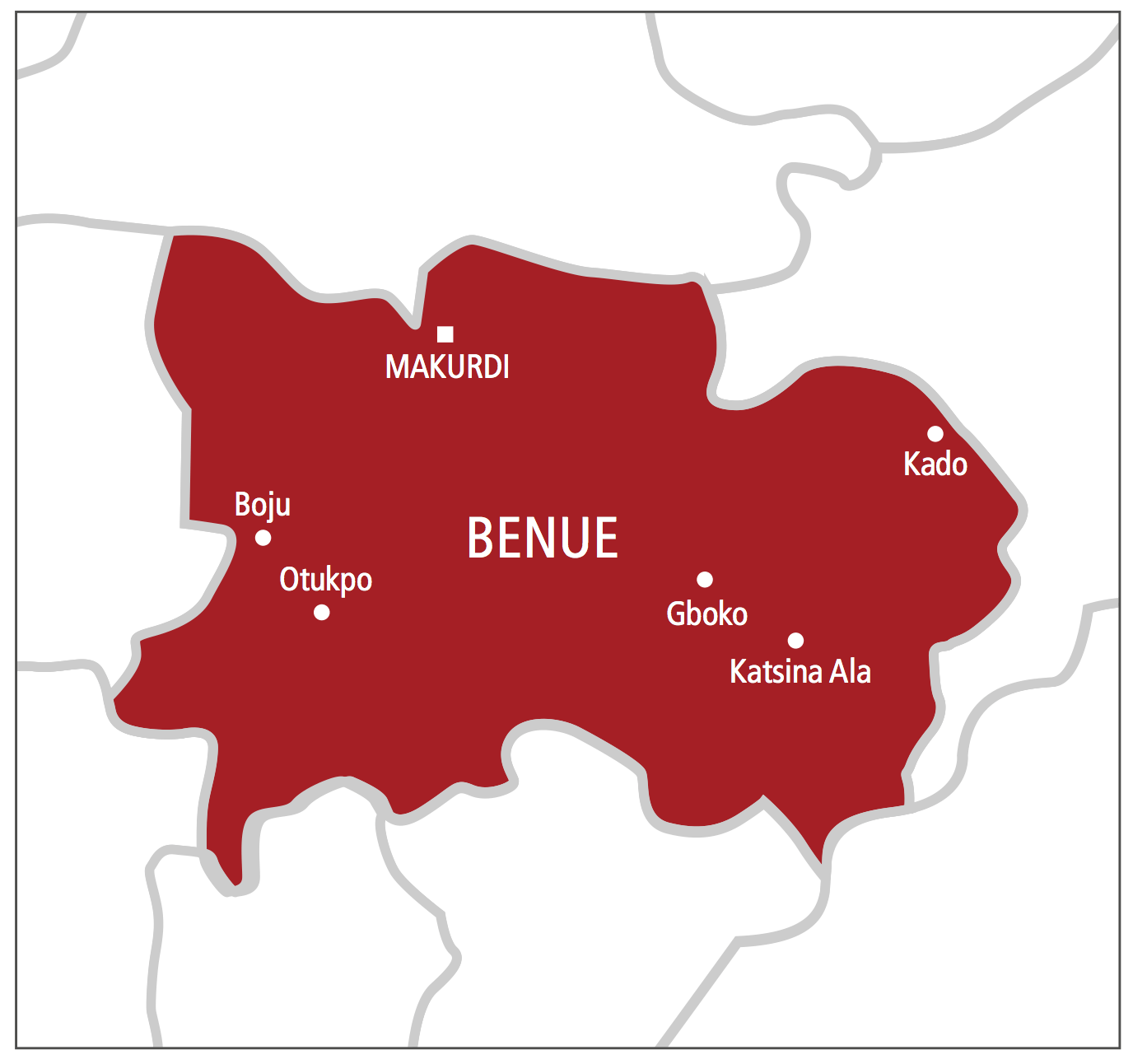
Agatu Local Government Area has for years remained one of the flashpoints of violent clashes between farmers and herders in Benue State.
The area has witnessed deadly attacks, killings and displacement of residents linked to disputes over grazing routes, destruction of farmlands and communal tensions.
Several communities in Agatu have experienced repeated violence over the years, forcing many residents to flee their homes.
In his statement shown in court, Oloche claimed that several meetings had previously been organised involving government officials, traditional rulers, security agencies and Fulani representatives from Benue, Kogi and Nasarawa states in efforts to end the conflict.
According to him, agreements allegedly reached during the meetings were repeatedly violated as attacks and destruction of farmlands continued.
The defendant stated in the video that frustration and anger grew within the community because residents believed government intervention had not been sufficient to stop the attacks.
He told investigators that information allegedly reached the community that some Fulani groups were preparing for confrontation, leading to efforts by local youths to mobilise resources for self-defence and retaliation.
According to the court proceedings, Oloche admitted obtaining ammunition and storing it in his house but claimed they had not yet acquired guns before DSS operatives arrested him.
He also reportedly stated that the community intended to retaliate against attacks but lacked enough weapons and ammunition to carry out such plans.
In the video recording, the defendant claimed displaced residents and grieving families contributed money after attacks on their communities and the recovery of bodies of victims.
He further alleged that repeated appeals to authorities for intervention did not produce the desired results, which increased anger among residents.
The trial has once again brought national attention to the lingering insecurity and farmer-herder crisis in Benue State and other parts of Nigeria’s North-Central region.
For years, Benue has suffered violent clashes involving farming communities and armed herders, leading to hundreds of deaths and displacement of thousands of people.
The violence has remained a major political and security concern in the state, with residents repeatedly accusing authorities of failing to provide adequate protection.
Successive governments at both federal and state levels have introduced different measures aimed at addressing the crisis, including anti-open grazing laws, peace meetings and security operations.
Despite those efforts, attacks and reprisal killings have continued to occur in some communities.
However, authorities have consistently warned against citizens taking the law into their own hands or acquiring illegal weapons.
Following the playback of the video statement in court, defence counsel Noah Imoni objected to the admissibility of the defendant’s extra-judicial statement.
The defence argued that the statement was not voluntarily obtained.
According to the lawyer, the defendant was allegedly beaten, tortured and traumatised during interrogation.
The defence also questioned the role played by the Legal Aid lawyer who was present during the interview process.
In response, the prosecution asked the court to conduct what is known in law as a “trial-within-trial” to determine whether the statement was truly voluntary before it could be fully admitted as evidence.
Justice Abdumaliki subsequently ordered a trial-within-trial to resolve the issue.
Earlier during proceedings, the defence also asked the court to relax the defendant’s bail conditions.
The lawyer argued that the existing conditions were too difficult because they required two sureties resident within the Federal Capital Territory who must own developed properties in Abuja.
However, the prosecution opposed the request, insisting that the seriousness of the allegations and evidence before the court justified the conditions already imposed.
The court reserved ruling on the application for variation of bail conditions to a later date.
Justice Abdumaliki subsequently fixed July 8 for the commencement of the trial-within-trial and continuation of hearing in the matter.
The case is expected to attract continued public attention because of its connection to the wider security crisis affecting farming communities in Benue and other parts of the country.