
The Federal Government has reaffirmed its commitment to empowering women in Nigeria’s dairy sector, describing them as key contributors to food security, household nutrition, rural livelihoods and the growth of the country’s dairy industry.
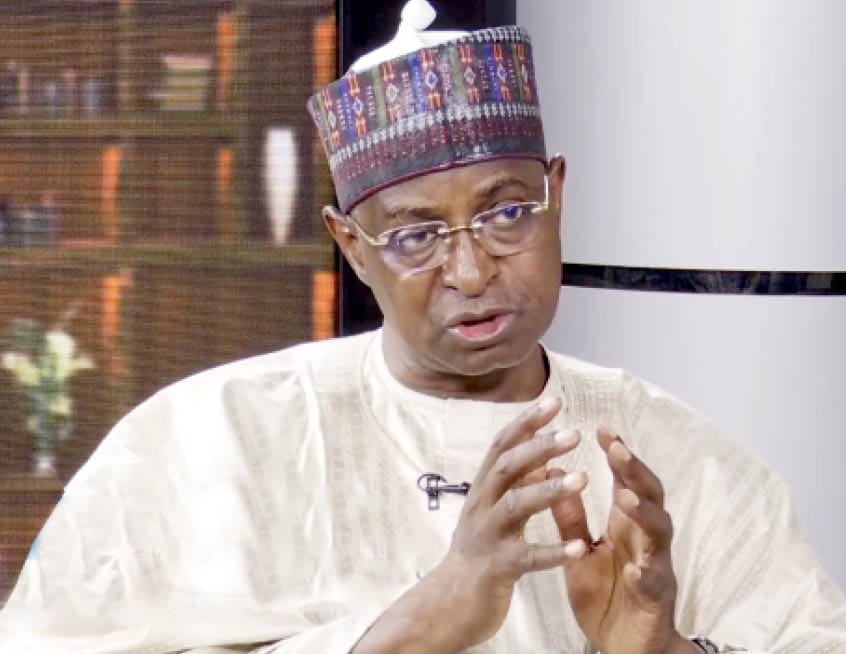
The Minister of Livestock Development, Idi Maiha, made the declaration on Saturday in Abuja during a press briefing ahead of activities marking the 2026 World Milk Day celebration.
According to the minister, women play a central role in nearly every aspect of the dairy value chain, including milk production, preservation, storage, processing and marketing. He stressed that any meaningful effort to transform Nigeria’s dairy industry must place women at the centre of development plans and investment strategies.
Maiha said the ministry had earlier organised a symbolic road walk in Abuja to create awareness about the nutritional value of milk, the contributions of women in the dairy sector and the opportunities available within Nigeria’s dairy industry.
He explained that this year’s World Milk Day celebration focuses on recognising women dairy farmers and their contributions to national development.
“This year’s World Milk Day celebration is particularly significant as it highlights the theme of celebrating women dairy farmers and their invaluable contributions to food security, household nutrition, rural livelihoods and the growth of the dairy economy,” the minister said.
He noted that women have remained the backbone of dairy activities in many rural communities across the country, helping to sustain families and local economies through their involvement in milk production and trade.
According to him, the Federal Ministry of Livestock Development recognises that women are indispensable to the future of the dairy industry and will continue to implement programmes that improve their participation and economic opportunities.
Maiha said the ministry is promoting gender-sensitive policies aimed at strengthening dairy cooperatives, improving skills development, supporting milk aggregation systems and encouraging value addition across the sector.
The minister also used the occasion to highlight the challenges facing Nigeria’s dairy industry, particularly the large gap between local milk production and national demand.
He disclosed that Nigeria currently requires about 1.7 million metric tonnes of milk annually, but local production stands at only between 600,000 and 700,000 metric tonnes.
The shortfall, he said, has forced the country to rely heavily on imported dairy products, resulting in huge foreign exchange spending every year.
“Our national annual milk demand is estimated at 1.7 million metric tonnes, while local production currently ranges between 600,000 and 700,000 metric tonnes annually. This gap continues to drive significant import dependence and foreign exchange expenditure estimated at over $1.5 billion annually on dairy imports,” he stated.
For years, Nigeria has struggled to achieve self-sufficiency in milk production despite having one of the largest livestock populations in Africa. Experts have often blamed poor infrastructure, low productivity, inadequate grazing systems, weak processing facilities and limited investment for the industry’s slow growth.
However, Maiha expressed optimism that recent government reforms and investments would help reverse the trend.
He said the establishment of the Federal Ministry of Livestock Development in July 2024 under the administration of President Bola Ahmed Tinubu marked a major turning point for the livestock sector.
According to him, the ministry has begun implementing coordinated programmes aimed at boosting local dairy production and reducing dependence on imports.
“Under the Renewed Hope Agenda of President Bola Ahmed Tinubu and through the establishment of the Federal Ministry of Livestock Development, Nigeria has begun implementing one of the most coordinated livestock and dairy transformation efforts in recent history,” he said.
The minister revealed that the ministry would officially unveil the validated Implementation Framework of the National Dairy Policy during the World Milk Day Conference scheduled for June 1, 2026.
He explained that the framework emerged from extensive consultations with stakeholders held in Abuja in November 2025. The discussions focused on key areas such as local milk production, dairy processing, milk collection systems, pasture development, ranch infrastructure, animal health services and private sector participation.
Maiha said attracting private investment remains a critical part of the government’s strategy to transform the dairy sector.
He cited growing commitments from major dairy companies including Arla Foods, FrieslandCampina WAMCO, Nestlé and Danone.
According to him, a new investor, Pure Dairy Herds, plans to establish a 5,000-cow dairy farm in Ogun State. The company also intends to build training centres in Ogun and Taraba states and introduce a 5,000 smallholder out-grower scheme to support local farmers.
The minister further disclosed that the Nigeria Sovereign Investment Authority signed a $496 million Memorandum of Understanding with Asset Green Limited in March for an integrated dairy livestock production and processing project.
The project is expected to include a 10,000-milking cow dairy operation, large-scale fodder production and a modern processing facility capable of producing fresh milk, butter, cream, milk powder and infant formula.
Maiha said the investment is projected to create about 2,500 direct jobs and more than 5,000 indirect jobs across the dairy value chain.
He added that the ministry is accelerating implementation of the National Livestock Growth Acceleration Strategy, which seeks to promote dairy industrialisation through investments in feed production, animal health services, cold chain infrastructure, improved livestock genetics, milk aggregation centres and climate-smart livestock systems.
As part of efforts to expand opportunities for women and young people, the minister announced plans for a proposed Women and Youth in Livestock Empowerment Initiative.
According to him, the programme aims to provide economic opportunities for about 37,000 women and youths involved in different livestock value chains across the country.
The initiative is currently undergoing final stakeholder consultations and programme design and is expected to be launched in the next phase of the ministry’s livestock transformation agenda.
Maiha also disclosed that the government is exploring the establishment of women-led milk aggregation and processing cooperatives in grazing reserves across the country.
He said the ministry has already conducted capacity-building and empowerment programmes for smallholder dairy farmers in Borno and Oyo states as part of efforts to strengthen local production.
Industry stakeholders have welcomed the government’s focus on women, noting that empowering female dairy farmers could significantly increase milk production, improve rural incomes and strengthen food security.
With demand for dairy products continuing to rise, experts believe that sustained investment, improved infrastructure and greater support for women farmers will be critical if Nigeria is to reduce its dependence on imports and build a stronger, self-sufficient dairy industry.
.