
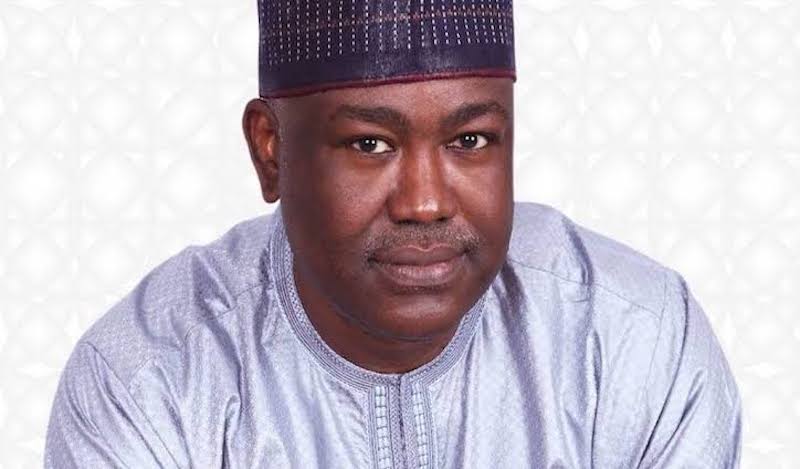
Former presidential candidate of the Accord Party, Gbenga Olawepo-Hashim, has said Nigeria cannot successfully defeat insurgency, terrorism and other security threats without the active cooperation of neighbouring countries and the support of the international community.
Olawepo-Hashim made the statement on Tuesday during an appearance on Politics Today, a current affairs program on Channels Television, where he spoke on the growing security challenges facing Nigeria and the wider Sahel region.
According to him, insecurity in Nigeria has become a regional problem that extends beyond the country’s borders, making it impossible for Nigeria to tackle it alone.
He argued that countries such as Niger, Chad, Mali and Burkina Faso must work closely with Nigeria if lasting peace is to be achieved across the region.
“Now, you can’t deal with these things if you are at loggerheads with your neighbours—Mali, Niger, and Chad. You must have an integrated strategy,” he said.
The former presidential candidate stressed that security challenges in West Africa have become increasingly interconnected, with armed groups operating across national boundaries and taking advantage of weak border controls.
He said one of his first steps, if given the opportunity to lead the country, would be to organise an international conference focused on security issues affecting Nigeria and the Sahel.
According to him, such a gathering would bring together governments, security experts and international partners to develop a coordinated response to terrorism, banditry and other violent crimes.
“The first thing I’m going to do is to have an international conference on security here, not a local conference. You need the input of our neighbours—Chad and Niger—and the cooperation of Mali and Burkina Faso,” he stated.
Olawepo-Hashim also highlighted the role of global powers in addressing insecurity in the region. He noted that international actors already involved in security operations across the Sahel should be part of broader efforts to tackle the crisis.
“You need global cooperation because the Russians are dealing with this issue on behalf of Mali in the Sahel region, and you also need the French, who were part of the problem in the first place,” he added.
The politician linked many of the security challenges currently affecting the region to events that followed the collapse of Libya’s government in 2011.
According to him, the movement of weapons and fighters across the region after the Libyan conflict contributed significantly to the rise of extremist groups and armed criminal networks operating in several African countries.
“All of these problems are linked with what happened in Libya and the importation of a host of extremist groups to that area, and cleanups were not done,” he said.
He argued that many Nigerians do not fully understand the complexity of the security crisis because it involves several countries, foreign interests and different armed groups operating across a vast geographical area.
“These guys are advising all manner of groups across the Sahel region, not just in Nigeria. So, you are dealing with a much more complicated crisis than people are able to admit,” he added.
His comments come at a time when insecurity remains one of the biggest challenges facing Nigeria.
In recent years, the country has battled terrorism in the North-East, bandit attacks in the North-West, farmer-herder clashes in parts of the North-Central region, separatist-related violence in the South-East and increasing incidents of kidnapping for ransom across several states.
The issue has continued to dominate national discussions as communities across the country grapple with attacks, abductions and loss of lives.
Public concern has grown further following the recent abduction of teachers and students in Oyo State, an incident that sparked outrage and renewed calls for stronger security measures.
The kidnapping highlighted concerns about the spread of insecurity into areas previously considered relatively safe from such attacks.
Nigeria shares borders with Niger, Chad, Cameroon and Benin Republic, making cross-border cooperation an important part of efforts to combat criminal activities and terrorism.
In the past, the country has participated in joint military operations with neighbouring nations, particularly through the Multinational Joint Task Force established to fight Boko Haram and other extremist groups in the Lake Chad Basin.
While these operations have recorded some successes, attacks by armed groups have continued in parts of the country and across the wider region.
Olawepo-Hashim said the security situation requires leaders who understand the broader nature of the threat and are willing to adopt strategies that go beyond military action alone.
He criticized Nigeria’s political leadership, arguing that many leaders do not have a proper understanding of national security issues.
According to him, effective security management requires not only military strength but also diplomacy, intelligence sharing, regional cooperation and international partnerships.
He suggested that a comprehensive approach involving neighbouring countries and global stakeholders would produce better results than isolated efforts by individual governments.
His remarks add to ongoing debates about how Nigeria should address its security challenges as citizens continue to demand greater protection of lives and property.
Over the years, successive governments have invested heavily in military operations, intelligence gathering and security reforms aimed at reducing violence and restoring peace to affected communities.
Despite these efforts, insecurity remains a major concern for many Nigerians, particularly in rural areas where attacks and kidnappings have become frequent.
As the country continues to search for lasting solutions, calls for stronger regional collaboration are likely to remain part of discussions on how to tackle terrorism, insurgency and other forms of organised crime.