
The Federal Government has moved closer to establishing state police, with the Presidency announcing that work on the constitutional framework required for its implementation has reached an advanced stage.
The development is expected to revive national debate on one of Nigeria’s most discussed security reforms, as the country continues to battle banditry, kidnapping, insurgency and other violent crimes across many states.
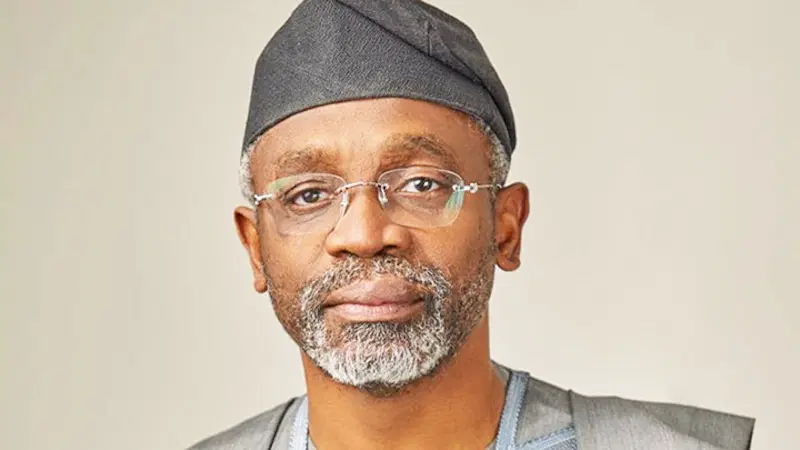
Chief of Staff to the President, Femi Gbajabiamila, disclosed the progress on Thursday after a high-level consultative meeting on state police held at the Presidential Villa in Abuja.
According to him, discussions on the proposed security arrangement began several months ago following a directive from President Bola Ahmed Tinubu and have now progressed to the stage where constitutional amendments are being prepared.
Gbajabiamila said the process has involved extensive consultations and careful examination of legal and constitutional issues, noting that creating a state police system is a major national reform that cannot be rushed.
“We started deliberations in the last three or four months on how to go about the establishment of state police as directed by Mr President,” he said.
“Establishing state police is not something that you do with the snap of the fingers. There is a lot involved in terms of constitution and legalities, and thank God we have now gained a lot of traction.”
He expressed optimism that the required constitutional amendments would soon be presented, adding that more details would emerge once the amendment process advances.
“Hopefully, the amendment will come shortly, and the details of the amendment will come after that,” he added.
The Chief of Staff explained that the immediate focus is on changing relevant sections of the Constitution that currently place policing under the exclusive control of the Federal Government.
He said the constitutional amendment would create the legal foundation for state police, while additional legislation would later be enacted to regulate how the new system would operate.
“Right now, what we are looking at is the constitutional amendment itself, and then the enabling law would follow thereafter. That is what we have been deliberating on in the last couple of hours,” he said.
The announcement marks one of the clearest indications yet that the Tinubu administration is determined to pursue the long-debated security reform.
Calls for state police have intensified in recent years as insecurity continues to affect communities across the country.
Nigeria has faced persistent security challenges, including terrorism in the North-East, banditry in the North-West, kidnapping in several regions, communal clashes and violent crimes in both urban and rural areas.
Many political leaders, security experts and civil society groups have argued that the current policing structure is no longer sufficient to address the country’s growing security demands.
Under the existing system, the Nigeria Police Force operates as a single national institution under federal control. State governors are officially regarded as chief security officers of their states, but they do not have direct control over police commands operating within their territories.
Critics of the current arrangement argue that the centralised policing model often slows responses to local security threats and limits the ability of state governments to tackle crimes effectively.
Supporters of state police believe locally controlled police formations would possess better knowledge of their communities, improve intelligence gathering and respond more quickly to emerging threats.
They also argue that decentralised policing would reduce the pressure on the Nigeria Police Force, which many observers consider overstretched due to manpower shortages, inadequate funding and growing security responsibilities.
However, the proposal has also generated concerns among some stakeholders.
Opponents fear that state police could be abused by governors and political leaders to harass opponents, influence elections or suppress dissent.
Others have raised questions about funding, training standards, accountability and coordination between federal and state security agencies.
These concerns have contributed to the slow progress of the proposal over the years despite repeated calls for its adoption.
In response to security gaps, several states have established regional and community-based security outfits to support conventional policing.
One of the most prominent examples is the South-West Security Network, popularly known as Amotekun, which was created by governors in the South-West to help combat kidnapping, armed robbery and other crimes.
Similar security arrangements have emerged in other parts of the country. However, many of these outfits operate with limited powers because they do not have full constitutional recognition as police agencies.
Gbajabiamila noted that discussions have now moved beyond whether state police should exist and are focused instead on how the system should be structured to serve the interests of all Nigerians.
According to him, there is growing consensus among political leaders and stakeholders that reforms are needed to strengthen the country’s security architecture.
He disclosed that President Tinubu, who has consistently supported the idea of state police, would receive a comprehensive report on the outcome of the consultations.
Tinubu had advocated state police long before becoming President, arguing that a country as large and diverse as Nigeria requires a more decentralised approach to security management.
The consultative meeting formed part of the Federal Government’s broader efforts to develop a workable model that balances local control with national security interests.
The proposed framework is expected to address issues such as recruitment, training, oversight, funding, operational responsibilities and cooperation between federal and state security agencies.
Among those who attended the meeting were Deputy Senate President Jibrin Barau, Deputy Speaker of the House of Representatives Benjamin Kalu, Inspector-General of Police Tunji Disu, Attorney-General of the Federation and Minister of Justice Lateef Fagbemi, as well as other senior government officials.
The participation of top legislative, legal and security officials underscores the importance attached to the proposed reform and the need for broad consensus before any constitutional changes are introduced.
If successfully implemented, state police would represent one of the most significant changes to Nigeria’s security structure since the return to democratic rule in 1999.