
The Senate has said it will consider the final report on the proposed creation of state police before the end of the week, marking a major step in ongoing efforts to address Nigeria’s worsening security challenges.
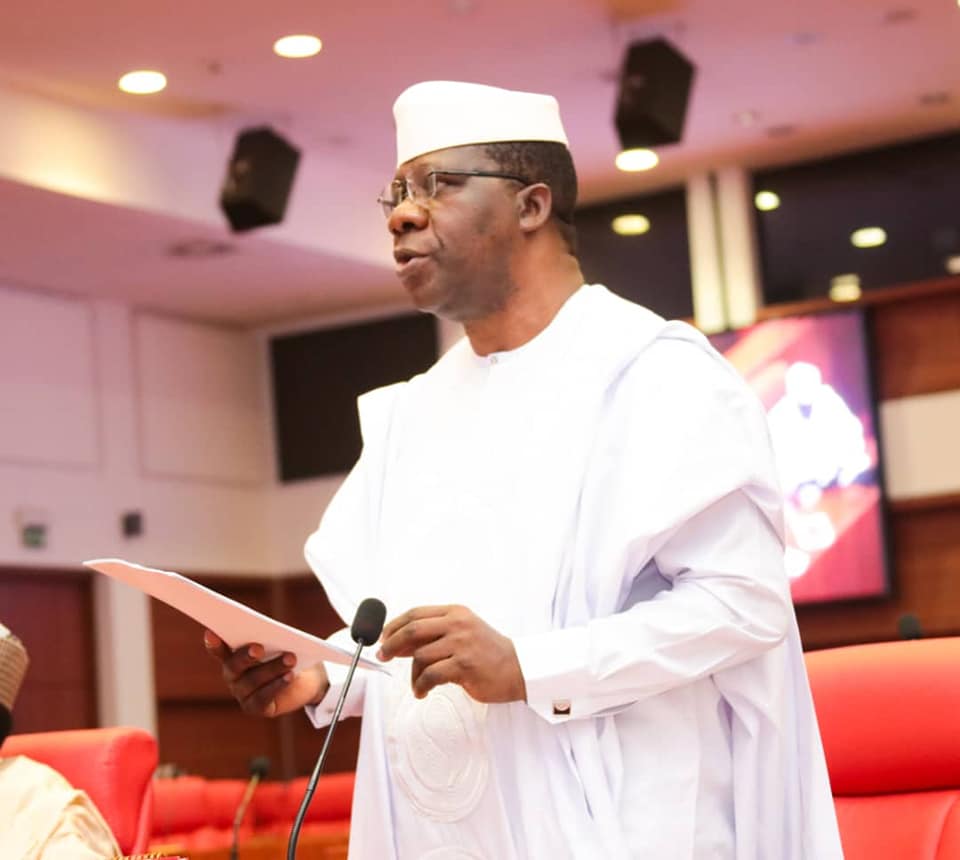
Senate Leader, Opeyemi Bamidele, disclosed this on Monday during a press conference in Abuja, where he said the National Assembly was determined to conclude work on the constitutional amendment required to establish state police across the country.
According to Bamidele, who also serves as Vice Chairman of the Senate Committee on Constitution Review, lawmakers have reached an advanced stage in the process and are ready to present the committee’s final recommendations to the Senate for debate and approval.
He explained that once the proposal receives the approval of the National Assembly, it will be transmitted to the 36 State Houses of Assembly for ratification, as required for constitutional amendments.
Bamidele expressed confidence that lawmakers would move quickly on the matter, saying there was no reason for further delay given the growing security concerns facing the country.
“We came to the conclusion that we’re going to pass the constitutional amendment in respect to making provision for state police, and I can tell you as of today that, that will come to creation this very week because there’s no need to allow any further delay,” he said.
The Senate Leader revealed that federal lawmakers had held a series of consultations with key government officials and stakeholders to fine-tune the proposed framework for state policing.
According to him, discussions were held with President Bola Ahmed Tinubu, the Attorney-General of the Federation and Minister of Justice, Lateef Fagbemi, the Inspector-General of Police, Olatunji Disu, and other relevant stakeholders involved in security and constitutional matters.
The consultations, he said, were aimed at ensuring that the proposed structure addresses concerns about funding, operational control, accountability and coordination with existing security agencies.
The debate over state police has been one of the most discussed security issues in Nigeria in recent years.
Supporters argue that Nigeria’s current policing structure, which places the police under the control of the Federal Government, is no longer sufficient to tackle the growing security challenges across the country.
They believe that allowing states to establish and manage their own police forces would improve intelligence gathering, strengthen community policing and enable quicker responses to local security threats.
Nigeria has faced increasing security challenges over the past decade, including banditry, kidnapping, terrorism, communal clashes, cult-related violence and armed robbery.
Several state governors have repeatedly called for the establishment of state police, arguing that local authorities are often in a better position to understand and address security threats within their jurisdictions.
Many governors have also complained that the current centralised policing system limits their ability to respond effectively to criminal activities despite being designated as chief security officers of their states.
The issue gained more attention in recent years as insecurity spread across different parts of the country, affecting economic activities, farming, transportation and investment.
While there is broad support for state police among many political leaders, the proposal has also attracted concerns from some stakeholders.
Critics fear that state-controlled police forces could be abused by state governments for political purposes, particularly during elections and political disputes.
Others have raised concerns about funding, warning that some states may struggle to finance police operations, recruit personnel and provide modern equipment.
There are also questions about how state police would coordinate with federal security agencies to avoid conflicts of authority and overlapping responsibilities.
To address these concerns, constitutional review committees and security experts have spent years studying different models and proposing safeguards that would prevent abuse while ensuring accountability.
The National Assembly has held several public hearings and consultations on the issue, receiving submissions from security agencies, civil society organisations, legal experts, traditional rulers and members of the public.
The latest move by the Senate suggests that lawmakers believe sufficient consensus has now been reached to advance the proposal.
Under Nigeria’s constitutional amendment process, approval by the National Assembly alone is not enough to change the Constitution.
Any constitutional amendment must also receive the support of at least two-thirds of the 36 State Houses of Assembly before it can become law.
This means that if the Senate and the House of Representatives approve the state police proposal, the next stage will involve consideration by state legislatures across the federation.
President Tinubu has repeatedly expressed support for measures aimed at strengthening national security and improving law enforcement capabilities.
His administration has also encouraged broader discussions on security reforms as part of efforts to tackle crime and violence in different parts of the country.
The proposed creation of state police is widely seen as one of the most significant constitutional reforms currently under consideration by the National Assembly.
If eventually approved and ratified, it could fundamentally change the structure of policing in Nigeria by allowing states to establish their own police services alongside the existing Nigeria Police Force.
Supporters believe the reform could help improve response times, enhance local intelligence gathering and strengthen efforts to combat insecurity.
However, they also acknowledge that strong legal safeguards, proper oversight and adequate funding will be necessary to ensure the success of the system.
As lawmakers prepare to consider the final report this week, attention is now focused on the National Assembly, where a decision on one of Nigeria’s most important security reforms could soon be made.