
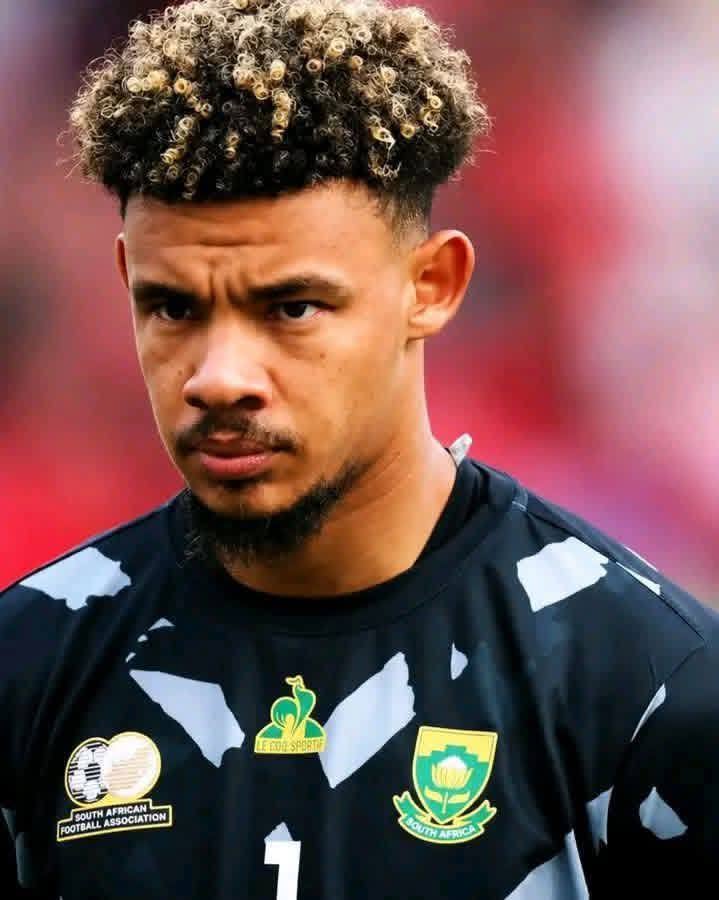
South Africa captain Ronwen Williams has expressed disappointment over what he described as a lack of support from fellow Africans following Bafana Bafana’s defeat to Mexico in their opening match of the 2026 FIFA World Cup.
The experienced goalkeeper said he was saddened to discover that many African football fans appeared to support Mexico rather than South Africa, the continent’s representative in the high-profile encounter.
South Africa lost 2-0 to co-hosts Mexico on Thursday night in a result that dealt an early blow to the team’s hopes of progressing in the competition.
Speaking after the match, Williams appealed for greater unity among African countries during major international tournaments.
According to him, African nations have traditionally rallied behind one another whenever they compete on the global stage, making the reaction during the Mexico game difficult for him to understand.
“Africans have always supported other African countries in every World Cup tournament, but I can’t figure out why our own case is different,” Williams said.
“Many Africans supported Mexico, not us, the South Africans. We almost shed tears, but it’s truly sad.
“As Africans, let’s stand for each other, let’s stand together.”
His comments have sparked conversations across social media platforms, with many football fans debating whether Africans owe automatic support to fellow countries from the continent during international competitions.
For some supporters, Williams’ disappointment was understandable.
They argued that when African teams compete at the World Cup, they carry the hopes of an entire continent and therefore deserve support regardless of national rivalries.
Several users noted that African nations have often celebrated the achievements of fellow continental representatives at previous tournaments.
They pointed to moments such as Cameroon’s historic run to the quarter-finals of the 1990 FIFA World Cup, Senegal’s impressive performances in 2002 and 2022, and Morocco’s remarkable journey to the semi-finals of the 2022 tournament in Qatar.
Morocco’s achievement in particular united many Africans, with fans from different countries cheering the Atlas Lions as they became the first African nation to reach the World Cup semi-finals.
Supporters of Williams’ position argued that such solidarity should extend to all African teams, including South Africa.
However, others offered a different perspective.
A number of social media users from countries including Nigeria, Ghana, Kenya and Zimbabwe said their decision not to support South Africa was influenced by recurring reports of xenophobic attacks against African migrants living in the country.
Many referenced incidents over the years in which foreign nationals and their businesses were targeted during violent outbreaks in parts of South Africa.
Some openly admitted that they supported Mexico during the match because of those experiences.
The issue of xenophobia has remained a sensitive topic in relations between South Africa and other African countries.
Over the years, there have been several incidents in which immigrants from countries such as Nigeria, Zimbabwe, Somalia, Ethiopia and Mozambique were attacked by mobs.
Properties and businesses belonging to foreign nationals have also been destroyed during periods of unrest.
The attacks have often drawn condemnation from governments across the continent, including Nigeria.
Diplomatic tensions have occasionally followed, with African leaders calling on South African authorities to take stronger measures to protect foreign nationals and prevent future violence.
South African leaders have repeatedly condemned xenophobic attacks and insisted that such actions do not reflect the values of the country’s people.
Authorities have promised investigations and prosecutions whenever such incidents occur.
Despite those assurances, memories of past attacks continue to shape public opinion in many African countries.
For some football fans, those experiences have affected their emotional connection with South African teams competing internationally.
Others, however, argued that football should not be used as a platform to settle political grievances.
They maintained that players representing their countries should not be held responsible for actions carried out by individuals outside the sport.
According to them, supporting an African team at the World Cup promotes continental pride and strengthens the bonds among Africans.
Williams’ remarks have therefore reopened broader conversations about what African solidarity truly means and whether it can exist independently of political and social realities.
The South African captain has been one of Bafana Bafana’s most influential figures in recent years.
Widely regarded as one of Africa’s top goalkeepers, he played a key role in South Africa’s strong performances at recent international competitions and has earned praise for his leadership both on and off the pitch.
His emotional reaction after the defeat highlighted the importance many athletes place on support from beyond their national borders.
As the World Cup progresses, South Africa will be hoping to recover from the opening setback and revive their chances of advancing to the next round.
At the same time, the debate sparked by Williams’ comments is likely to continue long after the final whistle.
For many observers, the episode serves as a reminder that football has the power not only to unite people but also to reflect unresolved tensions within societies.
Whether Africans choose to stand behind one another unconditionally or allow wider issues to shape their loyalties remains a personal decision.
But for Ronwen Williams, one message was clear: he believes Africa is stronger when it stands together.