
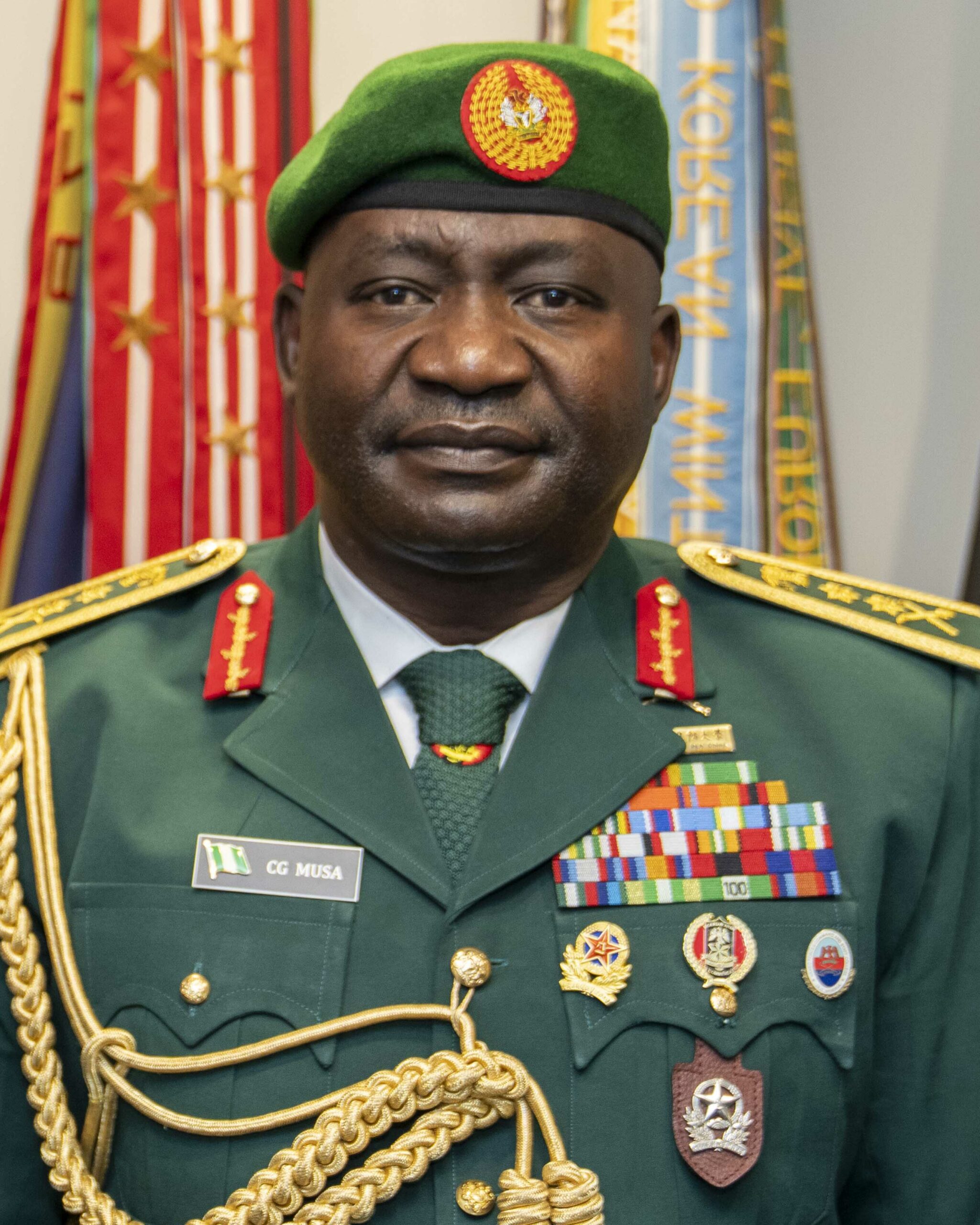
The Minister of Defence, retired General Christopher Musa, has said Nigeria can no longer afford to rely heavily on foreign countries for military equipment if it hopes to overcome its growing security challenges.
Speaking at the Nigerian People’s Strategic Conference and Defence Exhibition 2026 in Abuja, Musa said recent global events had shown the dangers of depending entirely on imported defence hardware, stressing that Nigeria must build its own capacity to produce the tools needed to protect its people and territory.
The conference, themed “Building a Modern Security Ecosystem: Integrating Private Sector Capacity into Nigeria’s National Security Architecture,” brought together government officials, military personnel, industry leaders, technology experts, investors and other stakeholders to discuss practical ways of improving national security.
Addressing participants, the Defence Minister said global conflicts in recent years had disrupted supply chains and made it difficult for many countries to obtain critical military equipment when they needed it most.
According to him, Nigeria must learn from these experiences and develop local alternatives to avoid being left vulnerable during international crises.
“Nigeria cannot continue to depend entirely on imported security solutions,” Musa said.
“Recent global conflicts have demonstrated how difficult it can be to procure critical military and security equipment during periods of international crisis.”
He explained that countries involved in wars or geopolitical tensions often prioritise their domestic needs, leaving others struggling to secure weapons, spare parts and other military assets.
For Nigeria, which is battling terrorism, insurgency, banditry, kidnapping, oil theft and cybercrime, such dependence could pose serious risks to national security.
Musa said the country already possesses the talent and resources needed to build a strong local defence industry capable of meeting many of its operational requirements.
He praised indigenous manufacturers and innovators for their growing contributions to the development of military equipment.
According to him, Nigerian companies and experts have begun producing military vehicles, drones, surveillance systems and other technologies that support security operations.
The minister urged the government and security agencies to deliberately patronise locally made defence equipment as a way of strengthening the country’s industrial base and promoting self-reliance.
He said increased local production would not only improve national security but also create jobs, boost technological advancement and reduce the huge amount of money spent on importing military hardware.
Musa also advocated greater investment in research and innovation.
He called for stronger support for universities, research institutions and young Nigerians developing technologies that can improve intelligence gathering, surveillance and threat detection.
He noted that security operations around the world are being transformed by emerging technologies, including artificial intelligence, drones, satellite imagery, biometric systems and predictive analytics.
According to him, Nigeria cannot afford to ignore these developments if it hopes to stay ahead of increasingly sophisticated criminal networks.
However, he stressed that the use of such technologies must align with national interests and operate within established legal frameworks to prevent abuse.
The Defence Minister said security in the modern era had become more complex and could no longer be seen as the sole responsibility of the government or the military.
He described security as a collective responsibility that requires cooperation among government institutions, security agencies, private organisations and local communities.
According to him, many of the security threats confronting the country today are technology-driven and highly organised.
He listed terrorism, insurgency, banditry, kidnapping, cybercrime and attacks on critical national infrastructure among the major threats facing Nigeria.
Musa observed that criminal groups often depend on local collaborators for intelligence, logistics and financial support.
Because of this, he said community participation remains a vital component of national security efforts.
He urged Nigerians to provide timely and credible information to security agencies and avoid supporting criminal elements operating within their communities.
According to him, citizens must recognise that the fight against insecurity concerns everyone and not just those in uniform.
The minister also made a strong case for deeper collaboration between the public and private sectors.
He said private firms possess expertise and resources that could complement the efforts of conventional security institutions.
According to Musa, the private sector can support intelligence gathering, cybersecurity operations, infrastructure protection, surveillance activities and emergency response efforts.
He, however, cautioned that such partnerships must be properly regulated and coordinated to ensure that they strengthen rather than undermine statutory security institutions.
To achieve this, Musa proposed the strengthening of legal frameworks guiding public-private security cooperation.
He also recommended increased investment in training, improved information-sharing mechanisms and policies that encourage local defence manufacturing.
Despite the security challenges confronting the nation, the minister reaffirmed the commitment of the Armed Forces and other security agencies to protecting Nigeria’s territorial integrity.
He said security forces would continue their operations against terrorists, insurgents, bandits, kidnappers and oil thieves.
However, he insisted that military force alone would not solve the country’s security problems.
According to him, Nigeria requires what he described as a “whole-of-government and whole-of-society approach” to effectively address insecurity.
This means that government agencies, traditional institutions, civil society groups, businesses, religious leaders and citizens must all play active roles in building a safer country.
Earlier in his remarks, the Convener of the conference, Mr Charles Awuzie, said the event was conceived as a platform for stakeholders from different sectors to discuss practical solutions to Nigeria’s security challenges.
Awuzie explained that the initiative initially focused on private security but later evolved into a broader national platform aimed at encouraging inclusive dialogue on defence, innovation and public-private cooperation.
He said the conference seeks to bring together government officials, defence institutions, technology innovators, industry leaders, investors and citizens to generate ideas capable of strengthening Nigeria’s security architecture.
According to him, security concerns affect every Nigerian regardless of occupation, location or social status.
He added that the conference was designed to complement existing government efforts by promoting partnerships, encouraging innovation and producing actionable recommendations.
Awuzie announced that the gathering would become an annual forum dedicated to strategic engagement on national security and national development.
The discussions at the conference come at a time when Nigeria continues to grapple with multiple security threats across different regions of the country.
While security agencies have recorded successes in several operations, concerns remain over persistent attacks by terrorists and bandits, rising cases of kidnapping for ransom and the growing sophistication of cybercriminals.