
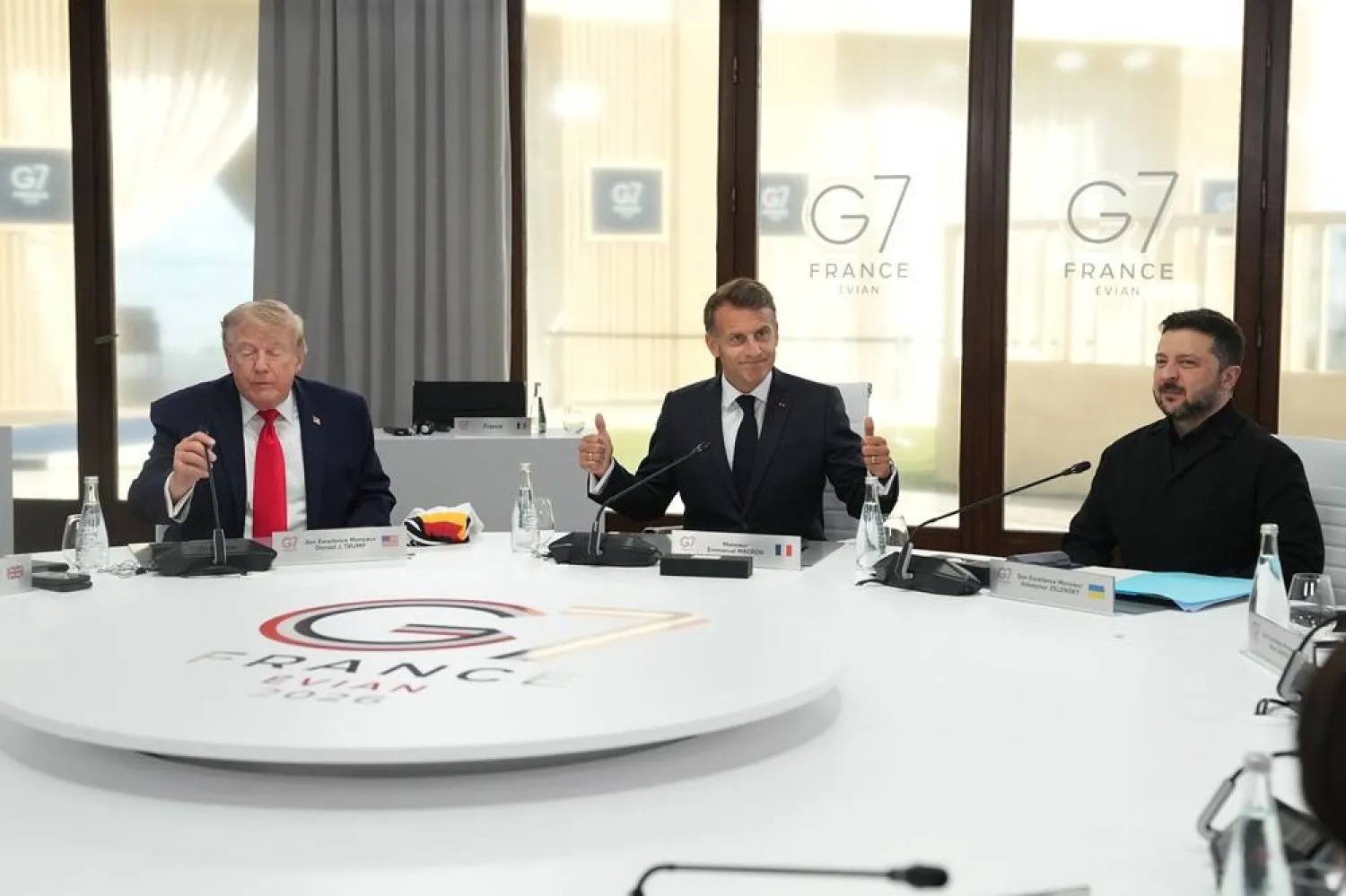
World leaders on Tuesday gathered in Evian, France, for the annual Group of Seven (G7) summit, with major global crises, including the war in Ukraine, tensions involving Iran and instability in the Middle East, dominating discussions.
The summit brought together leaders of the world’s leading industrialized democracies at a time of growing geopolitical uncertainty, economic challenges and rapid technological change.
The G7 consists of France, Canada, Germany, Italy, Japan, the United Kingdom and the United States. The European Union also participates in the summit through its top officials.
The opening session focused heavily on the ongoing war in Ukraine. Ukrainian President Volodymyr Zelenskyy joined G7 leaders for high-level discussions aimed at strengthening international support for Kyiv as the conflict with Russia continues.
The war, which began in February 2022 following Russia’s invasion of Ukraine, has remained one of the biggest security challenges facing Europe since the end of the Cold War. Thousands of people have been killed, millions displaced and several cities devastated by fighting.
Ukraine has relied heavily on military, financial and humanitarian assistance from Western allies, many of whom are members of the G7. The latest talks are expected to address continued support for Ukraine, reconstruction efforts and possible pathways toward ending the conflict.
United States President Donald Trump, who arrived in France on Monday, participated in the discussions alongside fellow leaders. His presence at the summit comes amid renewed attention on America’s role in addressing global conflicts and maintaining alliances with traditional partners.
Also present were senior European Union officials, including European Commission President Ursula von der Leyen and European Council President Antonio Costa. The EU has remained a major supporter of Ukraine and has played an important role in imposing sanctions on Russia and coordinating assistance for Kyiv.
Beyond Ukraine, leaders are expected to turn their attention to the increasingly tense situation in the Middle East.
Recent developments involving Iran have heightened concerns about regional stability and the possible impact on global energy supplies and international trade. Diplomatic efforts to reduce tensions have intensified in recent weeks, with world powers closely monitoring events in the Gulf region.
The Middle East remains strategically important because of its influence on global oil production and shipping routes. Any escalation in the region could affect energy prices and have economic consequences across the world, including in oil-producing countries such as Nigeria.
Economic growth is also expected to feature prominently during the summit.
Many countries continue to grapple with inflationary pressures, rising debt levels, supply chain disruptions and slower economic expansion following years of global uncertainty. G7 leaders are expected to exchange ideas on boosting investment, creating jobs and strengthening economic resilience.
Another key issue on the agenda is artificial intelligence (AI), a technology that is transforming industries and economies around the world.
Governments are increasingly seeking ways to balance innovation with regulation to ensure that AI is used responsibly. Discussions are likely to focus on creating international standards, protecting citizens from misuse of the technology and encouraging cooperation on future technological development.
The summit is also notable for the wide range of invited guests from outside the G7.
Apart from President Zelenskyy, leaders from major emerging economies and strategic regions are expected to participate in some sessions.
Among them are Indian Prime Minister Narendra Modi, Brazilian President Luiz Inacio Lula da Silva, and the leaders of South Korea, Kenya and Egypt.
Their presence reflects the growing recognition that many global challenges cannot be addressed by advanced economies alone. Issues such as climate change, food security, migration, public health and economic development require broader international cooperation.
Leaders from Gulf countries are also expected to attend the gathering.
These include Qatar’s Emir, Sheikh Tamim bin Hamad Al Thani, and the President of the United Arab Emirates, Sheikh Mohamed bin Zayed Al Nahyan. Their participation underscores the increasing diplomatic importance of Gulf states in efforts to resolve regional conflicts and promote energy security.
The annual G7 summit has long served as a platform for some of the world’s most influential leaders to coordinate responses to international crises and shape global policy directions.
While the group does not have the power to make legally binding decisions, agreements reached at its meetings often influence international diplomacy, trade and economic policies.
As discussions continue in France, the international community will be watching closely for concrete outcomes, especially on Ukraine, the Middle East and the management of emerging technologies.
For many countries, including Nigeria, decisions and positions taken at the summit could have implications for oil prices, international trade, security partnerships and the broader global economy.
With multiple crises unfolding at the same time, this year’s G7 meeting is expected to test the ability of world leaders to build consensus and provide direction in an increasingly uncertain world.