
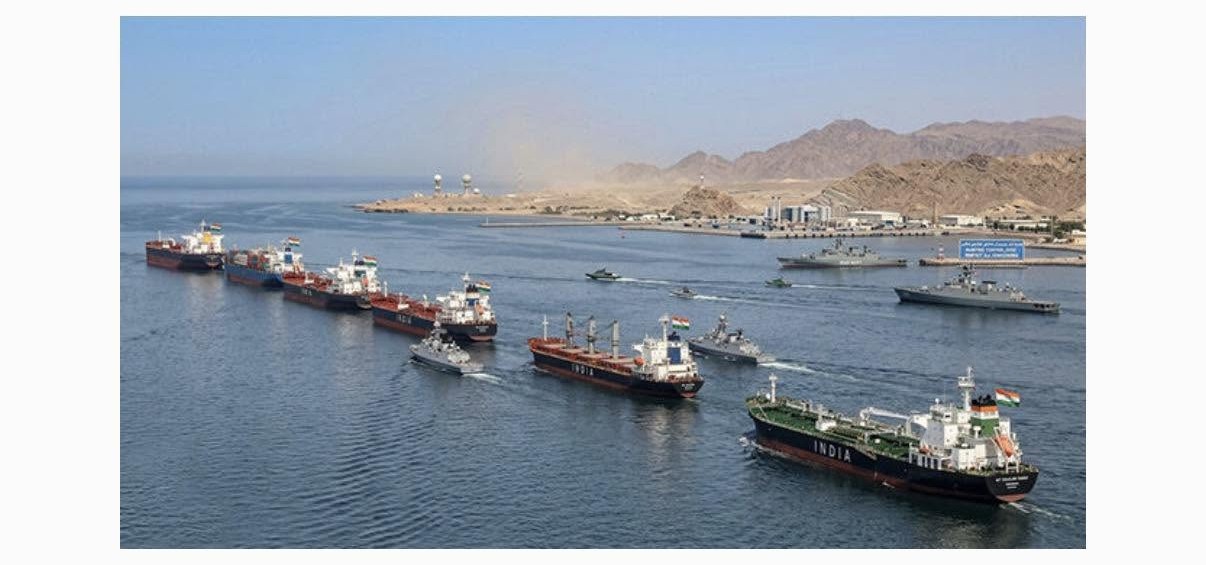
Five Iranian vessels, including three oil tankers and two ships carrying essential goods, have successfully passed through the Strait of Hormuz after the United States began easing its naval blockade against Iran.
The Islamic Revolutionary Guard Corps (IRGC) confirmed the development on Tuesday, describing it as a significant step following recent diplomatic efforts aimed at ending hostilities involving Iran.
According to the IRGC, the vessels crossed through the strategic waterway after the lifting of the blockade became operational. The three oil tankers were transporting crude oil, while the other two ships carried supplies described as essential goods.
The development came only hours after the US military stated in an advisory note that restrictions on Iranian ports were still in place pending the formal signing of a memorandum of understanding (MoU) between the parties involved.
The advisory had indicated that the blockade of Iranian ports remained effective until the agreement was officially endorsed. The signing ceremony is expected to take place on June 19 in Switzerland.
The Strait of Hormuz is one of the world’s most important shipping routes. It serves as a major passage for global oil exports from the Gulf region. Any disruption in the waterway often triggers concerns in international energy markets and raises fears over the security of global trade.
The United States imposed the naval blockade in April, preventing ships travelling to and from Iranian ports from moving through the Strait of Hormuz. The move heightened tensions in the region and sparked concerns among countries dependent on oil supplies passing through the narrow channel.
The blockade formed part of a broader confrontation involving Iran and the United States, with fears growing that the crisis could escalate into a wider conflict affecting neighbouring countries and international commerce.
However, a diplomatic breakthrough appears to have emerged following weeks of negotiations involving Iran, the United States and Pakistan.
The three countries announced early Monday that they had finalised a memorandum of understanding aimed at ending the conflict and reducing tensions in the region. The agreement is expected to provide a framework for restoring normal relations and reopening critical trade routes.
The MoU is scheduled to be formally signed on Friday in Switzerland, a country that has often hosted high-level international negotiations because of its long-standing neutrality in global affairs.
Following the announcement of the agreement, US President Donald Trump reportedly ordered the lifting of the anti-Iran naval blockade, paving the way for Iranian vessels to resume movement through the Strait of Hormuz.
The successful passage of the five Iranian ships is being viewed as an early sign that the agreement could help restore stability to one of the world’s most sensitive maritime corridors.
For oil-importing countries such as Nigeria, developments in the Gulf region are closely watched because they can influence international crude oil prices, shipping costs and broader economic conditions. Fluctuations in global oil prices often affect government revenues and domestic economic planning.
Although the latest development offers hope for de-escalation, observers caution that the situation remains delicate until the memorandum is formally signed and fully implemented.
The coming days are therefore expected to be crucial as the international community monitors whether the agreement translates into lasting peace and uninterrupted movement through the Strait of Hormuz.
For now, the crossing of the five Iranian vessels marks the first visible outcome of the diplomatic efforts and signals a possible return to normal operations in one of the world’s busiest and most strategically important waterways.