
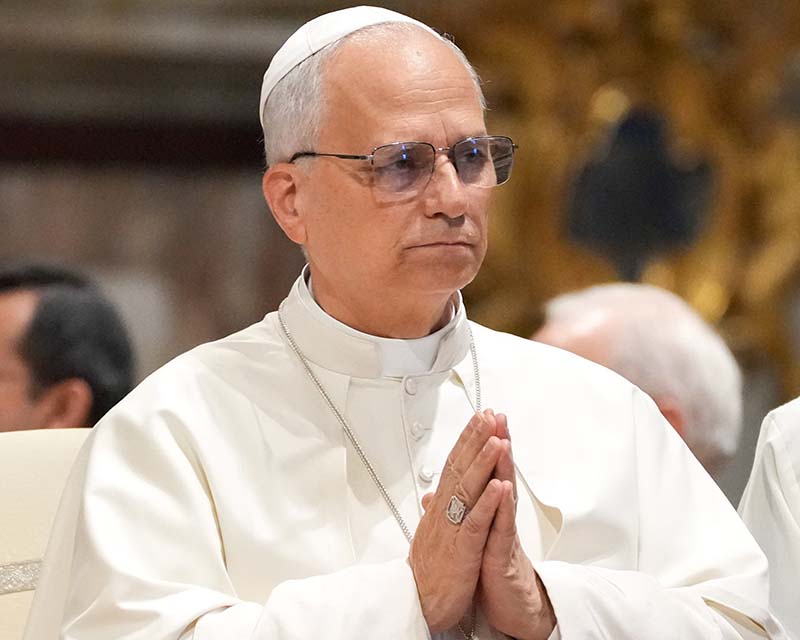
Pope Leo XIV has raised concern over what he described as growing bureaucracy and political obstacles that are slowing down global humanitarian assistance, warning that millions of vulnerable people are being denied timely support.
The pontiff spoke on Monday, June 22, 2026, during a visit to the headquarters of the World Food Programme (WFP) in Rome, Italy, where he addressed international officials and aid workers on the state of global hunger and humanitarian response.
In his remarks, Pope Leo said the world is facing a troubling imbalance in priorities, where conflicts and political interests are being treated with more urgency than the basic needs of hungry and displaced populations.
“Conflicts are fed more readily than people are nourished. This reflects a troubling imbalance in our political and moral priorities,” the Pope said.
His comments come at a time when humanitarian agencies continue to struggle with rising global crises, including food shortages, armed conflicts, climate-related disasters and displacement of millions of people across different regions.
Across several parts of the world, aid organisations have repeatedly reported delays in delivering food, medicine and emergency support due to complex approval systems, funding restrictions and political disagreements among donor countries. Experts say these delays often worsen the suffering of people already living in emergency conditions.
Pope Leo warned that the growing layers of bureaucracy surrounding humanitarian work are making it harder for relief to reach those who need it most. He said that while international cooperation is essential, excessive administrative procedures are slowing down life-saving operations.
On one hand, he noted, humanitarian action is increasingly burdened by procedures that delay the delivery of aid to affected communities.
“On the other hand, access to essential goods, including food, is too often influenced by economic or strategic considerations,” he said.
According to him, these conditions have created a situation where vulnerable populations are left behind in global decision-making processes.
“As a result, those who do not generate quantifiable value risk becoming invisible,” he added.
The Pope’s remarks highlight a long-standing concern within the humanitarian sector about the gap between global wealth and the persistent reality of hunger and poverty. Despite advances in technology and global trade, millions of people still lack reliable access to food, clean water and basic healthcare.
The World Food Programme, where the Pope delivered his address, is one of the leading international agencies fighting global hunger. It provides food assistance in conflict zones, supports emergency relief efforts during disasters, and works with governments to improve nutrition in vulnerable communities.
However, like many humanitarian organisations, the WFP has faced increasing challenges in recent years, including funding shortages and restricted access to conflict-affected regions. Aid workers often report that political tensions between countries can affect how quickly and effectively assistance reaches civilians.
Pope Leo used his platform at the WFP headquarters to call for urgent reforms in the way humanitarian aid is coordinated and delivered. He urged governments, international institutions and donor agencies to remove unnecessary barriers that slow down relief efforts.
He stressed the importance of cooperation, transparency and shared responsibility in addressing global hunger and humanitarian crises. According to him, the world must prioritise human dignity over political or economic competition.
The Pope’s message reflects broader concerns shared by humanitarian experts and global development organisations, many of which have repeatedly called for reforms to improve efficiency in aid delivery systems.
In recent years, global hunger levels have remained high due to a combination of conflict, climate change, inflation and supply chain disruptions. The United Nations has warned that millions of people are at risk of severe food insecurity, particularly in parts of Africa, the Middle East and Asia.
Nigeria, like many other developing countries, continues to face food security challenges driven by insecurity in farming communities, rising food prices and climate-related shocks such as flooding and drought. Humanitarian agencies operating in the country have also reported difficulties reaching remote areas due to insecurity and logistical constraints.
By drawing attention to the moral and political dimensions of global hunger, Pope Leo called for a renewed commitment from world leaders to ensure that aid reaches those in need without unnecessary delay.
He urged the international community to rethink current systems that, in his view, prioritise bureaucracy and political interests over human life.