
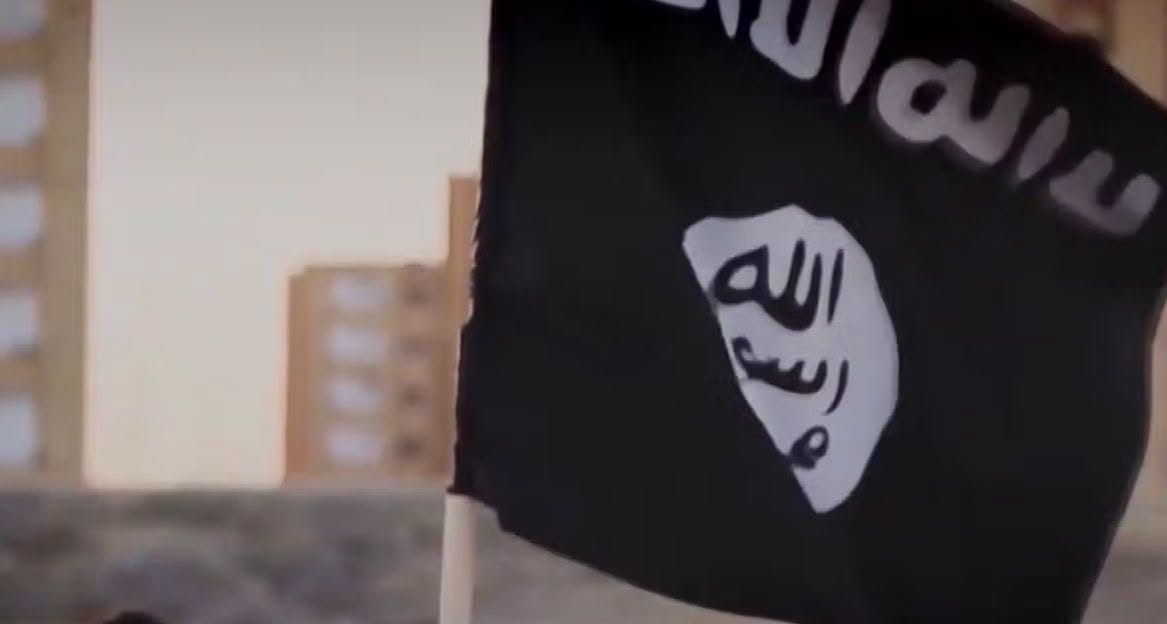
The United States government has identified a Nigerian national and three Nigeria-based companies among individuals and entities sanctioned for allegedly helping to finance activities linked to the Islamic State of Iraq and Syria (ISIS), in a move aimed at disrupting the terrorist group’s global financial network.
The sanctions were announced by the U.S. Department of State as part of a broader action targeting three individuals and six companies operating across Europe, the Middle East and West Africa.
According to the U.S. government, those affected are accused of facilitating the movement of funds used to support ISIS operations in different parts of the world.
In a statement issued on Monday and seen on Tuesday, U.S. Department of State spokesperson Thomas Pigott said the latest action exposed an international network that allegedly enabled ISIS to transfer money across borders.
He said the designations covered individuals and organisations operating in France, Syria, Türkiye and Nigeria.
“Today’s designations target three individuals and six entities operating across Europe, the Middle East and West Africa who have enabled ISIS to move money across borders, exposing a network that spans from France and Syria to Türkiye and Nigeria,” Pigott said.
He added that the sanctions included a France-based operative accused of providing information on the use of explosives to ISIS supporters, a Syria-based operator alleged to have used cryptocurrency to transfer funds on behalf of ISIS associates in several countries, including the United States, and a Nigeria-based facilitator whose money exchange businesses allegedly served as channels for ISIS financing.
The Nigerian named in the sanctions list is Mukhtar Adamu Muhammad, also known as Mukhtar Adamu or Muhammad Mukhtar.
According to information released by U.S. authorities, Muhammad is linked to Lagos State and was designated under terrorism-related sanctions connected to ISIS-West Africa.
The U.S. government alleged that businesses associated with him played roles in moving funds within a network connected to the terrorist organisation.
Alongside Muhammad, three Nigerian companies were also added to the U.S. Specially Designated Nationals (SDN) list.
The companies are Generation Currency Bureau De Change Limited, based in Lagos; Nine to Nine Exchange Bureau De Change Limited, located in Ikeja, Lagos; and Manhattan Bureau De Change Limited, based in Kano.
U.S. authorities claimed that the companies were linked to Muhammad and formed part of a network allegedly used to facilitate financial transactions connected to ISIS activities.
The sanctions do not amount to criminal convictions but are measures that allow the U.S. government to freeze any assets under U.S. jurisdiction and restrict transactions involving designated persons or entities.
Apart from the Nigerian national, the sanctions list included two other individuals.
One of them is Abdelhakim Boukich, who was identified as a Syria-based operative linked to ISIS. U.S. authorities alleged that he played a role in supporting the group’s financial and operational activities.
The second individual is Miloud Abderrahmane, a French national accused of helping ISIS supporters and allegedly using digital currency platforms in financial transactions connected to the terrorist organisation.
The sanctions also targeted companies operating in Syria and Türkiye.
Among them are Alkaram Danismanlik Gayrimenkul Ic Ve Dis Genel Ticaret Limited Sirketi, also known as Al-Karam Company or Al-Karam Money Transfer Company, and Spider Gayrimenkul Ve Genel Ticaret Limited Sirketi, known as Spider Money Transfer Company.
Another company listed is Bitcoin Exchange Agent Idlib’s No. 1 Coin Exchange, which operates in Syria.
According to U.S. authorities, these businesses were allegedly involved in financial activities that supported ISIS operations and helped move money across different regions.
The latest sanctions come amid growing security cooperation between Nigeria and the United States in efforts to combat terrorism and violent extremism.
Pigott reaffirmed Washington’s partnership with Nigeria and highlighted recent joint efforts against terrorist groups operating in West Africa.
The U.S. official noted that Nigeria participated in a military operation carried out on May 16, 2026, which reportedly led to the death of Abu-Bilal al-Minuki, described by U.S. authorities as the second-highest-ranking official within ISIS.
The operation was seen as a significant blow to the terrorist group’s leadership structure.
Pigott said the United States would continue working with Nigeria and other international partners to weaken terrorist organisations and prevent them from accessing financial resources.
“We will continue to use every diplomatic and legal tool available to hold ISIS and its supporters accountable, wherever they operate and however they move money,” he said.
“We remain fully committed to protecting American lives, defending religious minorities, and working with international partners to eliminate the threat that ISIS poses to global peace and security.”
The action was taken under Executive Order 13224, a U.S. counterterrorism measure that allows the government to impose sanctions on individuals and organisations accused of supporting terrorism.
The order has been used for more than two decades to target terrorist groups, financiers, facilitators and organisations believed to be involved in funding extremist activities.
Under the sanctions, designated persons and entities can face asset freezes, restrictions on access to the international financial system and limits on conducting transactions with U.S. citizens and institutions.
The U.S. government said the latest action was part of its broader strategy to disrupt the financial networks that allow terrorist organisations to recruit members, acquire weapons and carry out attacks.
ISIS, formerly known as al-Qa’ida in Iraq, was designated by the United States as a Specially Designated Global Terrorist (SDGT) organisation in 2004.
Although the group lost much of the territory it once controlled in Iraq and Syria, security agencies across the world have continued to warn that it remains active through affiliated groups and financial networks operating in different regions.
In West Africa, ISIS-linked factions have remained a concern for governments and security agencies, particularly in areas affected by insurgency and extremist violence.
The latest sanctions therefore represent another effort by U.S. authorities to cut off funding channels and prevent the movement of money allegedly used to support terrorist activities.
While the designated individuals and companies may challenge the sanctions through legal and administrative processes, the move highlights the increasing global focus on tracking financial networks suspected of supporting terrorism and violent extremism.