
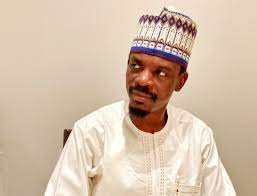
A chieftain of the African Democratic Congress (ADC) and former presidential media aide, Bashir Ahmad, has said the presidential candidate of the Nigeria Democratic Congress (NDC), Peter Obi, and his running mate, Senator Rabiu Musa Kwankwaso, should be concerned about the legal uncertainty surrounding the party following a recent court ruling.
Bashir made the remark on Friday after the Federal High Court in Lokoja, Kogi State, set aside its earlier judgment that directed the Independent National Electoral Commission (INEC) to register the NDC as a political party.
According to him, the latest court decision has left the party without legal recognition, raising questions about the political platform available to Obi and Kwankwaso ahead of the 2027 general elections.
In a post on his official X (formerly Twitter) account, Bashir said the two politicians have every reason to be worried because, in his view, they currently have no legally recognised political party through which to pursue their presidential ambition.
“Sen. Rabiu Kwankwaso and Peter Obi have every reason to be worried,” he wrote.
“As things stand today, they have no legally recognised platform on which to pursue their political ambitions, as the NDC is not recognised by law.”
His comments came shortly after Justice Isah Dashen of the Federal High Court in Lokoja delivered a ruling setting aside the court’s earlier judgment of December 10, 2025, which had compelled INEC to register the NDC.
The latest ruling followed an application filed by the Peace Movement Party (PMP), which argued that it was not joined in the original suit despite claiming ownership of the logo adopted by the NDC.
The applicant maintained that its legal rights could be affected by the earlier judgment and therefore asked the court to set it aside.
In his ruling, Justice Dashen agreed that all parties with an interest in the matter should be given an opportunity to be heard before a final decision is taken.
The judge therefore nullified the earlier judgment and ordered that all necessary parties be joined before the substantive case is heard afresh.
Following the judgment, counsel to the Peace Movement Party, C.S. Ekeocha, said the decision restored all parties to the position they occupied before the December 10, 2025 judgment.
According to him, the ruling also reversed all actions taken by INEC based on the earlier court order, including the registration and official recognition of the NDC, pending the final determination of the suit.
However, the NDC has rejected the interpretation that it has ceased to exist as a political party.
In a statement issued shortly after the judgment, the party insisted that it had not been deregistered and argued that the court did not expressly order INEC to remove it from the register of political parties.
The party also announced that it had directed its legal team to immediately file an appeal against the ruling.
According to the NDC, the Federal High Court had become *functus officio* after delivering its final judgment in the earlier case and therefore lacked the jurisdiction to revisit the matter.
The party further argued that it had already carried out several political activities after receiving registration from INEC.
It said it had registered members across the country, conducted ward, state and national congresses, held its national convention and organised primary elections for various elective offices in preparation for the 2027 general elections.
The NDC also stated that it had participated in recent bye-elections in Nasarawa and Enugu states and had nominated candidates for state Houses of Assembly, the House of Representatives, the Senate, governorship positions, and the offices of president and vice-president.
The legal dispute centres on the ownership of the party’s logo, particularly the victory sign, which the Peace Movement Party claims belongs to it.
The court held that because the Peace Movement Party was not made a party in the original suit, its legal rights may have been affected by the judgment that directed INEC to register the NDC.
The decision has generated widespread reactions within political circles, especially because preparations for the 2027 general elections are gradually gathering momentum.
Peter Obi, the former governor of Anambra State, has already criticised the Lokoja court judgment, describing it as another setback for Nigeria’s democracy.
He argued that every Nigerian should be concerned whenever institutions that protect democracy are weakened.
The court ruling has also sparked debate over the legal status of the NDC and whether the party can continue its political activities while its appeal is pending.
Under Nigeria’s electoral laws, only political parties recognised by INEC can sponsor candidates for elections.
As a result, the final outcome of the case could have significant implications for politicians seeking to contest future elections under the NDC platform.
For now, while Bashir Ahmad believes the latest judgment leaves Obi and Kwankwaso without a recognised platform, the NDC insists it remains a political party and is confident that the Court of Appeal will overturn the Federal High Court’s decision.
The appeal is expected to determine whether the party’s registration will ultimately stand and whether it will retain its place among political parties preparing for the 2027 general elections.