
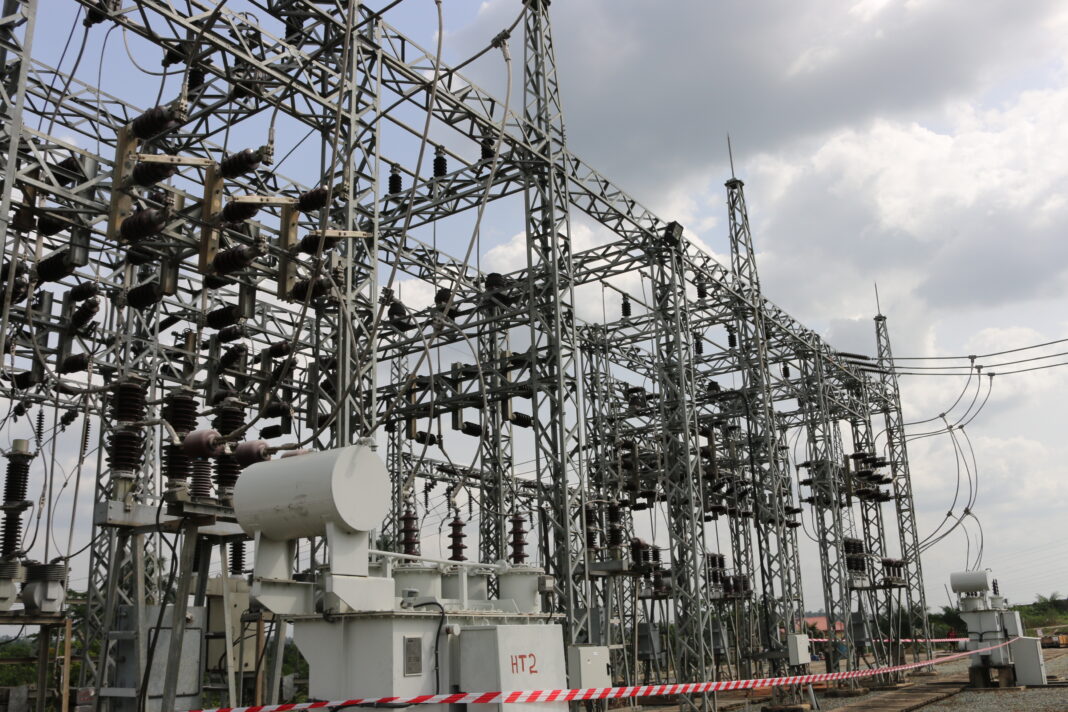
Electricity supply was disrupted across Lagos and parts of its surrounding areas on Thursday after a voltage instability on the national grid triggered widespread outages, the Transmission Company of Nigeria (TCN) has said.
The power disruption affected homes, businesses and industries in different parts of the commercial capital, forcing many residents and companies to rely on alternative sources of electricity as engineers worked to restore supply.
In a statement issued on Thursday, TCN explained that the incident occurred at about 8:19 a.m. when a sudden voltage fluctuation developed within the national grid.
According to the company, the instability quickly spread across the Lagos electricity network, causing several generating stations to shut down automatically and leading to the tripping of major transmission lines.
The company said the disturbance resulted in a significant interruption in bulk electricity supply to Lagos and neighbouring areas connected to the affected transmission network.
TCN explained that emergency measures were immediately introduced to prevent the situation from developing into a complete collapse of the national grid.
According to the company, the National Control Centre directed several power generation companies to reduce electricity generation immediately to stabilise the frequency of the national grid.
The move, it said, was necessary to prevent additional equipment failures and protect the integrity of the electricity transmission system.
The company also disclosed that the Minister of Power, Joseph Tegbe, convened an emergency meeting shortly after receiving reports of the incident.
The meeting was attended by senior officials of the Transmission Company of Nigeria and the Nigerian Independent System Operator to coordinate emergency response efforts and speed up the restoration of electricity supply.
According to TCN, discussions at the meeting focused on identifying the cause of the voltage instability, restoring affected transmission facilities and ensuring that normal electricity supply returned as quickly as possible.
The company said progress had already been made in restoring some critical transmission infrastructure.
It disclosed that the Benin–Egbin 330-kilovolt transmission line, one of the major facilities affected during the disturbance, had been successfully restored and was once again transmitting bulk electricity to the Lagos network.
However, engineers were still working on another critical line.
TCN said technical teams from its Benin and Omotoso sub-regions had been deployed to repair faults on the Benin–Omotoso 330kV transmission line.
The company expressed confidence that full restoration of electricity supply would be achieved after the repairs were completed.
It apologised to electricity consumers for the inconvenience caused by the outage and assured residents that all relevant agencies were working together to resolve the problem.
“The Ministry of Power and all relevant stakeholders are making every effort to restore normal bulk electricity transmission to the Lagos complex as quickly as possible,” the company said.
Thursday’s incident is the latest in a series of disturbances affecting Nigeria’s electricity network in recent years.
Although the national grid has improved in some areas following investments in transmission infrastructure, voltage instability, transmission faults and system disturbances continue to affect electricity supply across different parts of the country.
Nigeria’s electricity industry is divided into three major segments: generation, transmission and distribution.
Power generated by electricity generation companies is transmitted across the country by the Transmission Company of Nigeria before it is distributed to homes and businesses through electricity distribution companies.
Because the transmission network serves as the link between power generation and distribution, any major fault on the grid can affect electricity supply to millions of consumers within a short period.
In many cases, protective systems automatically disconnect power stations and transmission lines to prevent damage to expensive equipment and reduce the risk of a total system collapse.
While such automatic shutdowns help protect the national grid, they often result in temporary blackouts until engineers restore normal operations.
Lagos remains Nigeria’s largest economic hub, with thousands of industries, financial institutions, hospitals, educational institutions and commercial centres depending on stable electricity for daily operations.
Frequent power interruptions often increase operating costs for businesses, many of which rely on diesel or petrol-powered generators whenever public electricity supply fails.
Residents also face additional financial pressure due to the high cost of alternative energy sources, especially as fuel prices remain elevated.
The Federal Government has repeatedly pledged to improve electricity generation, transmission and distribution through ongoing reforms in the power sector.
Authorities say investments in new transmission projects, substations, transmission lines and grid management systems are aimed at improving the reliability of electricity supply across the country.
The government has also continued efforts to strengthen coordination among agencies responsible for managing the nation’s electricity infrastructure to reduce the frequency of system disturbances.
As repair work continued on Thursday, TCN assured electricity consumers that engineers remained on the ground to restore full transmission capacity and return stable electricity supply to Lagos and other affected areas as soon as possible.
The company appealed to consumers for patience while technical teams completed the ongoing repairs, expressing optimism that normal power supply would soon be fully restored.