
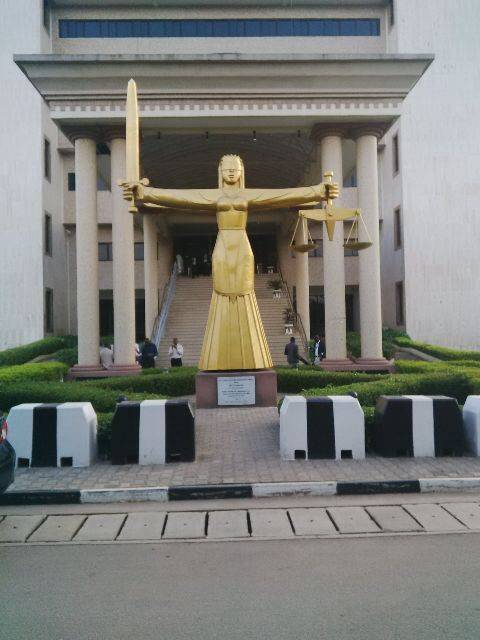
The Federal High Court has introduced a new set of rules to guide the handling of pre-election cases ahead of the 2027 general elections, in a move aimed at ensuring that election-related disputes are resolved more quickly, fairly and efficiently.
The new rules, known as the Federal High Court (Pre-Election) Practice Directions, 2026, were approved by the Chief Judge of the Federal High Court, Justice John Terhemba Tsoho.
The development was announced in a statement issued on Tuesday by the Director of Information of the Federal High Court, Dr. Catherine Oby Christopher.
According to the statement, the new Practice Directions are intended to improve the management and speedy determination of pre-election cases filed before the Federal High Court across the country.
The court said the guidelines were introduced to strengthen the administration of justice in election-related matters in line with the provisions of the 1999 Constitution, as amended, the Electoral Act, 2026, and other relevant laws governing elections in Nigeria.
It explained that the new rules are expected to provide a clear framework for judges, lawyers, political parties and other parties involved in pre-election litigation.
The statement also confirmed that the Federal High Court (Pre-Election) Practice Directions, 2026 have officially replaced the Practice Directions issued in 2022.
As a result, all pre-election cases brought before the Federal High Court will now be governed by the new rules.
The court urged legal practitioners, political parties, election contestants and members of the public to study the new Practice Directions and familiarise themselves with their provisions.
It added that copies of the document have been made available to guide all stakeholders involved in pre-election disputes.
Although the statement did not highlight every amendment contained in the new Practice Directions, legal observers say practice directions play a critical role in ensuring that election cases are handled within the strict timelines prescribed by law.
Pre-election matters are cases that arise before the conduct of elections. They usually involve disputes over party primaries, nomination of candidates, qualification or disqualification of aspirants, substitution of candidates, delegates’ lists and the interpretation of provisions of the Electoral Act.
Unlike election petitions, which are filed after the declaration of election results, pre-election cases must be determined before the elections are held because they often affect who eventually appears on the ballot.
In recent election cycles, Nigerian courts have handled hundreds of pre-election cases involving political parties and aspirants challenging the conduct of party primaries or alleging breaches of electoral laws.
Some of these cases have significantly altered the political landscape by removing candidates, ordering fresh primaries or recognising different candidates before elections.
The Federal High Court is one of the courts with jurisdiction to hear several categories of pre-election disputes, particularly those involving federal elections and issues arising from the Electoral Act.
Because election cases are time-bound under the Constitution and electoral laws, courts often adopt special procedures to ensure that cases are heard and concluded without unnecessary delays.
Practice Directions are administrative rules issued by the head of a court to regulate court procedures and improve the efficiency of judicial proceedings. While they do not replace existing laws, they provide practical guidance on how cases should be managed, filed and heard.
The introduction of the 2026 Practice Directions comes as political activities ahead of the 2027 general elections continue to gather momentum across the country.
Political parties have begun internal consultations and preparations for party congresses, primaries and the nomination of candidates for various elective offices.
With these activities expected to generate legal disputes, the judiciary is preparing to ensure that cases are handled promptly in accordance with constitutional timelines.
Delays in deciding such cases have, in the past, affected election preparations and, in some instances, resulted in conflicting court judgments that required intervention by appellate courts.
The Federal High Court said the new Practice Directions are expected to promote greater efficiency, consistency and fairness in the handling of election-related disputes.
By replacing the 2022 guidelines with the updated 2026 framework, the court hopes to strengthen public confidence in the judicial process as Nigeria prepares for another round of general elections.
With the new rules now in force, lawyers, political parties and aspirants are expected to comply with the revised procedures whenever they approach the Federal High Court to challenge issues arising from party primaries or other pre-election matters.