
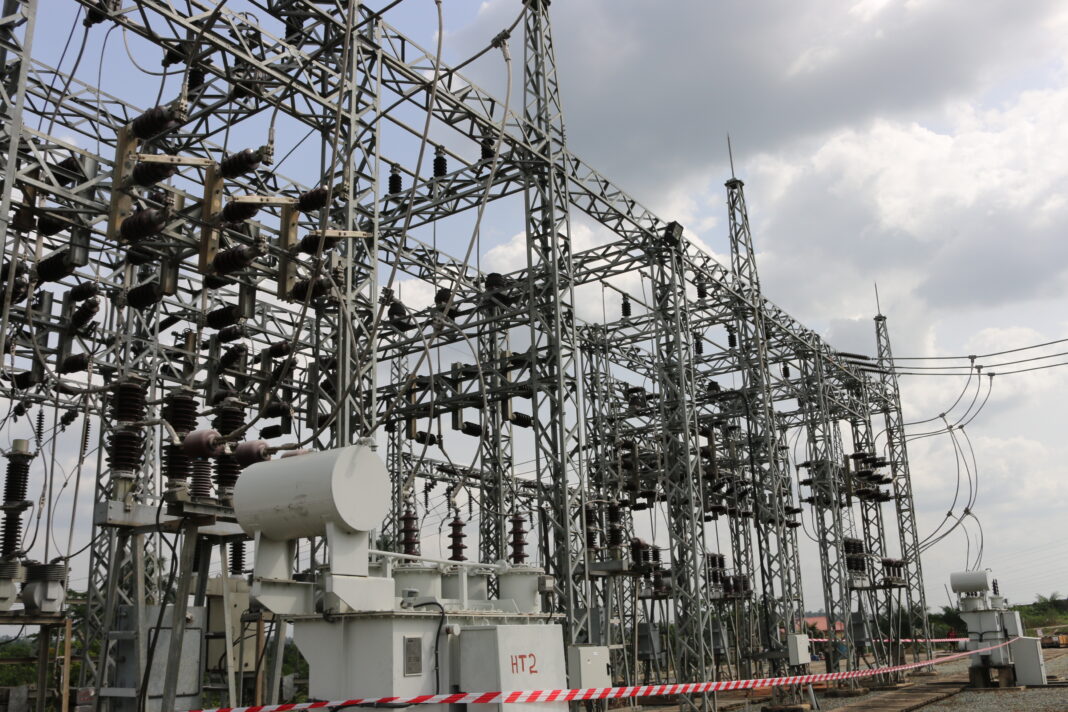
Residents and businesses in several parts of Lagos State have been thrown into darkness after heavy flooding submerged key electricity transmission facilities, forcing the Transmission Company of Nigeria (TCN) to shut down one of its major substations and declare force majeure on parts of its network.
The development followed days of persistent rainfall that caused widespread flooding in parts of the state, affecting critical infrastructure and disrupting electricity supply to customers served by the affected transmission stations.
In a statement issued on Wednesday, TCN’s General Manager, Public Affairs, Ndidi Mbah, said the company had declared force majeure on the Oworoshoki 33KV and Lekki 330/132KV Transmission Substations because of severe flooding caused by continuous rainfall in Lagos.
The company explained that while the Lekki 330/132KV Transmission Substation remains operational, the Oworoshoki 133/33KV Transmission Substation has been completely taken out of service after floodwater damaged important equipment.
According to TCN, the flood affected two power transformers at the Oworoshoki substation, making it impossible to restore electricity despite repeated efforts by engineers.
The statement said the affected transformers—TR1, a 60MVA transformer, and TR3, a 30MVA transformer—tripped even when there was no electrical load after attempts were made to restore them.
TCN added that floodwater had submerged all the protection and control cables connected to the two transformers, making the restoration process more difficult.
It said, “Although Lekki 330/132KV Transmission Substation is in service as water is continuously being pumped out of the station, Oworoshoki 133/33KV Transmission Substation is currently not in service as the level of water has affected two power transformers, TR1 – 60 MVA and TR3 – 30 MVA, that tripped on no load even after attempted restoration.
“Presently, all power protection and control cables of the two power transformers are submerged inside water, and efforts to evacuate the water have proved ineffective as the rain continues to fall.”
The company said engineers have remained at the site and are working to remove the floodwater so that the damaged equipment can be properly tested before electricity is restored.
According to TCN, power supply cannot resume until engineers are satisfied that the transformers are safe to return to operation, as restoring damaged equipment without proper testing could lead to more serious failures.
“Our engineers are working, doing everything possible to evacuate the flood to enable them to test the transformers for restoration,” the company said.
TCN also apologised to customers of Eko Electricity Distribution Company (EKEDC), whose areas are supplied through the affected substations.
“TCN regrets every inconvenience this might cause Eko Disco’s customers taking supply from the substations,” the statement added.
Although the company did not specify all the communities affected by the outage, customers connected to the Oworoshoki and parts of the Lekki transmission network are expected to experience varying levels of power disruption until normal operations resume.
The incident adds to the challenges already facing electricity consumers in Lagos, many of whom have complained of unstable power supply in recent months. Businesses that rely heavily on electricity, especially small and medium-sized enterprises, are expected to suffer losses if the outage continues for an extended period.
The flooding also highlights the growing impact of heavy rainfall on public infrastructure in Lagos, Nigeria’s commercial capital. During the rainy season, many parts of the city experience flooding due to poor drainage, blocked canals, rising water levels and rapid urban development.
Flooding has repeatedly disrupted transport, damaged homes and businesses, and affected essential services, including electricity supply. Experts have long warned that critical infrastructure such as power installations, roads and bridges require stronger flood protection measures as rainfall becomes more intense.
The Transmission Company of Nigeria is responsible for transmitting electricity generated by power plants across the country to distribution companies, which then deliver power to homes and businesses. Any disruption at major transmission substations can affect thousands of electricity consumers, depending on the size of the facility and the areas it serves.
The declaration of force majeure by TCN means the company considers the outage to have resulted from circumstances beyond its control. Such declarations are typically made when natural disasters or other unforeseen events prevent normal operations.
As rainfall continues across Lagos and other parts of the country, authorities have repeatedly advised residents living in flood-prone areas to remain alert and avoid unnecessary movement during periods of heavy rain.