
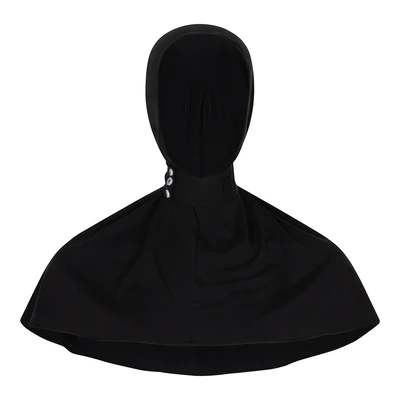
The Court of Appeal in Ibadan has overturned the judgment of the Oyo State High Court that allowed Muslim students of the International School, University of Ibadan (ISI), to wear hijab as part of the school’s uniform.
In a split decision delivered on Friday, the three-member panel of the appellate court ruled by a majority of two to one that the Supreme Court’s earlier decision permitting the use of hijab in schools applies only to public schools and does not extend to private institutions such as the International School, University of Ibadan.
The judgment brings a fresh twist to the legal dispute that has generated public debate over the balance between students’ constitutional right to freedom of religion and the authority of private schools to enforce their dress codes.
The Court of Appeal consequently set aside the earlier judgment delivered by Justice Moshood Ishola of the Oyo State High Court, which had ruled that the school’s prohibition of hijab violated the constitutional rights of the affected Muslim students to freedom of religion and freedom from discrimination.
The case was filed by 11 Muslim students of the school with the support of the Muslim Rights Concern (MURIC), an Islamic advocacy group.
The students had challenged the school’s policy prohibiting the use of hijab with the prescribed school uniform, arguing that it infringed on their constitutional rights as guaranteed under the 1999 Constitution.
Delivering the lead judgment, Justice Biobele Georgewill, with Justice K.I. Amadi agreeing, held that the International School, University of Ibadan, is a private educational institution and therefore has the authority to enforce its rules and regulations, including its dress code.
According to the appellate court, the Supreme Court’s earlier decision allowing Muslim students to wear hijab applies specifically to public schools, where government policies must comply with constitutional protections relating to religion.
Justice Georgewill held that the apex court has not made a similar pronouncement regarding private schools.
“In public schools, you can wear hijab on school uniforms based on the judgment of the Supreme Court, but the Supreme Court is yet to make any decision on the use of hijab in private schools,” the court held.
The appellate court further ruled that freedom of religion is a personal constitutional right that an individual may voluntarily waive under certain circumstances.
According to the court, the students accepted the school’s rules, including its dress code, when they enrolled and signed undertakings to obey the institution’s regulations.
“The students had waived that right by signing an undertaking to obey ISI’s rules and regulations, including its dress code,” Justice Georgewill stated.
On that basis, the majority held that the school was entitled to insist on compliance with its uniform policy.
However, the judgment was not unanimous.
Justice Fadawu Umar disagreed with the majority and delivered a dissenting judgment, holding that the appeal lacked merit and should have been dismissed.
The dissenting justice maintained that the earlier judgment of the Oyo State High Court ought to have been upheld, although the full reasons for the dissent were not immediately available.
The dispute over the use of hijab at the International School, University of Ibadan, has lasted for several years and has remained one of the most closely watched legal battles involving religious rights and school regulations in Nigeria.
The controversy began after some Muslim students sought permission to wear hijab along with the approved school uniform. The request was rejected by the school authorities, leading to protests and legal action.
The matter attracted national attention, with religious organisations, parents, legal experts and civil society groups expressing differing views on the issue.
Supporters of the students argued that denying Muslim girls the right to wear hijab amounted to religious discrimination and violated their constitutional rights.
On the other hand, supporters of the school maintained that as a private institution, the school has the right to establish and enforce a uniform policy that applies equally to all students regardless of religion.
The case also drew attention because of an earlier Supreme Court judgment delivered in a separate case involving public schools in Lagos State.
In that case, the Supreme Court upheld the right of Muslim female students to wear hijab in public schools, ruling that preventing them from doing so violated their constitutional right to freedom of religion.
Friday’s judgment by the Court of Appeal clarified that the Supreme Court’s decision cannot automatically be applied to private schools, which operate under different legal and contractual arrangements.
They note that while the Constitution guarantees freedom of religion, private educational institutions may still be able to enforce agreed rules where students voluntarily accept such conditions upon admission.
The judgment is also expected to fuel further legal and public debate over the limits of religious freedom within private educational institutions.
Although the Court of Appeal has delivered its verdict, the legal battle may not be over, as the parties still have the option of approaching the Supreme Court for a final determination on whether private schools can lawfully prohibit the use of hijab as part of their uniform policy.