
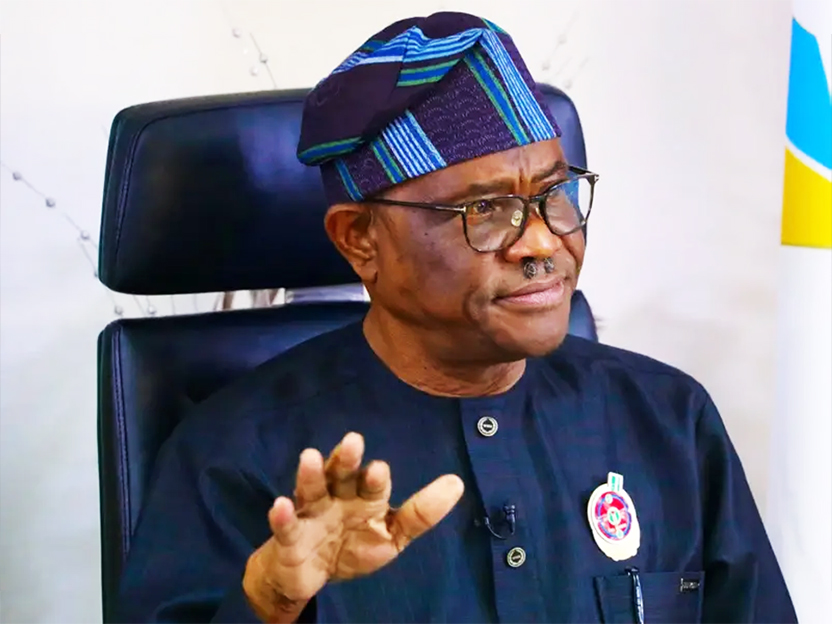
Minister of the Federal Capital Territory (FCT), Nyesom Wike, has said many civil servants in the territory are unhappy with him because of his decision to reduce spending on official trips, conferences and other government expenses, preferring instead to channel public funds into infrastructure projects.
Speaking during his monthly media briefing in Abuja on Thursday, the minister said he has deliberately changed the spending pattern of the FCT Administration by giving priority to projects that directly improve the lives of residents rather than what he described as wasteful government expenditure.
According to Wike, his administration has refused to approve several requests for expensive foreign conferences and official trips because such spending does not provide enough value for taxpayers’ money.
He said although the policy has made him unpopular among many civil servants, he has no regrets because his responsibility is to deliver projects that benefit the people.
“That’s why I can’t be popular among civil servants. If you ask anybody today, one minister they won’t like is me. Why? Those money for conferences, I put the money together for roads,” Wike said.
The minister explained that public resources should not be spent on activities that do not have a direct impact on the lives of residents.
He criticised requests by government officials seeking approval to attend conferences abroad, especially when similar experiences could be gained within Nigeria.
“We waste our resources on frivolities. You expect me to approve funds for you to go for conference in America on land administration, what’s that? Go to Lagos and Port Harcourt, study how their own works or did not work and make a comparison here,” he said.
Wike revealed that he had rejected requests running into millions of naira for week-long conferences outside the country, insisting that the money should instead be invested in roads and other infrastructure.
“How do you encourage me to sign N20 million to travel to America for a conference of one week for land administration? I won’t do that,” he said.
The minister said his administration has adopted a different budgeting approach since he assumed office.
According to him, about 70 per cent of the FCT budget is now devoted to capital projects, while only 30 per cent is allocated to recurrent expenditure, including salaries, overheads and routine government expenses.
He said the previous spending pattern was the reverse, with about 65 per cent of the budget going to recurrent expenditure, leaving only a small portion for development projects.
Wike argued that no government can achieve meaningful development if most of its resources are spent on running costs instead of building infrastructure.
He maintained that roads, bridges, schools, hospitals and other public facilities have a more lasting impact on citizens than conferences and official trips.
According to him, every naira saved from unnecessary expenditure is being redirected to projects that residents can see and benefit from.
The minister also alleged that some official conferences have become channels through which public funds are diverted.
He questioned the growing number of conferences attended by public officials, saying many of them add little value to governance.
“Some people say conferences for corruption and I say what is that? You are going for conferences to do what? These are ways government funds are being diverted. I say put this money in this road here and the people will get the impact,” he said.
Wike stressed that his administration would continue to resist pressure to approve spending that does not directly contribute to development in the nation’s capital.
He said his focus remains on completing ongoing projects and improving infrastructure across the FCT.
Since assuming office in August 2023, Wike has made infrastructure development one of the major priorities of his administration.
Several road projects in Abuja and the satellite towns have either been completed or are under construction as part of efforts to improve transportation and open up new areas for development.
The administration has also undertaken rehabilitation of public facilities, improved street lighting in some parts of the capital and expanded access roads in developing districts.
Many of these projects have been commissioned by President Bola Tinubu as part of activities marking key national events and government milestones.
The minister has repeatedly argued that visible infrastructure is the best measure of government performance and has pledged to ensure that public funds are spent on projects that Nigerians can see and use.
His latest comments reflect the broader effort by the Federal Government to reduce the cost of governance and improve the use of public resources.
Over the years, successive administrations have faced criticism over high spending on foreign travel, seminars and conferences by public officials, even as many parts of the country continue to lack basic infrastructure.
Economic challenges, rising public debt and pressure on government finances have also increased calls for prudent management of public funds.
Several public finance experts have urged governments at all levels to reduce recurrent expenditure and invest more in capital projects that stimulate economic growth and improve living standards.
Supporters of Wike’s approach argue that reducing spending on non-essential activities allows more resources to be invested in roads, schools, hospitals, water supply and other critical infrastructure.
However, some civil servants believe that conferences and training programmes are important for improving professional skills and exposing public officials to international best practices.
They argue that while unnecessary travel should be discouraged, genuine capacity-building programs remain essential for effective public service.
Despite such concerns, Wike insisted that his administration would continue to scrutinise requests for official travel and conferences to ensure that only those with clear benefits receive approval.
He said every decision on public spending must be guided by the interests of residents rather than the comfort of government officials.
The minister maintained that he is prepared to remain unpopular among civil servants if that is the price for delivering better infrastructure and ensuring prudent management of public funds.