
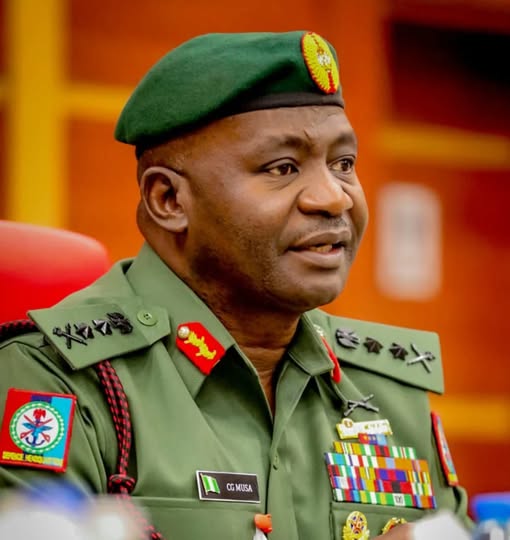
The Minister of Defence, Christopher Musa, on Thursday warned that the proposed creation of state police could become a major threat to Nigeria’s unity and security if it is not carefully planned and properly implemented.
Speaking at an Arise Television Town Hall meeting in Abuja, the minister said state police has the potential to strengthen security across the country, but cautioned that a poor implementation could create more problems than it would solve.
He described the proposal as one that could either become the “silver bullet” needed to tackle insecurity or turn into “the Hiroshima Nigerians are afraid of” if it is driven by ethnic, religious or political interests.
According to Musa, the success of state police will depend on careful planning, strong legal safeguards and a phased implementation process that allows the country to learn and make adjustments before expanding the system nationwide.
“State police is a good thing if well harnessed, planned, and executed. It could be the silver bullet that we need. But again, if not well executed, it could turn out to be the Hiroshima that we are afraid of,” he said.
The minister stressed that any state police structure must serve all citizens without discrimination.
He warned against allowing governors or influential groups to use the proposed security outfit for ethnic, religious or elite interests.
“State police should not be ethnic-based. It must not be religion-based. It must not be for the elite. That is very critical,” he said.
To reduce possible risks, Musa suggested that the new policing system should first be introduced in state capitals before extending it to other parts of the states.
He explained that a gradual rollout would allow authorities to study the challenges, understand the operating environment and make necessary corrections before full implementation.
“I want to encourage that we must have phased implementation, probably starting with the state capitals, so that we understand the dynamics before we go into full implementation,” he added.
The minister also defended the performance of the Nigeria Police Force, saying officers have continued to carry out their duties despite difficult conditions, limited manpower and the growing security challenges facing the country.
He said the federal police had remained committed to protecting lives and property, even though the demands on the force continue to increase.
“The Federal Police is doing extremely well considering the circumstances that they are operating in,” Musa said.
Beyond the debate on state police, the minister urged Nigerians to play a more active role in addressing the country’s security and social problems.
He said many citizens desire change but are often unwilling to change their own attitudes and behaviours.
“Most Nigerians want change but they want somebody to change and not themselves. Every Nigerian must be the change that we so much desire,” he said.
Musa noted that Nigeria still faces deep divisions based on ethnicity, religion and social class, warning that these issues could undermine the success of any new policing arrangement if they are not addressed.
“We know what our gaps are, which are ethnicity, religion, elitist movement and all sorts,” he said.
The debate over state police has remained one of the most discussed constitutional and security issues in Nigeria.
Supporters argue that the current centrally controlled policing system is overstretched and unable to respond quickly to the growing security challenges across the country, including terrorism, banditry, kidnapping, communal clashes and violent crimes.
Nigeria currently operates a single national police force under the control of the Federal Government. Many state governors have repeatedly complained that they lack direct authority over police commissioners deployed to their states, even though they are recognised as the chief security officers of their states.
Advocates of state police believe decentralising policing would improve intelligence gathering, strengthen community policing and allow security agencies to respond faster to local threats.
However, critics have consistently raised concerns that state police could be abused by state governments to intimidate political opponents, suppress dissent or promote ethnic and religious interests.
These concerns have slowed efforts to amend the Constitution to allow states to establish and control their own police services.
The issue has gained renewed attention as Nigeria continues to battle widespread insecurity in different parts of the country. Terrorist attacks in the North-East, banditry in the North-West and North-Central, separatist violence in parts of the South-East, and rising cases of kidnapping across the country have increased calls for major reforms in the nation’s security architecture.
Several committees and stakeholders have recommended state policing as part of broader reforms aimed at improving internal security.
While discussions continue, the Federal Government has repeatedly stated that any decision on state police must include adequate legal safeguards, proper funding arrangements, clear oversight mechanisms and measures to prevent abuse.
Musa’s remarks add to the growing national conversation on how best to reform Nigeria’s policing system. His support for the idea, coupled with his warning against hasty implementation, reflects the balance many security experts believe is necessary as the country considers one of its most significant security reforms in decades.
His call for careful planning, gradual implementation and protection against ethnic, religious and political influence is expected to shape further discussions as lawmakers and other stakeholders continue to examine proposals for the establishment of state police in Nigeria.