
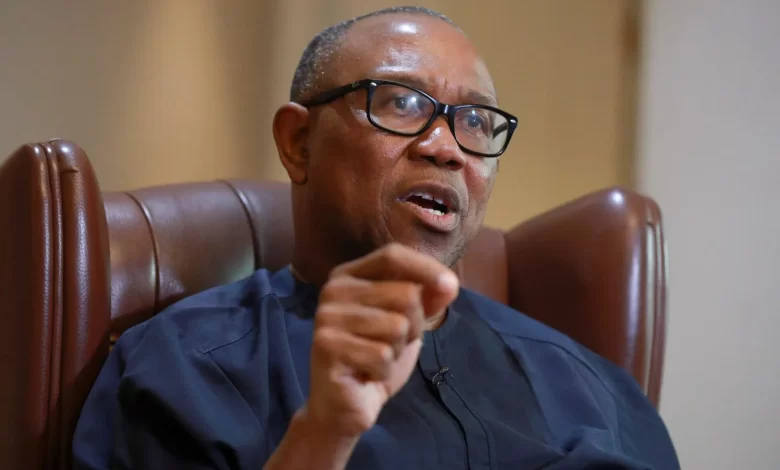
The presidential candidate of the Nigeria Democratic Congress (NDC), Peter Obi, has said Nigeria can only realise its enormous economic and human potential through competent, accountable and compassionate leadership, insisting that good governance remains the country’s greatest need as it prepares for the 2027 general elections.
Obi made the remarks after participating in a high-level roundtable discussion titled “Nigeria in 2027 and Beyond”, organised by the European Council on Foreign Relations (ECFR) in Berlin, Germany.
In a post shared on his official X account on Tuesday, the former Anambra State governor said the event provided an opportunity to discuss Nigeria’s democratic future, economic development, governance and its relationship with the international community.
According to him, the discussions centred on how Nigeria can strengthen its democratic institutions, improve development cooperation and build stronger partnerships with the global community to drive sustainable economic growth.
Obi said he used the forum to restate his belief that Nigeria possesses all the resources needed to become one of the world’s leading economies if the country is governed effectively.
He maintained that the country’s biggest challenge is not a lack of natural or human resources but the quality of leadership.
“During the discussions, I reiterated my unwavering belief that Nigeria possesses all the human and natural resources required to become a prosperous, secure and globally competitive nation,” Obi wrote.
According to him, what Nigeria urgently needs is leadership that places the welfare of citizens above personal or political interests.
“What is required is competent, accountable and compassionate leadership that prioritises investment in people, education, healthcare, productive enterprise, the rule of law and strong institutions over politics of consumption,” he stated.
Obi argued that governments should focus more on developing the country’s productive capacity rather than depending largely on consumption-driven economic policies.
He said greater investment in education, healthcare and enterprise would create jobs, reduce poverty and improve the quality of life for millions of Nigerians.
The former governor also called for stronger institutions capable of promoting accountability, transparency and the rule of law.
According to him, sustainable development can only be achieved when public institutions function independently and leaders are held accountable for their actions.
Obi expressed optimism that Nigeria has the capacity to overcome its present economic and social challenges if deliberate policy choices are made.
“Nigeria’s future is bright, but only if we make the deliberate choices that will move our country from consumption to production, from poverty to prosperity and from division to unity,” he said.
He added that embracing good governance, prudent economic management and constructive engagement with international partners would help restore Nigeria’s position among leading nations.
“By embracing good governance, fiscal responsibility and productive partnerships with the international community, we can build an economy that works for all Nigerians and restores our nation’s standing among the comity of nations,” Obi added.
According to him, the Berlin roundtable attracted policymakers, diplomats, development experts, business leaders, representatives of international organisations and members of the international media.
He said participants examined Nigeria’s political and economic outlook beyond the 2027 general elections and discussed ways of strengthening cooperation between Nigeria and its international partners.
The former presidential candidate thanked the European Council on Foreign Relations for inviting him to participate in the discussions.
He described such international engagements as important opportunities to exchange ideas, promote mutual understanding and attract partnerships that could support Nigeria’s development.
Obi said sustained dialogue between Nigeria and development partners would contribute to economic growth, institutional reforms and democratic consolidation.
His latest comments come at a time when political activities are gradually gathering momentum ahead of the 2027 general elections.
Although the election is still months away, major political figures have continued to outline their visions for the country’s future while participating in local and international policy discussions.
Obi has consistently argued that Nigeria’s economic challenges can be addressed through disciplined leadership, improved investment in critical sectors and prudent management of public resources.
Throughout his political career, he has repeatedly advocated increased funding for education and healthcare, support for small and medium-sized enterprises, industrialisation and greater fiscal discipline.
He has also maintained that reducing the cost of governance and improving transparency in public finance would free up resources for national development.
Nigeria, Africa’s largest economy by population, continues to face significant challenges, including inflation, unemployment, insecurity, infrastructure deficits and foreign exchange pressures.
The Federal Government has defended its economic reforms, saying difficult policy decisions are necessary to stabilise the economy and attract long-term investment.
However, opposition politicians and economic experts have continued to debate the pace and impact of those reforms, with many calling for additional measures to cushion the effects on ordinary Nigerians.
International organisations have also maintained a keen interest in Nigeria because of its strategic position in Africa, its large population and its influence on regional peace, trade and economic development.
The European Council on Foreign Relations, which hosted the discussion in Berlin, is one of Europe’s leading foreign policy think tanks.
The organisation regularly brings together political leaders, diplomats, academics and policy experts to discuss international affairs, democracy, security and economic development.