
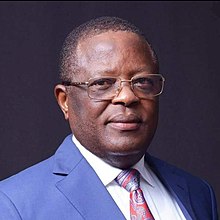
Minister of Works, Engr. David Umahi, has disclosed new details surrounding the death of Miss Mary Habila, the nurse who was found dead in a guest house within his residence in Uburu, Ebonyi State, saying she had complained of a nosebleed during a phone conversation with her boyfriend on the night before she died.
Speaking to journalists on Thursday for the first time since the incident, Umahi described the late nurse as “like a daughter” to him and appealed to her family to allow an autopsy to determine the actual cause of death.
Habila, a nurse at the David Umahi Federal University of Medical Sciences, Uburu, died on June 27, 2026, in a guest house located within the minister’s residence in Umunaga, Uburu, Ebonyi State.
Her death has generated widespread public attention and intense discussion on social media, with many Nigerians calling for a thorough investigation to establish the circumstances surrounding the incident.
Addressing reports that circulated after the incident, Umahi clarified that the deceased was a registered nurse and not a physiotherapist, as had been reported by some media organisations.
“The lady in question was like a daughter to me. She had stayed with me for three years. She was a staff of the Federal Medical University. She was a nurse and not a physiotherapist,” the minister said.
He explained that Habila and another female employee from Benue State were the only occupants of the guest house, which he stressed is separate from his personal residence.
According to Umahi, the events leading to Habila’s death began on the night before she was found dead when she spoke with her boyfriend on the telephone.
He said she informed him that she was experiencing a nosebleed.
According to the minister, the boyfriend advised her to report the development to her superior at work. Habila later told him that the bleeding had stopped.
“She told the boyfriend she was bleeding from the nose. The boyfriend advised her to report it to her boss. She later told him the bleeding had stopped.
“He then said he would end the call so she could rest. She pleaded with him not to end the conversation, but he did. About three minutes later, he called back and she was no longer answering her phone,” Umahi said.
The minister said concern grew the following morning after colleagues were unable to reach Habila on her phone despite several attempts.
According to him, they eventually forced open the door to her room and discovered her lifeless body.
“When they broke the door, they found her dead. The tap was still running. I think she wanted to have her bath,” he said.
Umahi maintained that there was no immediate indication of foul play, noting that the room had been locked from the inside and had to be forced open before Habila’s body was discovered.
He, however, stressed that only a medical examination could establish the true cause of death.
The minister disclosed that he immediately instructed his legal team to request an autopsy and insisted that the body should not be released for burial until the examination is carried out.
“We told our lawyer that an autopsy should be done. We are appealing to the parents to allow it. They said it is against their culture,” Umahi said.
He urged the family to reconsider their position, saying the autopsy would help remove speculation and provide clear medical evidence about what happened.
According to him, he also reported the matter to the Inspector-General of Police and requested that the investigation be transferred to Abuja to ensure transparency and public confidence in the outcome.
Umahi further revealed that Habila had been receiving treatment for an undisclosed health condition at the Turkish Hospital in Abuja before her death.
He said the treatment expenses had been paid by his family, adding that the last hospital bill, amounting to about N2.2 million, was settled on April 5.
The minister said all the relevant medical records are available at the hospital and could assist investigators if necessary.
Although he did not disclose the nature of the illness, Umahi suggested that the medical history could be important in determining the cause of death.
He also expressed disappointment over what he described as attempts by some individuals to politicise the incident.
According to him, the death of the young nurse should not be turned into a political issue or used to spread unverified claims.
“What baffles me is that everything becomes politics in this country. Must the minister be held responsible because somebody died in a guest house under the Ministry of Works? Is that how it works?” he asked.
Umahi also condemned what he described as false and misleading information circulating on social media regarding the circumstances of Habila’s death.
He announced that he had instructed his lawyers to begin legal action against individuals responsible for spreading what he called false allegations online.
“We are going to test the law on cyberbullying over this matter,” he said.
The minister said misinformation surrounding sensitive cases could damage reputations, mislead the public and interfere with ongoing investigations.
The death of Mary Habila has continued to attract public interest because it occurred within a property associated with a serving cabinet minister.
The incident has also renewed discussions about the need for prompt and transparent investigations into sudden deaths, particularly those involving public officials or government facilities.
The Nigeria Police Force has not yet released the outcome of its investigation into Habila’s death.
As the investigation continues, attention is expected to focus on the findings of the police and any medical examination that may eventually be conducted if the family agrees to an autopsy.
For now, Umahi insists that a scientific investigation remains the best way to establish the truth, clear public doubts and provide answers to the deceased’s family and the wider public.