
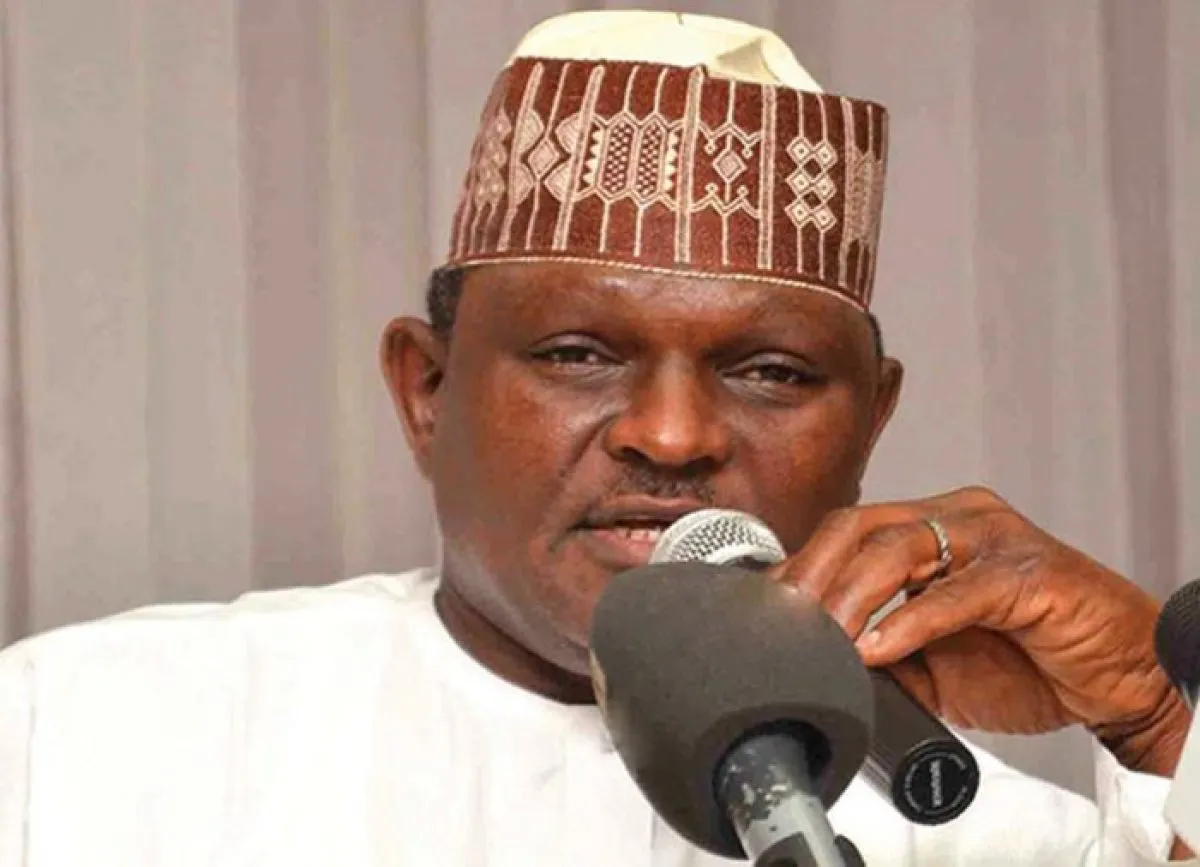
Former Chief Security Officer to the late Head of State, Gen. Sani Abacha, Maj. Hamza Al-Mustapha (retd.), has rejected claims made by former Department of State Services (DSS) operative Dennis Amachree about the final moments of the late military ruler, describing the account as false and urging Nigerians not to believe it.
Al-Mustapha spoke on Saturday while addressing journalists on the sidelines of the 3rd General Hassan Usman Katsina Memorial Conference held at Arewa House in Kaduna.
His comments followed renewed public debate over Amachree’s recently published memoir, *The Shadow Warrior*, in which the retired DSS officer gave his version of the events leading to Abacha’s sudden death on June 8, 1998.
The publication has reopened one of the most controversial chapters in Nigeria’s political history, with former officials who served under the Abacha administration offering differing views on the circumstances surrounding the late Head of State’s death.
Responding to questions from journalists, Al-Mustapha dismissed Amachree’s account, insisting that it was fabricated and did not reflect what actually happened.
“The boy was asked by others to write those lies. I have all the CCTV footage of what happened in my custody, so what he said is not true,” Al-Mustapha said.
The retired army officer maintained that he possessed evidence capable of disproving the claims made in the memoir but did not explain the nature of the alleged CCTV footage or say whether he intended to make it public.
He also appealed to Nigerians to disregard the claims, arguing that it was unfair to make allegations against someone who had died and could no longer respond.
“Just ignore his lies. It’s bad to say such things about someone who is dead,” he added.
Al-Mustapha did not provide further details about the events of June 8, 1998, nor did he directly address specific claims contained in Amachree’s book.
His remarks are the latest in a series of reactions generated by the publication, which has attracted attention because Amachree served as a senior intelligence officer during the Abacha administration and was directly involved in security operations during that period.
The retired DSS officer’s memoir reportedly offers his personal account of the final hours of the late military ruler and other events that shaped Nigeria’s political and security landscape during the 1990s.
Although the contents of the book have sparked fresh debate, several former military officers and government officials who served during the era have continued to present different versions of the events.
Abacha came to power on November 17, 1993, after seizing control of the government in a military coup that removed the Interim National Government led by Chief Ernest Shonekan.
His administration was marked by major infrastructure projects and economic policies, but it also attracted widespread criticism over allegations of human rights abuses, suppression of political opposition and restrictions on civil liberties.
During his years in office, several opposition figures, journalists and activists were arrested or detained, while international pressure mounted on Nigeria following the execution of environmental activist Ken Saro-Wiwa and eight other Ogoni leaders in 1995.
Abacha died suddenly at the Presidential Villa in Abuja on June 8, 1998, less than five years after taking power.
At the time, the Federal Government announced that the Head of State had died after a sudden illness.
However, the circumstances surrounding his death have remained a subject of speculation for nearly three decades.
Over the years, different accounts have emerged from former military officers, intelligence operatives, diplomats, journalists and political actors.
Some have maintained that Abacha died of natural causes, while others have put forward different theories based on their personal experiences or information available to them.
The absence of a universally accepted account has continued to fuel public debate, with books, interviews and documentaries regularly revisiting the issue.
Amachree’s memoir is one of the latest publications to revisit the controversial episode, leading to renewed public interest and reactions from individuals who were close to the late military ruler.
Among those responding is Al-Mustapha, who served as Abacha’s Chief Security Officer and was regarded as one of the late Head of State’s closest and most trusted aides.
Since leaving office, Al-Mustapha has consistently defended the Abacha administration against allegations made by critics, insisting that many claims about the regime have been exaggerated or politically motivated.
He has also repeatedly challenged accounts that he believes distort the actions of the former military government.
Al-Mustapha himself remains one of the most controversial figures associated with the Abacha era.
Following Abacha’s death and Nigeria’s return to civilian rule, he was arrested in 1999 and faced several criminal charges.
He stood trial over the attempted murder of newspaper publisher Alex Ibru and the murder of Kudirat Abiola, wife of the presumed winner of the June 12, 1993 presidential election, Chief Moshood Kashimawo Olawale (MKO) Abiola.
The legal proceedings lasted for more than a decade, during which Al-Mustapha remained in detention.
In July 2013, the Court of Appeal discharged and acquitted him, bringing an end to one of Nigeria’s longest and most closely watched criminal trials.
Since regaining his freedom, the retired army major has remained active in public affairs.
He has occasionally commented on national security, politics and historical issues relating to Nigeria’s military era.
His latest remarks add another perspective to the continuing debate over Abacha’s death, a subject that has remained unresolved in the minds of many Nigerians despite the passage of nearly 30 years.
For now, Al-Mustapha insists that Amachree’s account should not be believed, maintaining that the version contained in the former DSS officer’s memoir is false and unsupported by the facts as he knows them.
With the two former security officials offering sharply different accounts, the circumstances surrounding the death of Gen. Sani Abacha remain one of the most debated and controversial episodes in Nigeria’s political history.