
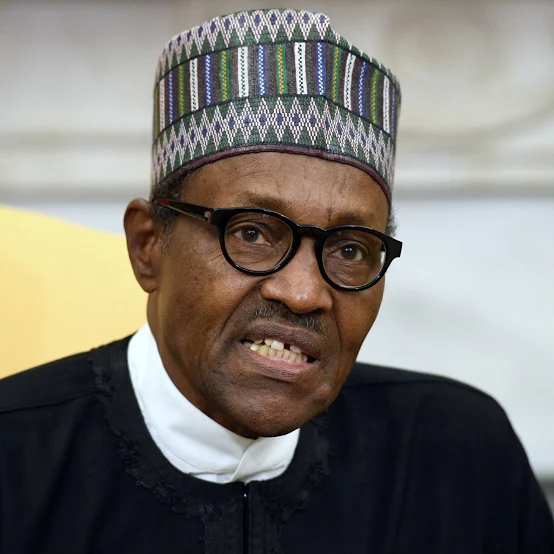
The Buhari Media Organisation (BMO) has rejected claims linking the administration of late former President Muhammadu Buhari to the controversy surrounding the alleged fake Presidential Foreign Investment Promotion Council (PFIPC), accusing the Budget Office of the Federation of making false claims before the House of Representatives.
The group said the Budget Office wrongly attempted to connect Buhari’s administration to the ongoing investigation into the controversial council, insisting that the former president only established the Presidential Economic Advisory Council (PEAC), an advisory body that operated without a statutory budget or the status of a government agency.
The BMO made its position known in a statement issued over the weekend in response to comments made by the Director-General of the Budget Office of the Federation, Tanimu Yakubu, during his appearance before the House of Representatives Ad Hoc Committee investigating the establishment and funding of the PFIPC.
The House committee is probing how the purported Presidential Foreign Investment Promotion Council allegedly secured official recognition, office accommodation and a budgetary allocation despite claims that it had no legal backing.
The investigation has already produced several revelations from top government officials, including the Accountant-General of the Federation, the Central Bank of Nigeria and the Nigeria Police Force.
Lawmakers are examining allegations that forged presidential approvals, fake State House correspondence, counterfeit Acts of the National Assembly and other falsified government documents were used to create and operate the purported council.
Appearing before the committee last week, Yakubu reportedly traced the institutional origin of the controversial body to the Presidential Economic Advisory Council inaugurated by former President Buhari on October 9, 2019.
However, the BMO described that position as inaccurate and misleading.
According to the organisation, Buhari established only the Presidential Economic Advisory Council, which functioned solely as an advisory body to provide economic policy recommendations to the President.
The group stressed that the council was never a statutory government agency and did not receive a dedicated allocation in the national budget.
“The late President Muhammadu Buhari did not create a fictitious agency known as the Presidential Foreign Investment Promotion Council or any organisation allocated ₦1.3 billion in the 2026 Appropriation Act,” the statement said.
The BMO maintained that reports suggesting the roots of the current controversy could be traced to the Buhari administration were “false, groundless and lacking any factual basis.”
The organisation explained that the PEAC was established as an ad hoc advisory body made up of respected economists and financial experts whose responsibility was to advise the President on economic policy and national development issues.
According to the statement, the council initially operated from offices allocated to the Office of the Chief Economic Adviser to the President within the Federal Secretariat.
It added that the PEAC was chaired by Professor Doyin Salami before he was later appointed Chief Economic Adviser to the President.
Professor Mahmuda Sagagi served as the council’s vice chairman, while other members included Professor Ode Ojowu, Dr. Shehu Yahaya, Dr. Iyabo Masha, Professor Chukwuma Soludo, Mr. Bismarck Rewane and Dr. Mohammed Adaya Salisu, who served as secretary.
The organisation stated that members of the council were not paid salaries for their services.
Instead, it said only office-related expenses were covered by the Presidency through approvals granted by the President and processed by the Minister of Finance.
“They were not paid salaries, but office expenses were paid by the Permanent Secretary, State House, upon approval by the President,” the statement said.
According to the BMO, the advisory council had no statutory budget throughout Buhari’s administration.
It explained that its limited operational expenses were funded through specific presidential approvals rather than annual budgetary allocations.
The organisation further argued that after President Bola Tinubu assumed office in May 2023, the Buhari-appointed advisory council was neither formally dissolved nor reconstituted.
Instead, it said members regarded their appointments as having naturally ended with the expiration of the administration that appointed them.
The BMO also claimed that the office previously occupied by the advisory council remained vacant for some time before it was later occupied by individuals linked to the organisation now under investigation.
According to the group, there is no basis for linking Buhari’s administration with the alleged fake agency currently being investigated by the House of Representatives.
“News reports saying that the ongoing comedy-drama on the alleged fictitious government agency is rooted in the Buhari administration are false, groundless and lack any factual basis,” the statement added.
The controversy surrounding the PFIPC has continued to deepen following a series of public hearings by the House committee.
During previous sessions, the Accountant-General of the Federation, Shamseldeen Ogunjimi, disclosed that a forged State House letter was used to obtain an administrative code for the purported council, although he maintained that no public funds were released to it.
Similarly, the Central Bank of Nigeria informed lawmakers that while two domiciliary accounts were opened in the name of the organisation, they never became operational because the required regulatory conditions were not met.
The Nigeria Police Force also confirmed that criminal charges bordering on conspiracy, fraud and forgery had already been filed before the Federal High Court against the prime suspect, Adeyemi Adeniyi, who allegedly presented himself as the Director-General of both the Presidential Foreign Investment Promotion Council and the Presidential Economic Advisory Council.
The House committee has also directed the Inspector-General of Police to produce Adeyemi before lawmakers as part of its ongoing investigation into the alleged forgery of official government documents and the establishment of the purported agency.