
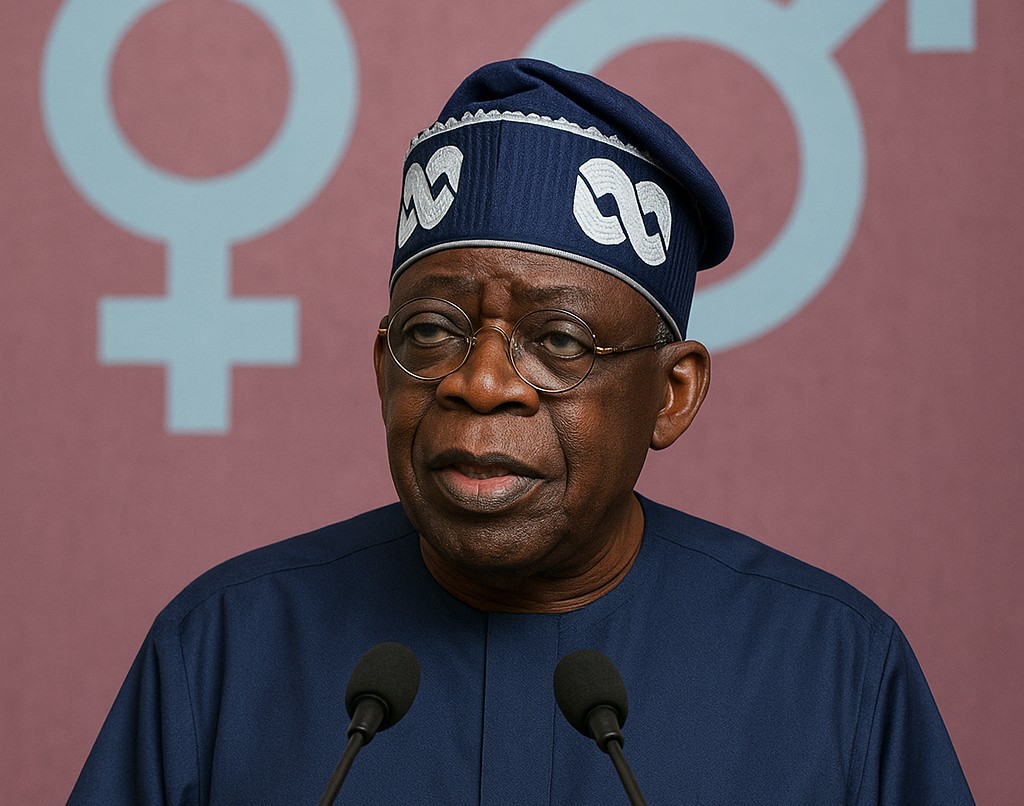
President Bola Tinubu has dissolved the Presidential Implementation Committee (PIC) on the Alienation of Federal Government Properties, ending the operations of a committee that had managed the privatisation, sale and lease of federal government properties for about 25 years.
The President also approved the immediate transfer of all the committee’s responsibilities to the Attorney-General of the Federation and Minister of Justice, Prince Lateef Fagbemi (SAN), in what the Presidency described as part of efforts to improve the management of government property matters and address long-standing legal disputes.
The decision was announced on Thursday in a statement by the Special Adviser to the President on Information and Strategy, Bayo Onanuga.
According to the statement, the dissolution took effect from November 5, 2025, while the committee’s Secretary, B. S. Dutsin-Ma, has been directed to stop acting on behalf of both the committee and the Federal Government on all matters relating to the sale and management of federal government properties.
The Presidency explained that the decision followed a review of the committee’s activities, which found that it had gone beyond the purpose for which it was originally established.
According to the statement, the expansion of the committee’s activities led to numerous legal disputes across the country, making its continued existence unnecessary.
“After careful consideration, the government has noted that the activities of the PIC had extended beyond its original mandate, resulting in multiple litigations across the country, and the continued existence of the committee is no longer justified,” the statement said.
With the committee now dissolved, the Attorney-General of the Federation will oversee all issues relating to the alienation, sale and transfer of Federal Government properties previously handled by the committee.
The move marks another administrative reform by the Tinubu administration as it seeks to streamline government agencies, eliminate overlapping responsibilities and strengthen accountability in public administration.
### Committee created under Obasanjo
The Presidential Implementation Committee was established in 2000 during the administration of former President Olusegun Obasanjo.
It was created to supervise the implementation of the Federal Government’s monetisation policy, a major public sector reform aimed at reducing the cost of governance and improving efficiency in the civil service.
Under the policy, many government-owned residential houses, office buildings and other landed assets were sold or leased instead of being maintained by the government for public officials.
The reform also extended to government vehicles and other official benefits that had traditionally been provided to civil servants.
Rather than receiving official houses and vehicles, many public officers were expected to receive allowances that would enable them to make their own arrangements.
The policy was introduced to reduce waste, cut maintenance costs and generate revenue for the government through the sale of public assets.
The Presidential Implementation Committee was therefore assigned the responsibility of supervising the disposal of those assets and ensuring that the process followed government guidelines.
Its membership reflected its national importance at the time.
The committee was chaired by the Minister of Housing and included representatives from the Federal Ministries of Transportation, Justice, Health and Agriculture, as well as the Nigeria Police Force.
Professor P. T. Ahire, then a Deputy Director in the Office of the Secretary to the Government of the Federation (SGF), served as the committee’s pioneer Secretary.
As part of the implementation process, the Federal Executive Council on March 22, 2001, approved the establishment of a Panel of Inquiry to prepare a White Paper that would guide the execution of the committee’s recommendations.
The panel spent about 21 months reviewing issues connected to the policy before submitting its report to the government.
Although the monetisation policy was regarded by many observers as one of the most important public sector reforms introduced during the Obasanjo administration, its implementation became the subject of controversy over the years.
Thousands of government houses and landed properties across the country were sold to serving and retired public officials, as well as other interested buyers.
However, many of the transactions later became the subject of disputes.
Questions were raised over the valuation of several properties, with critics alleging that some government assets were sold below their actual market value.
There were also accusations that influential political figures and senior public officials received preferential treatment during the sales process.
In many cases, unsuccessful bidders challenged the transactions in court, while some occupants of government houses also disputed ownership claims after the sales.
These disagreements led to numerous lawsuits in different parts of the country, with several cases remaining in court years after the original transactions.
The Presidency indicated that the increasing volume of litigation was one of the major reasons for dissolving the committee.
According to the government, the committee had gradually moved beyond the duties originally assigned to it, creating administrative and legal complications that no longer supported its continued operation.
By transferring its responsibilities to the Office of the Attorney-General of the Federation, the government hopes to centralise the handling of property-related matters under a constitutional office with legal authority to manage disputes involving the Federal Government.
The dissolution is also expected to reduce duplication of functions within government and align property management with the Tinubu administration’s ongoing reforms aimed at improving efficiency across ministries, departments and agencies.
While the Presidency did not indicate whether a new structure would eventually replace the committee, it made clear that all matters relating to the alienation of Federal Government properties will now be handled by the Attorney-General and Minister of Justice.