
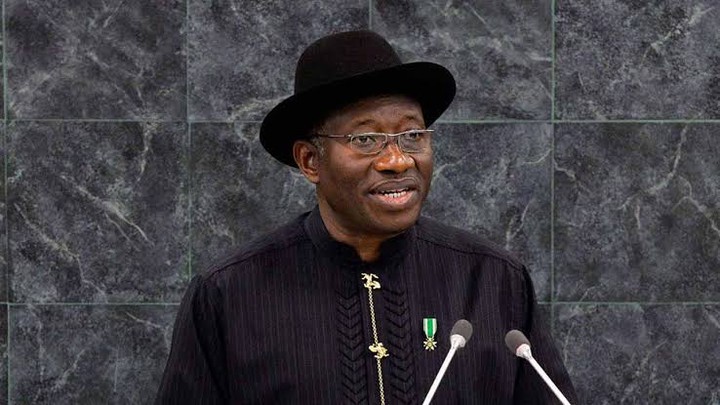
The African Policy and Research Consortium (APRC) has called on President Bola Tinubu to nominate former President Goodluck Jonathan for the position of Secretary-General of the United Nations, saying the former Nigerian leader has the experience, leadership record and international reputation needed to lead the world’s largest global organisation.
The group said Jonathan’s years in public office, his commitment to democracy and his continued involvement in peacebuilding efforts across Africa make him a strong candidate for the position when the office becomes vacant.
In a statement issued on Thursday, the Convener of the consortium, Prof. Edward Agbai, urged the Federal Government to begin the diplomatic process required to secure international support for Jonathan’s candidature.
According to Agbai, the United Nations needs a leader with practical executive experience, democratic values and the ability to handle the increasingly complex political, economic and security challenges facing the world.
He said Jonathan’s record as Nigeria’s Vice President between 2007 and 2010 and President from 2010 to 2015 showed that he possesses the leadership qualities required for the office.
“The United Nations requires a leader who understands governance, diplomacy and the importance of building consensus among nations. Former President Jonathan has demonstrated these qualities throughout his political career,” the consortium said.
The group pointed to Jonathan’s conduct during the 2015 presidential election as one of the strongest reasons he deserves international consideration.
Jonathan became the first sitting Nigerian president to concede defeat in a presidential election after losing to former President Muhammadu Buhari. His decision to accept the outcome and congratulate his opponent before the final announcement of results was widely praised both within Nigeria and abroad.
According to APRC, that action helped prevent political tension, strengthened Nigeria’s democratic system and became an example of peaceful transfer of power on the African continent.
The consortium described the move as one of Jonathan’s greatest contributions to democratic governance, saying it reflected respect for constitutional order, political stability and the will of the people.
Beyond his time in office, the group noted that Jonathan has remained active in promoting peace, democracy and good governance across Africa.
It said the former president has participated in several election observation missions, mediation efforts and conflict resolution initiatives under the African Union, the Economic Community of West African States (ECOWAS), the Common Market for Eastern and Southern Africa (COMESA), the Intergovernmental Authority on Development (IGAD) and the West African Elders Forum.
According to APRC, these assignments have earned Jonathan international recognition as a respected statesman capable of engaging political leaders through dialogue rather than confrontation.
The consortium argued that such experience is especially important for anyone seeking to become the Secretary-General of the United Nations.
The UN Secretary-General serves as the organisation’s chief administrative officer and often acts as a mediator in international conflicts, humanitarian crises and diplomatic disputes. The office also plays a major role in promoting global peace, sustainable development, climate action and cooperation among member states.
The consortium said the next occupant of the office would face difficult global challenges, including armed conflicts, economic uncertainty, climate change, migration, terrorism and growing geopolitical rivalry among major world powers.
It therefore believes that Jonathan’s experience in governing Nigeria—a country with over 200 million people and significant ethnic, religious and cultural diversity—would be valuable in handling such responsibilities.
According to the group, leading Africa’s most populous nation exposed Jonathan to many of the governance and development issues that also confront the international community.
The consortium further argued that Jonathan’s style of leadership, which it described as calm, consultative and inclusive, would be useful in building consensus among countries with different political interests.
It also said Jonathan has consistently demonstrated a willingness to engage stakeholders through dialogue and consultation, qualities considered essential for the head of the United Nations.
APRC further maintained that supporting Jonathan’s candidature would also advance Africa’s long-standing campaign for stronger representation in global institutions.
The group said Africa has continued to play an important role in international affairs but remains underrepresented in many major global decision-making bodies.
It argued that presenting a respected African statesman for one of the world’s most important diplomatic positions would help strengthen the continent’s voice on international issues.
The consortium therefore urged President Tinubu to take the lead by officially backing Jonathan and beginning consultations with African governments as well as other countries that could support the nomination.
According to the group, winning the office would require extensive diplomatic engagement and broad international backing, but every successful campaign begins with identifying a credible and widely respected candidate.
It said Nigeria should seize the opportunity to project one of its most experienced former leaders onto the global stage.
The call comes as discussions gradually begin in diplomatic circles over who could succeed the current United Nations leadership when the office eventually becomes vacant.
Under the UN Charter, the Secretary-General is appointed by the General Assembly following the recommendation of the Security Council. In practice, the process involves extensive negotiations among member states, particularly the five permanent members of the Security Council, who hold veto powers.
Regional balance also plays an important role in selecting the UN chief. Although there is no formal rotation system, many diplomats believe different regions should have opportunities to produce the Secretary-General.
Several African countries and policy groups have in recent years argued that Africa deserves greater representation in top international positions, considering the continent’s growing population and influence in global affairs.
Jonathan has remained active in international diplomacy since leaving office in 2015. He has frequently been invited to observe elections and mediate political disputes in different African countries, earning praise from regional organisations and development partners for his efforts to promote peaceful democratic processes.
While neither the Presidency nor Jonathan has officially responded to APRC’s proposal, the consortium insisted that his record of democratic leadership, regional diplomacy and commitment to peaceful conflict resolution makes him one of Africa’s strongest potential candidates for the United Nations’ highest office.