
President Bola Tinubu is expected to receive the Executive National Policing Bill for review on September 3, 2026, as the Federal Government begins a fresh round of public consultation on the proposed reform of Nigeria’s policing system.
The Presidency also announced on Monday the opening of a public information portal where Nigerians can submit memoranda and position papers to influence the final content of the bill before it is presented to the President and later transmitted to the National Assembly.
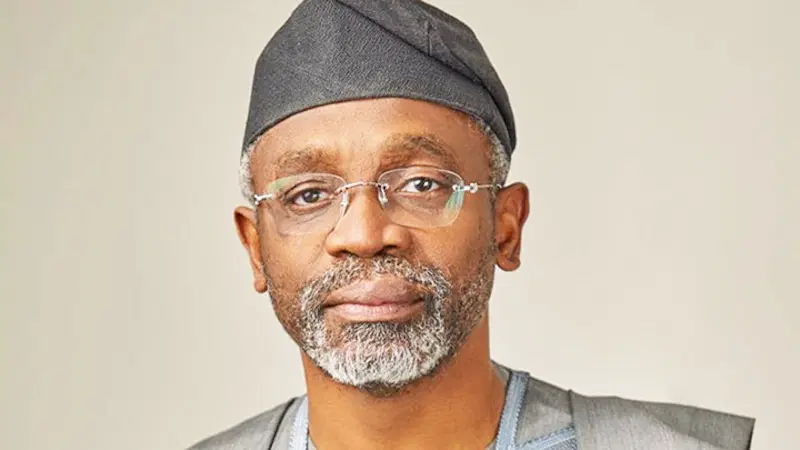
Chief of Staff to the President and Chairman of the Presidential Working Group on the National Policing Bill, Femi Gbajabiamila, disclosed this while briefing State House correspondents after a meeting of the group at the Presidential Villa, Abuja.
Gbajabiamila said the group was working under a seven-week programme designed around specific milestones and running from July 27 to September 14, 2026.
He said the Executive Bill package was scheduled to be presented to Tinubu on September 3, although the group had adjusted its process to ensure that national consultation would take place before the President gives his final approval.
“The resulting Executive Bill package is scheduled for presentation to the President on the 3rd of September,” he said.
“Subject to his approval, and I think we have tweaked that so the national consultation will come before the President’s final approval, after which the text and supporting materials will be revised and prepared for formal transmission to the National Assembly.”
According to the former Speaker of the House of Representatives, the final package will contain several documents aimed at giving the President and lawmakers a detailed picture of the proposed policing structure.
These will include schedules, an explanatory memorandum, a legal audit, a consequential-amendments matrix, a clause-by-clause analysis, a state readiness framework, a fiscal and implementation note, a validation report, a risk register and a controlled digital archive.
Gbajabiamila described the proposed reform as a major development that Nigerians had debated for many years.
“This is a monumental reform that Nigerians have debated for many years,” he said.
“Our central task now is to design a lawful, professional and sustainable federal and state policing system that places greater capability closer to the people while preserving national standards, national security and the rights of every Nigerian.”
The planned reform is expected to change the way policing is organised in Nigeria by allowing states to establish and operate their own police services, subject to the constitutional and legal requirements.
However, Gbajabiamila stressed that the constitutional process and the operational legislation were two different stages of the reform.
He said the Senate approved the state police constitutional proposal on June 24, 2026, while the House of Representatives passed the executive state police Bill on July 23.
He noted, however, that the constitutional amendment had not yet taken effect.
“The constitutional amendment is, however, not yet in force. It must obtain the approval required from the state Houses of Assembly as prescribed under the Constitution,” he said.
“Until that process is concluded, there is no operational state police service anywhere in Nigeria, and the Nigeria Police Force remains the constitutionally recognised police institution.”
The distinction is important because state police has been a major subject of debate in Nigeria for years, particularly against the background of insecurity, kidnappings, banditry and other violent crimes in different parts of the country.
Supporters of state police argue that policing closer to communities would improve intelligence gathering and response to crimes because officers would have better knowledge of local communities and their security needs.
Opponents, however, have raised concerns about the possibility of state governors or other powerful politicians using state police to harass political opponents and suppress dissent.
Gbajabiamila acknowledged the concern, insisting that the proposed system must not create 36 state militias.
“State Police cannot mean 36 state militias, just as national standards cannot become a disguised method of re-centralising day-to-day state policing,” he said.
He added that political office holders should not be allowed to use the police to settle political disputes.
“No political officeholder should be able to direct the arrest of an opponent, the suppression of lawful political activity or the selective enforcement of the law,” he said.
He also said federal intervention in state policing should only occur under clearly defined conditions.
“Federal intervention must remain exceptional, evidence-based, proportionate, time-limited and reviewable,” he added.
The Attorney-General of the Federation and Minister of Justice, Lateef Fagbemi, SAN, also warned against turning state police into an instrument of political persecution.
Fagbemi said the proposed system must have safeguards to protect citizens and ensure that policing remained focused on public safety.
“It is important that we do not make state policing a weapon of political persecution or oppression,” he said.
“There must be a minimum threshold to guarantee the continued existence and operation of the society. If you leave the door open, all sorts of situations will come in, and that will not be good enough for society.”
As part of the consultation process, the Presidency said the new public portal had gone live on Monday.
Gbajabiamila said Nigerians from different backgrounds would be able to use the platform to study the stages of the reform and submit their views directly to the working group.
“There will be a website which has gone live already, for members of the public to learn about the stages of what we’re doing, and to actually contribute and send their contributions through that platform,” he said.
“So the public is included, no matter your station in life.”
The portal is expected to remain open for about two weeks, although the working group may extend the period if necessary.
The government’s decision to seek public input is expected to give citizens, professional groups, civil society organisations, security experts, traditional institutions and other stakeholders an opportunity to make submissions before the bill is finalised.
The process comes at a time when demands for major changes to Nigeria’s policing system have grown because of the country’s security challenges.
For years, the Nigeria Police Force has remained largely centralised, with the Federal Government responsible for its overall administration. Advocates of state police have argued that the size and diversity of Nigeria make a single central police structure inadequate for dealing with local security problems.
There have also been concerns about funding, recruitment, training, command structures, accountability and the relationship between state police and the existing Nigeria Police Force.
The working group is therefore expected to address these issues in the Executive Bill and accompanying documents before they are sent to the National Assembly.
Monday’s meeting was attended by the Attorney-General of the Federation, Fagbemi; President of the Nigerian Bar Association, Afam Osigwe, SAN; Inspector-General of Police, Olatunji Disu; Chairman of the Policy Advisory Committee, Justice Mohammed Liman, retd.; and members of the working group’s technical secretariat.
The group is expected to continue its work over the coming weeks before the proposed legislation reaches Tinubu on September 3.
If approved by the President, the bill will be transmitted to the National Assembly for consideration as the country moves towards implementing a new policing structure.
For the reform to succeed, however, the government will have to balance the demand for policing closer to the people with the need to prevent political abuse and maintain national security standards.
The Presidency has now opened the process to public contributions, with the outcome of the consultation expected to shape one of the most significant security reforms in Nigeria’s recent history.