
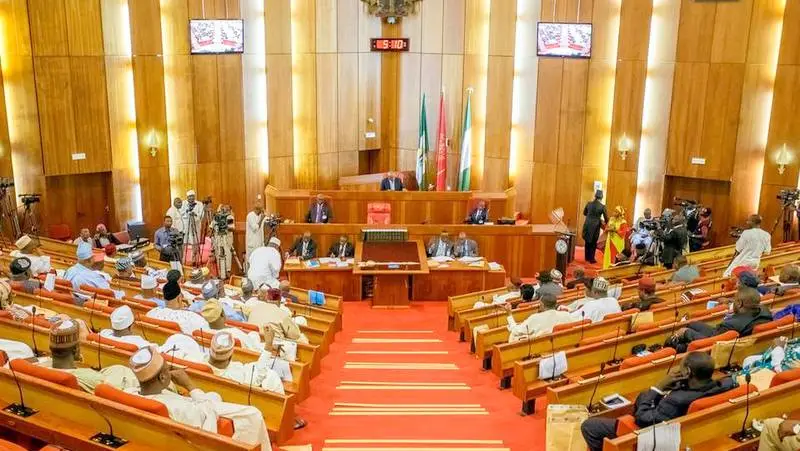
The Senate has explained why the Federal Capital Territory, FCT, will not be included in the planned state police system, saying Abuja lacks the constitutional structures required to operate its own police force.
The Chairman of the Senate Committee on Media and Publicity, Yemi Adaramodu, said the arrangement for the FCT was different from that of Nigeria’s 36 states because the territory is directly controlled by the Federal Government.
Adaramodu explained that the FCT does not have an elected governor or a State House of Assembly, which are key institutions under the proposed state police arrangement.
He said the territory is administered by a minister appointed by the President, while the National Assembly performs the legislative functions for the FCT.
The senator made the clarification in a statement issued amid growing questions over why Abuja was excluded from plans for the creation of state police.
“I have heard many people raise a lot of questions on why the Federal Capital Territory is not among the plan for state police. The FCT issue is different. It is under the Federal Government,” he said.
According to him, the absence of a governor and state legislature means the FCT cannot operate a police system similar to the one being planned for the states.
“The federal capital does not have an assembly. The National Assembly is the body that makes laws for the Federal Capital Territory.
“That’s why it has to be the same as what the Federal Government does. So, the federal police are responsible,” he added.
The explanation comes as the Federal Government moves ahead with plans to introduce state police as part of efforts to improve security and strengthen policing across the country.
President Bola Tinubu is expected to receive the draft Executive National Policing Bill on September 3. The proposed legislation is expected to provide the legal framework for the planned restructuring of policing in Nigeria.
The move towards state police followed years of calls from governors, lawmakers, traditional rulers, security experts and other stakeholders for greater local control of policing.
Supporters of state police argue that the Nigeria Police Force, which is controlled from the federal level, is overstretched and often unable to respond quickly to security threats in remote communities.
They have also argued that state governments and local communities are better placed to understand the security challenges in their areas and respond more quickly to them.
Nigeria currently operates a centralised policing system, with the Nigeria Police Force under the control of the Federal Government. State governments do not have constitutional authority to establish and control their own police forces.
The issue has, however, remained controversial, with concerns about the possible misuse of state police by governors and other political actors.
Critics have warned that state police could be used to intimidate political opponents, especially during elections, if adequate safeguards are not put in place.
Those backing the proposal have countered that proper laws, oversight mechanisms and clear limits on the powers of state authorities can reduce the risk of abuse.
The Federal Government has therefore been working on a framework intended to address both the security needs of the states and concerns about the possible abuse of local police structures.
The proposed system is expected to create a clearer division of responsibilities between federal and state security authorities while retaining a federal police structure for national duties.
The exclusion of the FCT from the planned state police system is linked to its special constitutional status.
Unlike the 36 states, the FCT is not headed by an elected governor. Instead, the President appoints a minister to oversee its administration.
The National Assembly also performs the functions of a state legislature for the territory. This arrangement is based on the special status given to Abuja as Nigeria’s federal capital.
The FCT is home to the country’s major federal institutions, including the Presidential Villa, National Assembly, Supreme Court and several ministries and security agencies.
As the seat of the Federal Government, Abuja also hosts foreign embassies, diplomatic missions and other strategic national institutions.
The Senate’s position means that policing in the FCT will remain under the federal structure even if the proposed state police system becomes law.
The development is expected to continue generating debate, particularly among residents and security stakeholders who have called for stronger local policing in Abuja.
For now, however, the Senate has maintained that the special administrative and constitutional status of the FCT makes it different from the states and leaves responsibility for policing in the territory with the Federal Government.