
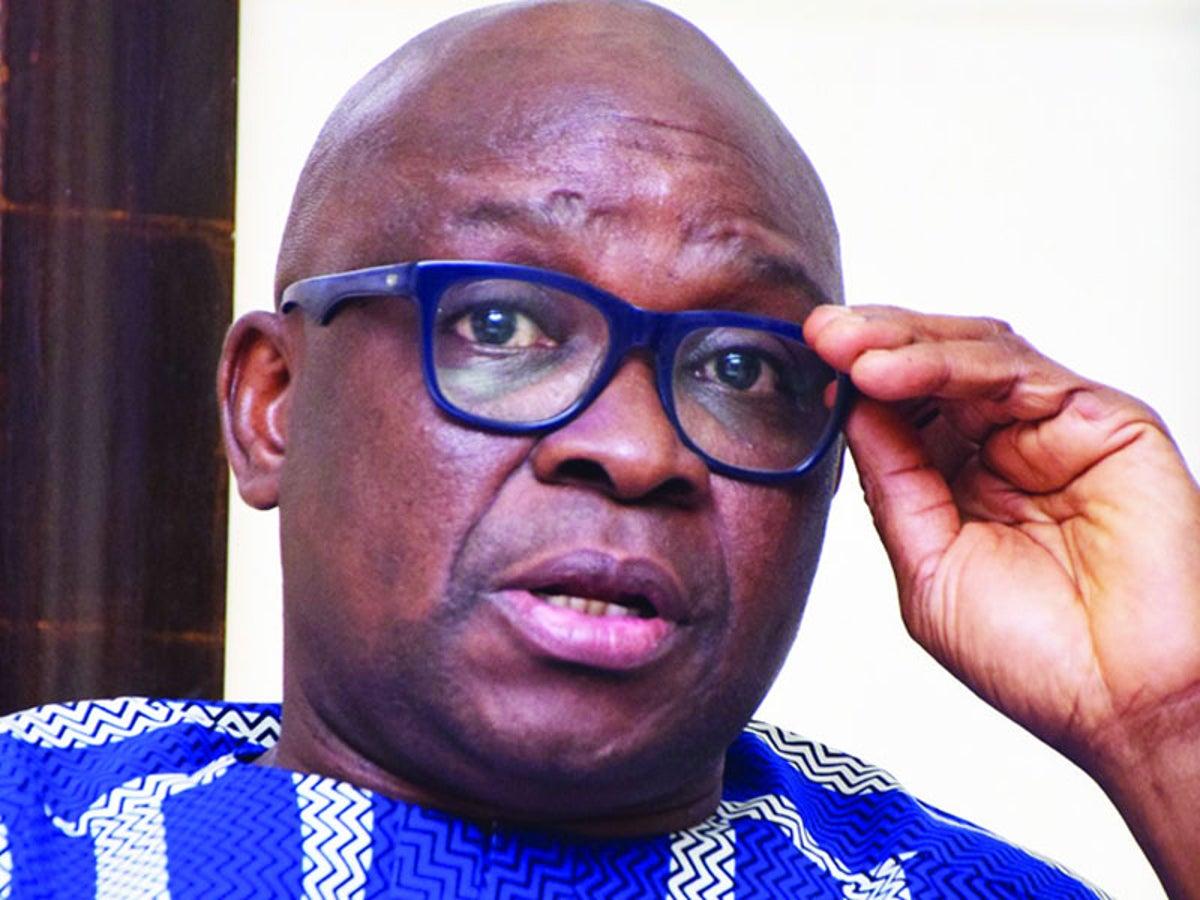
Former Ekiti State Governor, Ayodele Fayose, has linked the lack of electricity in rural communities to early bedtime, limited nightlife and what he described as rising population growth in the areas.
Fayose made the remarks on Friday in Abuja shortly after his inauguration as Chairman of the Governing Board of the Rural Electrification Agency, REA.
Speaking in a video clip, the former governor argued that the absence of electricity had restricted social and recreational activities in rural communities, leaving residents with few options for entertainment after sunset.
He said many people in rural areas had little choice but to remain at home once darkness set in, adding that the situation could contribute to population growth because of the lack of alternative recreational activities.
“Why you don’t address this issue of electricity? The people at that level have no alternative attraction. Nothing else matters to them. After 7 o’clock, it gets dark there.
“Everybody is engaging their wives. And the population simply becomes double. The simple problem is because there is lack of electricity,” Fayose said.
The former governor further argued that expanding electricity access to rural areas would change the way residents spend their evenings by creating opportunities for nightlife, entertainment and other forms of social interaction.
According to him, people would be less likely to go to bed early if their communities had reliable electricity.
“People go to bed early. Their mind is simply prepared that, well, if this is the only available recreation, let me remain here.
“But when we address this electricity, there will be nightlife. There will be recreation outside your wife,” he said.
Fayose’s comments came as he assumed responsibility for leading the REA governing board at a time when the Federal Government is seeking to expand electricity access to communities that remain outside the national power grid.
The REA is responsible for promoting electricity supply to underserved and unserved communities, particularly in rural areas where extending conventional grid infrastructure can be difficult and expensive.
The agency has been implementing various programmes aimed at using both grid and off-grid solutions to provide electricity to communities that have remained without reliable power supply.
Fayose was sworn in as chairman of the REA board alongside other members by the Minister of Power, Joseph Tegbe.
Ahmadu Abubakar and Ilyasu Makinta were also inaugurated as board members, while three other non-executive directors joined the governing board.
Abba Aliyu was formally installed as the Managing Director of the agency.
The inauguration places Fayose and other members of the board at the centre of efforts to improve rural electricity supply and support the government’s wider power sector reforms.
Nigeria has continued to struggle with inadequate electricity generation, transmission and distribution, with millions of people relying on petrol and diesel generators to power homes, businesses and public facilities.
The electricity challenge is particularly severe in many rural communities, where some residents remain completely disconnected from the national grid.
For communities without electricity, economic activities are often limited to daylight hours. Small businesses such as barbing salons, tailoring shops, food vendors, welding workshops and other enterprises that require power may struggle to operate after sunset.
The lack of electricity can also affect healthcare, education and security. Health centres in rural communities often need reliable power for lighting, refrigeration of medicines and vaccines, maternity services and basic medical equipment.
Students and other learners can also find it difficult to study at night where there is no reliable electricity.
Fayose’s remarks therefore come against the background of broader concerns about the social and economic effects of Nigeria’s electricity shortage.
The Federal Government has in recent years increased its focus on renewable energy and decentralised power systems as part of efforts to close the electricity access gap.
Solar mini-grids and other off-grid solutions have become increasingly important in communities where connecting to the national grid is either technically difficult or too expensive.
The REA has played a major role in such efforts, working with government agencies, private companies, development partners and local communities to deploy alternative electricity solutions.
The agency’s work is particularly important given the size and spread of Nigeria’s rural population.
Reliable electricity can provide rural communities with longer productive hours, improve security and create new opportunities for small businesses.
It can also support social activities and community life, including evening markets, entertainment centres, restaurants and other businesses that depend on lighting and power.
Fayose’s comments about nightlife and recreation, although delivered in a light-hearted manner, drew attention to an aspect of rural electrification that is often overlooked in policy discussions.
Electricity is generally discussed in terms of economic development, industrial growth, education, healthcare and household welfare. However, access to power also affects how people interact and use their communities after dark.
In many areas without electricity, darkness arrives early and residents reduce outdoor activities because of poor visibility and concerns about safety.
Reliable street lighting can also improve security by making roads and public spaces more visible and allowing people to move around more safely at night.
The new REA board is therefore expected to contribute to the government’s efforts to increase electricity access while ensuring that projects reach communities that need them most.
Fayose, who served as Ekiti State governor from 2014 to 2018, brings political and administrative experience to the new assignment.
His appointment also comes at a period when the government is seeking greater private-sector participation and investment in the power sector.
The success of rural electrification programmes, however, depends not only on connecting communities to electricity but also on ensuring that the supply is reliable and affordable.
Some communities that have gained access to electricity still face problems with poor supply, damaged equipment, high operating costs and difficulties in maintaining infrastructure.
For the REA, the challenge will be to ensure that new projects deliver lasting benefits rather than simply increasing the number of communities listed as having electricity access.
Fayose’s remarks have also highlighted the need to look at rural electrification from a wider social perspective.
Beyond powering homes and businesses, electricity can help transform the daily lives of rural residents by extending productive hours, improving access to information and entertainment and creating safer public spaces.
With the new board now in place, the agency is expected to strengthen its programmes and work towards reducing the number of Nigerians living without reliable electricity.
The task is significant, given the country’s long-standing power problems and the large number of communities that remain underserved.
Fayose’s central message was that electricity should not be viewed only as a means of powering homes and businesses but as a basic service capable of changing how communities live and interact.