
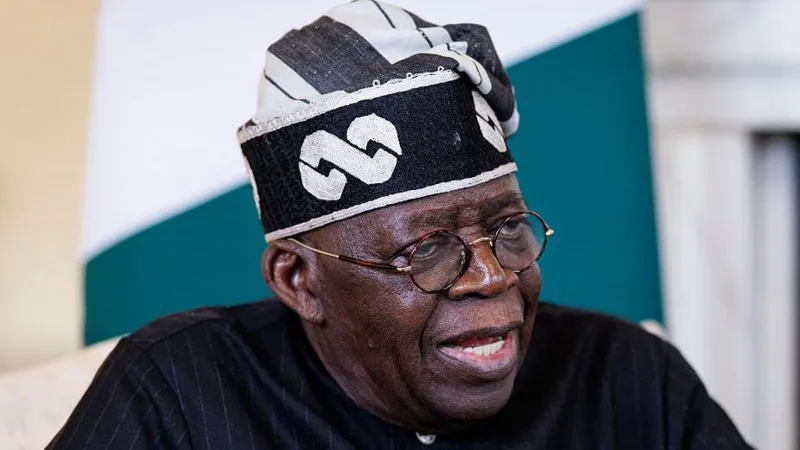
President Bola Tinubu has disclosed that 147 structures in Lagos State are expected to be affected by the construction of the service lane for the Lagos-Calabar Coastal Highway.
The President, however, said only five of the affected structures would be completely demolished, while the remaining 142 would suffer minimal impact from the project.
Tinubu made the disclosure during a stakeholders’ engagement held in Lagos alongside the flag-off of rehabilitation works on the Eko and Marine bridges and repairs to a flood-damaged section of the Lagos-Ibadan Expressway.
The President, who was represented at the event by Lagos State Governor, Babajide Sanwo-Olu, assured property owners affected by the construction that the Federal Government would pay compensation where applicable.
He appealed to residents and other stakeholders to remain patient as the process of construction and compensation progresses.
“It will be given to you at the right time,” Tinubu said.
The disclosure was made amid concerns over the possible impact of the Lagos-Calabar Coastal Highway on buildings, businesses and other properties along the route.
A representative of the AEC consortium handling the project had earlier disclosed during the engagement that 147 structures would be affected by the construction of the service lane.
The clarification from the Federal Government is expected to provide further details on the scale of demolition and other effects that property owners may face as work progresses.
Tinubu said the stakeholders’ engagement was organised to promote understanding, dialogue and cooperation between the government, contractors, communities and other parties affected by the projects.
He stressed that the success of major infrastructure projects depended not only on government funding and construction work but also on the cooperation of residents and communities.
According to him, the government would continue to welcome constructive criticism but stakeholders should also support projects that were properly planned and executed in the public interest.
The President urged Lagos residents to cooperate with the government, saying the projects were designed to improve transportation, strengthen infrastructure and create assets that would serve future generations.
“For all of us to enjoy the full benefit of infrastructure, we have to shift a bit, so that it becomes an asset that will outlive all of us,” he said.
The Lagos-Calabar Coastal Highway is one of the Federal Government’s major road projects and is intended to provide a major coastal transportation link between Lagos and other parts of the southern region.
The project has attracted significant public attention because of its size, location and the number of properties and communities along the proposed route.
The highway is also expected to improve connectivity, reduce pressure on existing roads and support economic activities along the coastal corridor when completed.
However, the construction has raised concerns among property owners and residents whose buildings and businesses are located along sections of the route.
The issue of compensation has therefore remained an important part of discussions surrounding the project, with affected owners seeking clarity on the extent of demolition and the process for receiving compensation.
Tinubu’s assurance that compensation would be provided where applicable is expected to ease some of the concerns among those whose properties may be affected.
The President also used the occasion to highlight the importance of the Eko and Marine bridges to Lagos.
He described the Eko Bridge as one of the major bridges constructed in Nigeria during the post-independence era, noting its importance to transportation in Lagos.
The bridge is a major link between parts of Lagos Island and the mainland and has for decades carried large volumes of traffic within the state.
The Marine Bridge, according to the President, is also an important access route to the Lagos seaports.
The bridge serves industrial and commercial areas and provides an important connection for the movement of people and goods around the port environment.
The rehabilitation of the two bridges is therefore expected to help improve road safety and traffic movement while extending the life of the infrastructure.
The Federal Government has also commenced repairs on a flood-damaged section of the Lagos-Ibadan Expressway, another major road linking Lagos with other parts of the country.
The Lagos-Ibadan Expressway is one of Nigeria’s busiest highways and serves as a major route for the movement of passengers, agricultural products, manufactured goods and other cargo between Lagos and states in the South-West and beyond.
Damage to the road, particularly during periods of heavy rainfall and flooding, has often contributed to traffic delays and increased travel risks.
The rehabilitation works on the bridges and expressway are part of wider efforts by the Federal Government to improve road infrastructure and address some of the transportation challenges facing Lagos and other parts of the country.
Tinubu commended the Minister of Works, David Umahi, for his efforts towards expanding and rehabilitating the nation’s road network.
He said the government was committed to infrastructure development and would continue to work with state governments and other stakeholders to deliver projects that would benefit Nigerians.
Lagos, with its large population and status as Nigeria’s commercial centre, has continued to face major transportation challenges, including traffic congestion, pressure on existing roads and the need for improved links between residential, industrial and commercial areas.
The Federal Government has in recent years increased its focus on major road and bridge projects in the state because of its importance to the national economy.
Tinubu said the government recognised that infrastructure projects could sometimes require residents and property owners to make adjustments.
He, however, stressed that such sacrifices should be viewed in the context of the long-term benefits that the projects would bring to the wider population.
The President said the government’s objective was to create infrastructure that would remain useful for many years and support economic growth.
He also reiterated that the Federal Government was open to constructive criticism from citizens and stakeholders, saying public engagement remained important in the implementation of major projects.
The stakeholders’ meeting provided an opportunity for government officials, contractors and residents to discuss the projects and their possible effects on communities.
With work continuing on the coastal highway, Eko and Marine bridges and the Lagos-Ibadan Expressway, the Federal Government is expected to maintain engagement with affected communities as construction progresses.
For property owners affected by the coastal highway, however, the key issue will remain the identification of affected structures, the extent of the impact and the timely payment of compensation.
The government’s assurance on compensation and its appeal for cooperation are expected to guide further engagement as the projects move forward.