
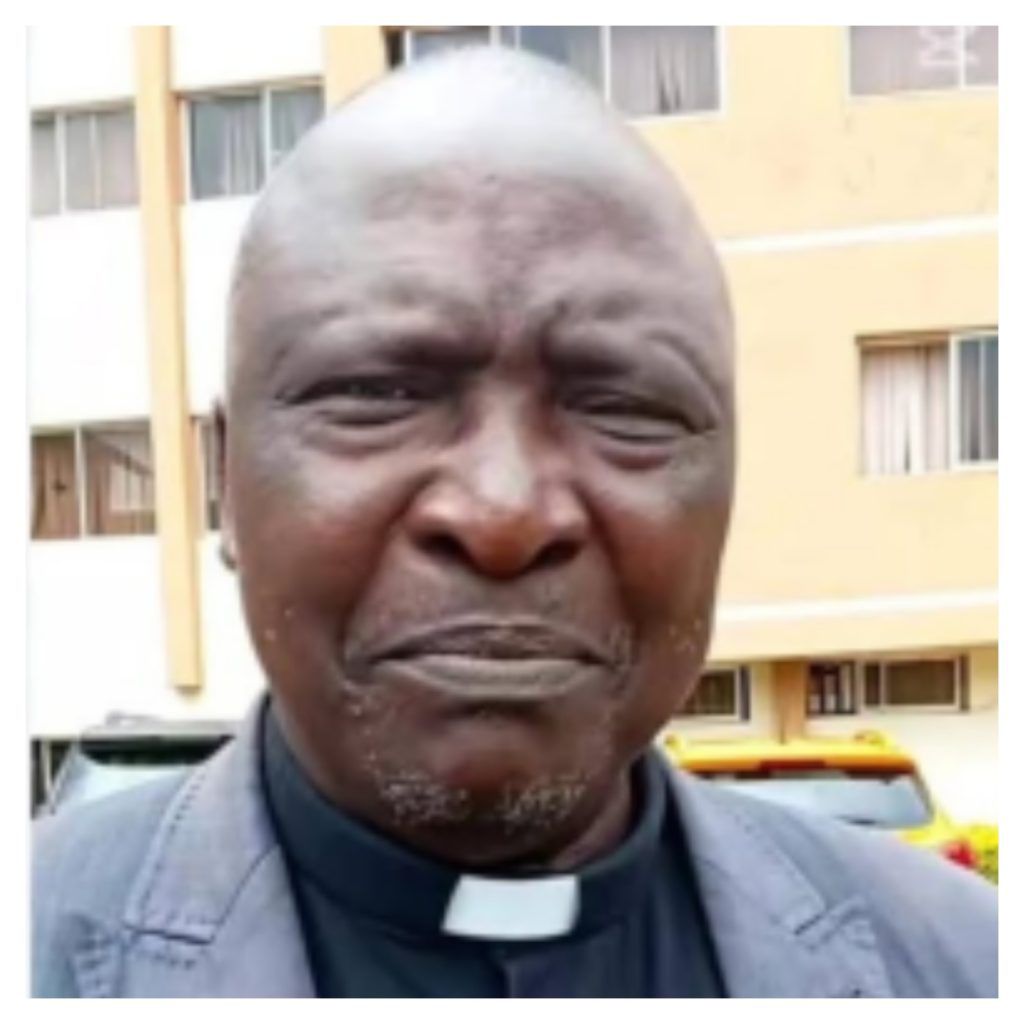
The Regional Chairman of the Church of Christ in Nations (COCIN) in Barkin Ladi Local Government Area of Plateau State, Rev. Ezekiel Dachomo, has rejected the claim by Islamic cleric, Sheikh Sani Yahaya Jingir, that Nigeria is a Muslim country.
Dachomo described the claim as wrong and warned religious leaders against making statements capable of deepening religious tension between Christians and Muslims.
Jingir, a prominent Islamic scholar based in Jos, had reportedly made the comments during a programme in Kano State over the weekend while speaking in support of the continuation of the Muslim-Muslim political arrangement in the country.
The cleric argued that Muslims constitute the majority of Nigeria’s population and should therefore have the opportunity to lead the country.
He also referred to Christians as infidels and suggested that Christians who were unhappy with a Muslim-Muslim political arrangement were free to leave the country.
The comments have attracted criticism, particularly from Christian leaders who said Nigeria belongs equally to citizens of different religious backgrounds.
Reacting in a statement on Tuesday, Dachomo said Nigeria was a multi-religious country and could not be described as belonging to one faith.
He said, “Nigeria is a multi-religious country in which Muslims and Christians have historically participated in the political process and contributed to the development of the nation.”
The COCIN leader said political leadership should not be based on religious identity or claims about which faith has the larger population.
According to him, the most important factors in choosing political leaders should be competence, justice, good governance and the ability to protect the lives and property of all Nigerians.
Dachomo said the country’s political system should provide equal opportunities for citizens regardless of their religious beliefs.
He warned that linking political leadership to religious majority could create the impression that one religious group had a greater claim to Nigeria than another.
“Linking political leadership to religious majority could create a perception that one faith has greater ownership of the country than another,” he said.
The cleric also urged Jingir and other religious leaders to be careful with their public statements, particularly when discussing politics and issues that could affect relations between religious communities.
“I urge religious leaders to be mindful of their public statements, particularly when discussing politics and issues capable of affecting relations between different religious communities,” he said.
Dachomo’s comments come against the backdrop of long-running religious and political tensions in Nigeria, where questions about power-sharing between Christians and Muslims have often featured in national debates.
Nigeria has a large Muslim and Christian population, with both faiths spread across different parts of the country. While Muslims are more concentrated in northern states, Christians have a strong presence across the North-Central, southern and parts of the northern regions.
The country has also had political leaders from both religious backgrounds since independence. At different times, political parties have fielded presidential and vice-presidential candidates from different faiths as part of efforts to achieve political balance.
The debate became particularly intense during the 2023 presidential election when the All Progressives Congress fielded Bola Tinubu, a Muslim, as its presidential candidate and Kashim Shettima, also a Muslim, as his running mate.
The decision generated strong reactions from some Christian groups and political opponents who argued that the arrangement did not reflect Nigeria’s religious diversity.
Supporters of the Muslim-Muslim ticket, however, maintained that competence and political choice should take priority over religious considerations.
The issue has remained part of the wider political debate as the country moves towards the 2027 general elections.
Jingir’s recent remarks have therefore added another dimension to the debate, with Dachomo stressing that religious identity should not be used to determine who has the right to govern Nigeria.
The COCIN leader also took exception to the suggestion that Christians should leave the country if they were unhappy with the political arrangement.
He maintained that Christians and Muslims are equally citizens of Nigeria and have the same rights and responsibilities under the Constitution.
Nigeria’s Constitution guarantees freedom of religion and prohibits discrimination on the basis of religious belief. It also provides for freedom of thought, conscience and religion, allowing citizens to practise and express their faith within the law.
Against this background, Dachomo urged religious leaders to promote peaceful coexistence instead of making statements that could increase suspicion or hostility between communities.
He said religious leaders had an important role to play in maintaining peace because their words could influence large numbers of followers.
According to him, comments suggesting that one religion owns the country could damage the relationships that have existed between Nigerians of different faiths over the years.
He called for greater focus on issues that affect the daily lives of Nigerians, including insecurity, poverty, unemployment, poor infrastructure and weak public services.
Dachomo said political leaders should be judged by their ability to address such problems rather than by their religious identity.
His position reflects the view of many Nigerians who have called for political competition to be based more on policies, competence and accountability than on religious affiliation.
The debate over religious balancing in Nigerian politics is, however, likely to continue as political parties prepare for the 2027 elections.
For Dachomo, the priority should be to protect Nigeria’s unity and ensure that no religious group feels excluded from the country.
He therefore urged religious and political leaders to avoid statements that could create divisions and instead promote tolerance and peaceful coexistence.
He maintained that Nigeria belongs to all its citizens and that no single religious group should claim ownership of the country or use religious majority as a basis for determining political leadership.