
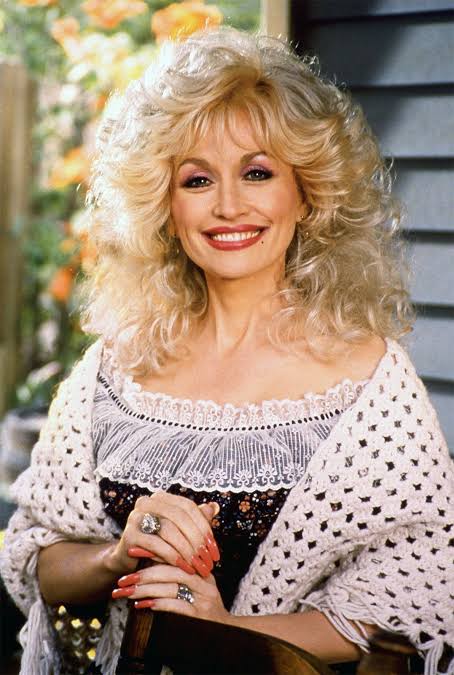
Country music icon Dolly Parton has died at the age of 80, bringing to an end the life and career of one of the most influential and successful entertainers in American music.
Parton’s death was reportedly announced by her nephew, Bryan Seaver, in a post on Instagram on Tuesday.
Seaver described the moment as one filled with both pride and deep sadness as the family mourned the singer, songwriter, actress and philanthropist who had remained a major figure in popular culture for more than six decades.
“I have imagined the heaviness of this moment but haven’t truly felt it until now,” Seaver said.
“It is an honour, an honour that is mixed with absolute pride and great sadness.”
Parton rose from a poor family in rural Tennessee to become one of the biggest names in country music. She sold more than 100 million records worldwide and earned the title “Queen of Country” through a career that produced some of the most recognisable songs in modern music.
Among her best-known songs are “Jolene”, “9 to 5” and “I Will Always Love You”. She wrote more than 3,000 songs and won 11 Grammy Awards during her career.
Her success was not limited to music. Parton also became a successful actress, businesswoman and philanthropist, building a reputation that extended far beyond the entertainment industry.
Born on January 19, 1946, Parton grew up in a two-room log cabin near the Little Pigeon River in Tennessee. She was the fourth of 12 children.
Her father, who was illiterate, worked as a sharecropper before eventually owning a small tobacco farm. Parton often spoke about her childhood and described her family as “dirt poor”.
Despite their limited means, she said her parents played important roles in shaping her life. Her mother passed on her love and knowledge of traditional folk songs, while her father taught her the value of hard work.
Music became part of Parton’s life at an early age. By the time she was 13, she had already appeared on local radio and television programmes in East Tennessee. She had also performed at the Grand Ole Opry in Nashville, one of the most important stages in country music.
That same year, she recorded her first single, “Puppy Love”.
After completing high school in 1964, Parton moved to Nashville the following day to pursue a career in music. Nashville, widely regarded as the centre of country music, became the base from which she built her remarkable career.
In 1967, she released her first album, “Hello, I’m Dolly”. That same year, she joined “The Porter Wagoner Show”, a popular weekly television programme hosted by country music star Porter Wagoner.
Wagoner became an important mentor to the young singer. The two also recorded several successful albums together, helping Parton gain national attention.
However, Parton eventually decided that she needed to establish herself as a solo performer.
In 1973, she left the professional partnership with Wagoner and wrote “I Will Always Love You” to mark their separation. The song became a major hit for Parton and later gained even greater international fame when American singer Whitney Houston recorded it for the 1992 film “The Bodyguard”.
Houston’s version became one of the best-selling singles of all time and introduced Parton’s songwriting to a new generation of listeners around the world.
Parton was also writing some of her most memorable songs during this period. “Jolene”, one of her signature songs, was released around the same period and became another defining moment in her career.
The song appeared on her 1974 album “Jolene”, which helped expand her audience beyond traditional country music.
Her 1977 album, “Here You Come Again”, became her first album to sell one million copies. It also earned her first Grammy Award after years of nominations.
Parton later expanded into acting. In 1980, she made her film debut alongside Jane Fonda and Lily Tomlin in the comedy “9 to 5”.
She also wrote and performed the film’s theme song. The song became a number one hit and earned an Academy Award nomination for Best Original Song.
The success of “9 to 5” opened another major chapter in her career. She went on to appear in films including “The Best Little Whorehouse in Texas” in 1982, “Steel Magnolias” in 1989 and “Joyful Noise” in 2012.
Away from entertainment, Parton built a business empire that included television projects, food products and Dollywood, the popular theme park in Tennessee. She acquired an interest in the park and renamed it Dollywood in 1986.
However, Parton’s influence extended beyond music, film and business.
She became widely respected for her philanthropy, particularly through the Dollywood Foundation’s Imagination Library programme, which promotes childhood literacy by providing books to children.
The programme grew into one of her most important charitable efforts and reflected her long-standing interest in helping children and families.
Parton also supported medical research, disaster relief and other charitable causes. During the COVID-19 pandemic, she donated $1 million to support vaccine research.
Her charitable work earned her the Carnegie Medal of Philanthropy in 2022.
Accepting the honour, Parton explained her approach to giving in simple terms.
“I just give from my heart. I never know what I’m going to do or why I’m gonna do it. I just see a need and if I can fill it, then I will,” she said.
Her later years were marked by health concerns. In September 2025, Parton postponed her planned Las Vegas residency after health problems became public.
She had also withdrawn from a number of public appearances in recent weeks as she dealt with ongoing health issues.
Her death comes only months after the death of her husband, Carl Dean, who died in March 2025 at the age of 82.
Parton and Dean married in 1966 and remained together for nearly 60 years. Dean largely stayed away from the public spotlight despite his wife’s international fame.
Parton’s death marks the end of an extraordinary career that began in poverty and took her to the highest levels of music, film, business and philanthropy.
For generations of fans, her songs will remain part of the soundtrack of country music and popular culture, while her charitable work has left a lasting impact on children and communities.
From a small cabin in Tennessee to international stages, Parton built a legacy that went far beyond record sales and awards. She became a symbol of determination, songwriting talent and generosity, earning a place among the most celebrated entertainers of her generation.