
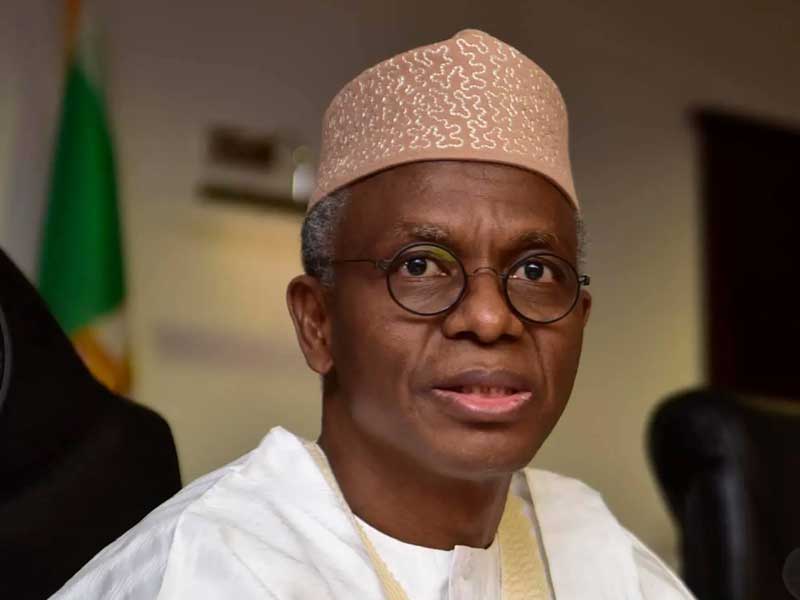
The Supreme Council for Shariah in Nigeria (SCSN) has called on the authorities to respect the rule of law in the continued detention of former Kaduna State Governor Nasir El-Rufai.
The council said it was concerned about the circumstances surrounding El-Rufai’s detention and reported difficulties in meeting the conditions attached to his bail.
In a statement issued on Monday, the Secretary-General of the SCSN, Nafiu Baba Ahmad, said the situation required the authorities to ensure that constitutional rights and due process were respected.
The council stressed that El-Rufai, like every other Nigerian, enjoys fundamental rights and remains innocent until proven guilty by a competent court.
It said Nigeria is a constitutional democracy where fair hearing, due process and lawful detention must be observed regardless of an individual’s political position, status or affiliation.
The SCSN also made it clear that its call for due process should not be interpreted as support for any alleged offences involving the former governor.
“The Council does not, under any circumstances, support or condone criminality in any form by anyone. However, the pursuit of justice must itself be just,” it said.
The council’s intervention comes as El-Rufai faces multiple legal proceedings over allegations connected to his time as governor of Kaduna State.
The former governor is currently standing trial on a nine-count amended charge filed by the Independent Corrupt Practices and Other Related Offences Commission (ICPC).
The charges include alleged abuse of office, fraud, irregular award and execution of public contracts, money laundering, conferring undue advantage and unlawful handling of public funds.
El-Rufai has denied the allegations and maintained that he did not commit the offences for which he is being prosecuted.
The former governor is also facing a separate legal case involving the Department of State Services.
The DSS filed a five-count amended charge against him over allegations linked to the unlawful recording of telephone conversations involving the National Security Adviser, Nuhu Ribadu.
The allegations and the circumstances surrounding El-Rufai’s detention have attracted political and public attention, with supporters and critics offering different views on the cases.
The SCSN said the authorities must ensure that the legal process remains transparent and in line with the Constitution.
It warned that any action perceived as arbitrary or politically motivated could damage public confidence in government institutions.
According to the council, people may lose trust in the justice system if they believe that political considerations are being allowed to influence legal proceedings.
It therefore urged government officials to avoid actions that could be interpreted as political persecution and instead demonstrate fairness and transparency.
The council’s statement reflects a wider debate in Nigeria over the treatment of politically exposed persons who face corruption or other criminal allegations.
Successive administrations have faced accusations from opposition groups and civil society organisations of using anti-corruption agencies to target political opponents.
Government officials and anti-corruption agencies have generally rejected such claims, maintaining that individuals are investigated and prosecuted based on evidence rather than political affiliation.
The SCSN did not state that the allegations against El-Rufai should be dropped.
Instead, it focused on the need for the legal process to be followed while the cases are being determined by the courts.
The principle of presumption of innocence is a key part of Nigeria’s criminal justice system.
It means that a person accused of a crime is treated as innocent until a court determines otherwise after a fair hearing.
The council said this principle must apply to everyone, including former governors and other public officials.
El-Rufai, who served as Kaduna State governor from 2015 to 2023, has remained an influential figure in Nigerian politics since leaving office.
Before becoming governor, he served as Minister of the Federal Capital Territory under former President Olusegun Obasanjo and later became one of the leading political figures associated with the All Progressives Congress.
His administration in Kaduna attracted both praise and criticism, particularly over its reforms, public sector policies and handling of security and other challenges in the state.
The current legal cases relate to allegations arising from his time in office.
The ICPC’s case centres on alleged financial and administrative offences, including allegations involving public contracts and funds.
The separate DSS case concerns allegations involving the recording of telephone conversations connected to the National Security Adviser.
El-Rufai has rejected wrongdoing in the cases.
The question of bail has also become a major part of the controversy.
Bail allows an accused person to remain out of custody while a case is being heard, subject to conditions set by the court.
Where a court grants bail, the accused is required to meet the specified conditions before release.
The SCSN expressed concern over reports that difficulties in meeting the conditions had affected El-Rufai’s continued detention.
The council urged the authorities to ensure that the process did not undermine his constitutional rights.
It also called on relevant officials to act with fairness and transparency throughout the proceedings.
The SCSN said the credibility of the justice system depends not only on prosecuting alleged wrongdoing but also on ensuring that the methods used in pursuing justice comply with the law.
It warned that failure to respect due process could weaken democratic institutions and reduce public confidence in government.
The council’s position also highlights the importance of separating opposition to criminality from support for an accused person.
It said it did not condone corruption or any other criminal conduct, but maintained that every allegation must be tested through lawful judicial procedures.
Nigeria’s Constitution provides protections for citizens facing criminal allegations, including the right to fair hearing.
These protections are intended to prevent arbitrary detention and ensure that accused persons have the opportunity to defend themselves before an independent court.
The SCSN therefore called on the government and relevant agencies to allow the courts to determine the cases based on evidence.
It urged the authorities to ensure that all proceedings involving El-Rufai complied with the Constitution and other relevant laws.
The council also advised officials to avoid conduct that could create the impression that the cases were politically motivated.
It said demonstrating fairness would strengthen rather than weaken the government’s efforts to fight corruption and other forms of criminality.
The cases involving the former governor are expected to continue as the courts consider the allegations and the legal arguments from both sides.
For now, El-Rufai remains an accused person and has denied the allegations against him.
The SCSN’s intervention has added a religious and civil society voice to the debate over his detention and bail conditions, but the final determination of the allegations remains a matter for the courts.
The council maintained that justice must be pursued without compromising the principles of justice itself.
It urged the authorities to uphold the rule of law, respect constitutional protections and ensure that El-Rufai’s cases are handled fairly, regardless of his political background or position.
The SCSN said adherence to these principles would not only protect the rights of the former governor but also strengthen public confidence in Nigeria’s democratic and judicial institutions.