
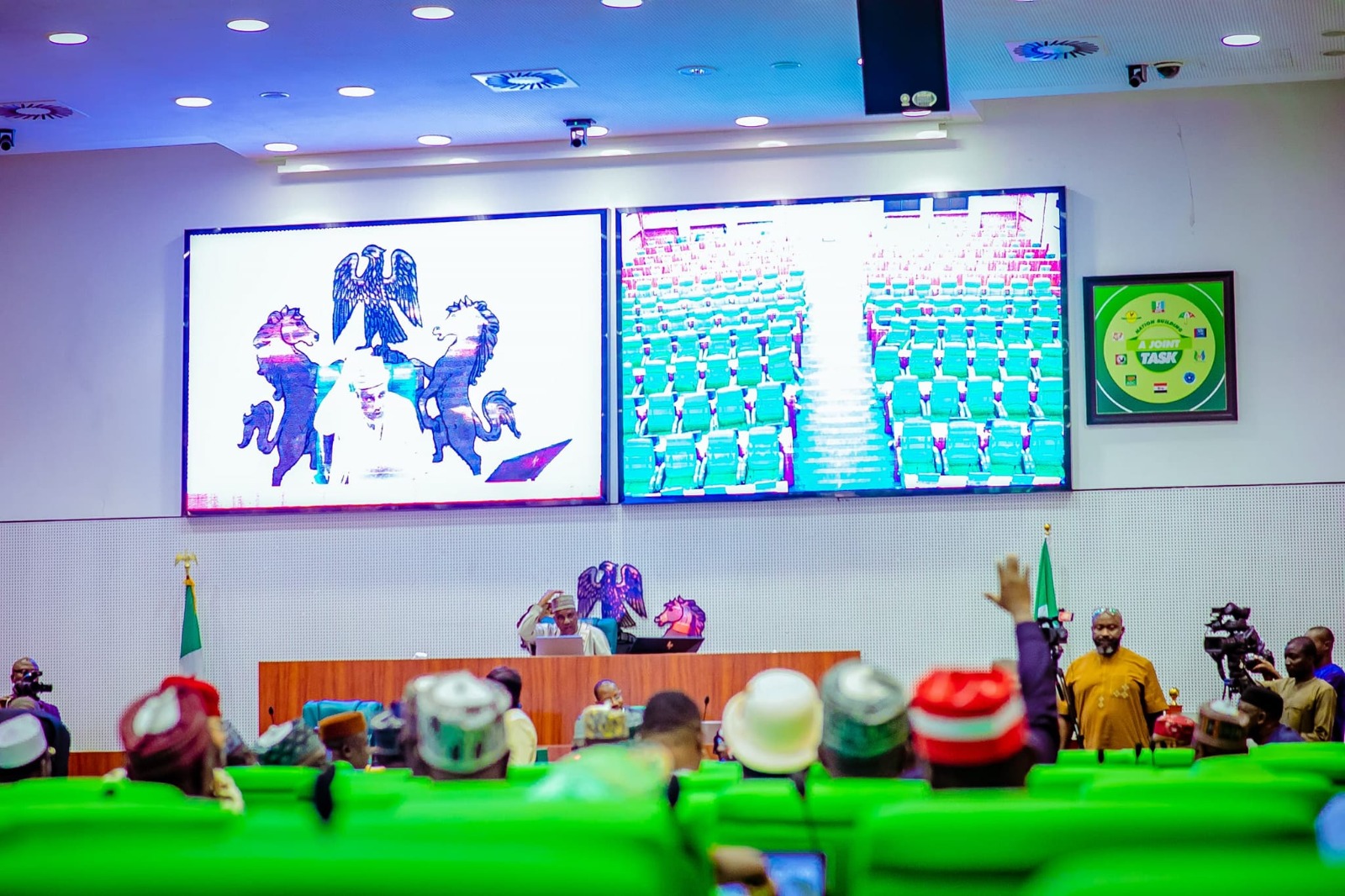
The Nigerian House of Representatives has resolved to investigate the failure of the federal government to deliver 2,000 tractors, 100 combined harvesters, and other agricultural equipment under President Bola Tinubu’s Renewed Hope Agenda.
In a dramatic move on Tuesday, members of the House expressed their concern over the non-delivery of essential farming machinery, which was promised as part of the government’s efforts to improve agricultural mechanization in the country.
In November 2023, the Federal Ministry of Agriculture and Food Security signed a landmark five-year agreement with a private company to supply these critical machines. The deal was valued at a staggering $70,041,733.80 and N2,981,739,134.30.
The agreement was hailed as a vital step toward boosting local food production and addressing Nigeria’s agricultural challenges. It was aimed at reducing food inflation, cutting foreign currency spending, and promoting self-sufficiency in agriculture by relying on locally produced equipment.
However, more than a year later, none of the promised 2,000 tractors or 100 combined harvesters have been delivered to Nigerian farmers. This failure has sparked outrage among lawmakers, agricultural stakeholders, and the general public.
Honorable Saba Adam, who raised the motion for investigation, called the situation a “setback to the Renewed Hope Agenda” and warned that it posed a major challenge to Nigeria’s quest for food security.
“The non-delivery of these tractors and implements has caused Nigeria to lose two crucial farming seasons,” he said. “This delay undermines the federal government’s efforts to boost agricultural productivity and improve food security.”
The lack of progress has raised serious questions about the accountability and effectiveness of the government’s agreements with private contractors. Nigerian farmers have long struggled with insufficient access to modern farming equipment, and the failure to deliver on this promise has only deepened their frustrations.
Agricultural mechanization is seen as key to modernizing farming in Nigeria. Without the necessary equipment, farmers rely on outdated and inefficient methods that hinder productivity. The government’s failure to deliver the tractors is thus not just a bureaucratic issue; it directly impacts the livelihoods of millions of Nigerians who depend on agriculture for their sustenance.
The House of Representatives has expressed its intention to hold those responsible accountable. The speaker of the House adopted the motion and instructed the Committee on Agricultural Production and Services to conduct a full investigation into the matter. The committee is expected to report back within four weeks.
The investigation is expected to examine the reasons for the delays, the terms of the contract, and the performance of the private company contracted to supply the machinery. Lawmakers have vowed to ensure that the federal government takes action to fulfill its promise to the nation’s farmers.
“This is a matter of national importance,” said Honorable Saba Adam. “We cannot afford to let this issue slide, especially when it directly affects the agricultural sector and the well-being of our people.”
The failure to deliver the tractors and other agricultural equipment is not just an isolated incident. It highlights broader concerns about the government’s ability to execute large-scale projects and deliver on promises made to Nigerians.
Many Nigerians are now asking whether the government’s ambitious plans to boost agriculture are simply empty promises or if they will ever come to fruition. The outcome of the investigation will be crucial in determining the future of the Renewed Hope Agenda and the government’s commitment to improving food security in Nigeria.
As the committee begins its work, there are growing calls for transparency and accountability. Nigerian farmers, who have long struggled with inadequate infrastructure and resources, are watching closely to see whether the government will finally make good on its promises or continue to leave them in the lurch.
The failure to deliver the promised equipment is a blow to President Tinubu’s Renewed Hope Agenda, which had been marketed as a new era for Nigeria’s agricultural sector. For now, the clock is ticking, and the pressure is mounting on the government to act quickly before further damage is done to Nigeria’s agricultural ambitions.
The Federal Ministry of Agriculture and Food Security’s deal with the private company was meant to deliver 2,000 tractors, 100 combined harvesters, and other agricultural implements annually over five years. This initiative was designed to support Nigeria’s agriculture sector and promote mechanized farming, which is essential for improving food production and reducing the country’s reliance on foreign imports.