
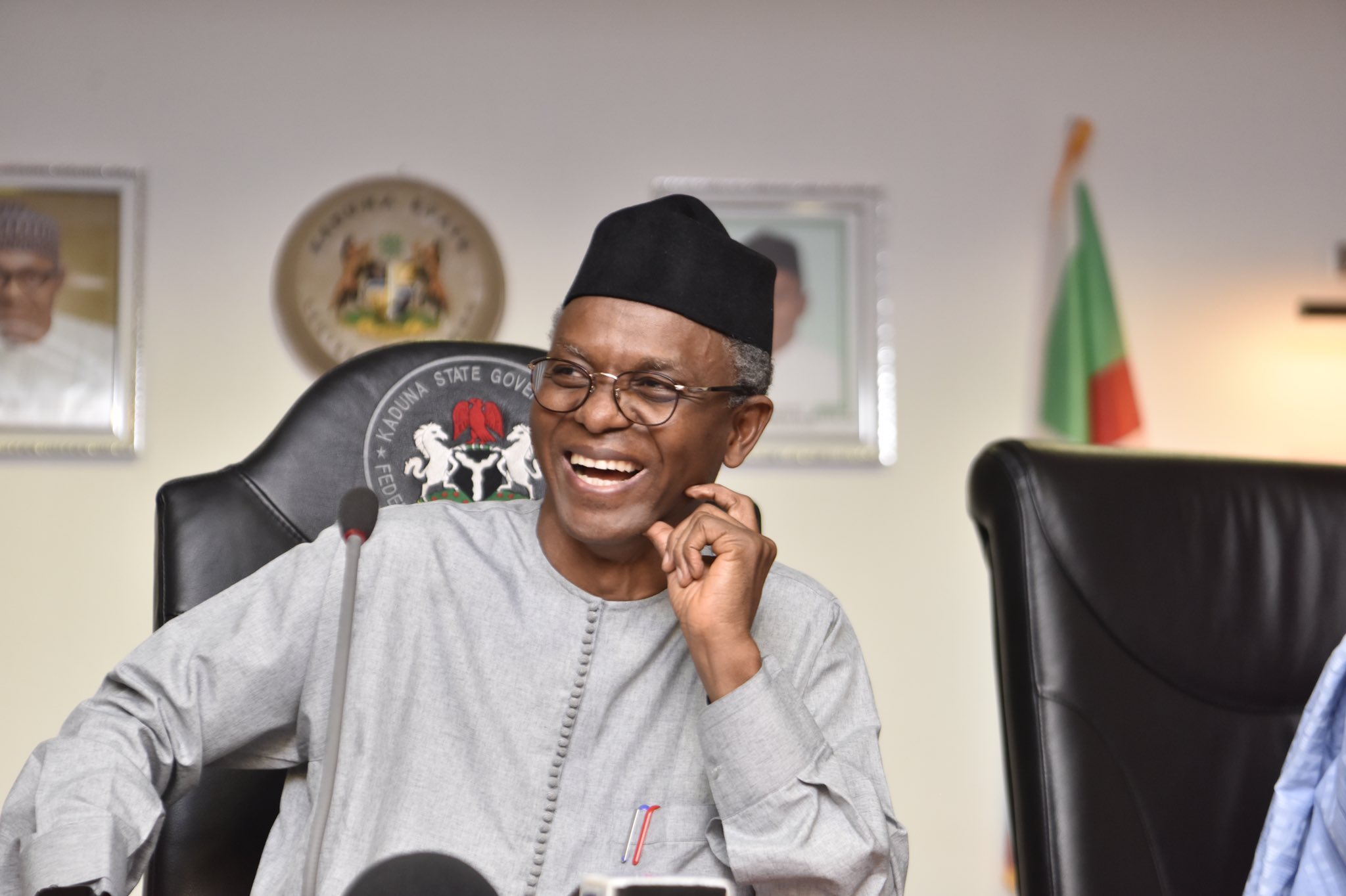
Former Kaduna State Governor, Nasir El-Rufai, has launched a blistering attack on the All Progressives Congress (APC), accusing the party of abandoning its founding principles and fostering poor leadership in the country.
Former Kaduna State Governor, Nasir El-Rufai, has sparked a fresh wave of controversy with scathing remarks about the state of governance in Nigeria and the current leadership within the All Progressives Congress (APC). El-Rufai, known for his outspoken nature, described the party as being in a state of disarray, having “abandoned its ideals,” and criticized its leadership structure as being utterly dysfunctional.
Speaking at a national conference in Abuja on strengthening democracy in Nigeria, El-Rufai painted a grim picture of the APC, calling the situation a “national emergency.” According to the former governor, the party’s internal democracy has all but collapsed, with party structures failing to meet for over two years.
“I no longer recognize the APC,” El-Rufai declared to an attentive crowd. “No party organ has met in two years—no caucus, no NEC, nothing. You don’t even know if it is a one-man show; it’s a zero-man show,” he added.
El-Rufai’s comments are a significant blow to the APC, as he was once one of its most prominent figures. His criticisms reflect a growing disenchantment within the party, where many of its founding principles, including the fight against corruption and efforts to rebuild Nigeria’s economy and security, seem to have been sidelined.
At the heart of El-Rufai’s concerns is what he calls a “lack of quality leadership” in the APC, a direct result of the party’s failure to ensure competent and qualified delegates and candidates. “You cannot afford to have illiterates, semi-illiterates, and cunning people as your leaders. This is why we end up with the poor leadership we have today,” he stated, underscoring the detrimental effects of low standards in political leadership.
The APC’s Shifting Ideals and Declining Morale
El-Rufai’s frustrations echo the sentiment of many Nigerians who feel that the APC, once a beacon of hope for democratic change, has lost its way. The party was originally founded on the promise of tackling Nigeria’s corruption crisis, improving the economy, and addressing the nation’s security challenges. However, the former governor now believes the party is no longer interested in addressing these foundational issues.
“The problems that led to the creation of the APC remain unresolved, but I no longer believe the APC is interested in addressing them. The distance between me and the party is widening,” El-Rufai admitted, reflecting his growing disillusionment.
The former governor’s remarks are a significant indictment of the current state of Nigerian politics, where internal party crises, lack of direction, and unqualified leadership have become commonplace. This crisis is not only affecting the ruling APC but also the opposition parties, which El-Rufai believes are equally embroiled in a leadership struggle that threatens the country’s democratic stability.
The Deterioration of Nigerian Democracy
El-Rufai’s statements came amid his ongoing concerns about the state of Nigeria’s democracy. He pointed to alarming signs of political stagnation, citing a recent poll that suggested a staggering 75% of registered voters might abstain from the 2027 elections. This, he warned, could lead to a grave crisis for Nigeria, especially given the country’s history of military rule.
“This is dangerous. For those of us who lived half our lives under military rule, we know what it is. We don’t want military rule, but we also don’t want civilians behaving like the military in their babbar riga and suits,” El-Rufai remarked, referring to the possibility of civilian leaders becoming more authoritarian in the absence of strong democratic institutions.
El-Rufai’s comments have struck a chord with many Nigerians who fear the erosion of democratic values in the face of political instability. His call for urgent action to safeguard Nigeria’s democracy resonates in a time when political polarization and disenfranchisement are widespread.
A Call for Unity Among Opposition Parties
Not one to hold back on his opinions, El-Rufai also directed his ire at Nigeria’s opposition parties. He accused them of being plagued by internal sabotage and infighting, which he believes is undermining their ability to mount a serious challenge to the APC in future elections.
“There are internal mercenaries in the PDP, hired and motivated to destroy the party. The Labour Party is also facing similar issues. Peter Obi himself told me, ‘I don’t know what’s happening in the party I contested with,’” El-Rufai revealed, indicating that the leadership crises within opposition parties are as severe as those within the ruling APC.
The former governor’s call for unity among opposition parties is clear: to protect Nigeria’s democracy, opposition forces must come together and form a broad coalition to challenge the APC and its leadership. However, this remains a difficult task, as El-Rufai acknowledges the deep divisions within the country’s political landscape.
The Growing Divide: El-Rufai’s Distant Relationship with APC
As El-Rufai’s discontent with the APC becomes more evident, it is clear that his relationship with the party has undergone a significant transformation. Once considered one of the party’s key architects, El-Rufai has now distanced himself from the APC, expressing a deep sense of frustration with its leadership and failure to address the issues that once drove its creation.
“The distance between me and the party is widening,” El-Rufai remarked, underscoring his dissatisfaction with the current state of the APC. His candid statements serve as a warning to the party, which risks alienating its own founding members and losing its credibility as a political force in Nigeria.
A Plea for Action: “This Is a National Emergency”
El-Rufai’s final message was a stark call to action for all Nigerians to take the country’s political crisis seriously. In his view, Nigeria’s democratic survival is at stake, and urgent steps must be taken to avert a repeat of the country’s turbulent past.
“This is a national emergency, and we must act before history repeats itself,” he concluded, leaving his audience with a clear message: Nigeria must rise above its current political malaise and safeguard the future of its democracy.