
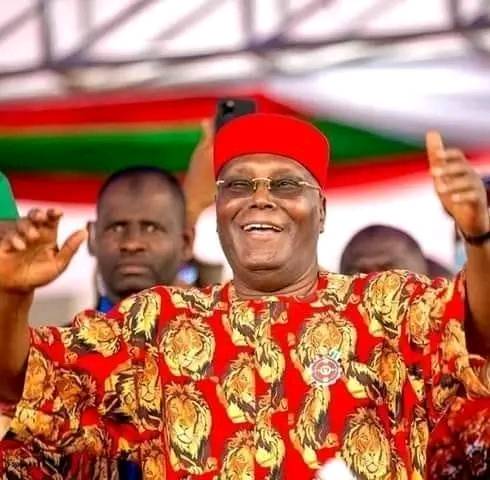
Former Vice President Atiku Abubakar has launched a scathing attack on the administration of President Bola Tinubu, accusing it of suppressing dissent and laying the groundwork for a one-party autocracy in Nigeria. Atiku’s comments came in response to the recent prosecution of Omoyele Sowore, the outspoken publisher of Sahara Reporters, and the detention of Professor Usman Yusuf, a former Executive Secretary of the National Health Insurance Scheme (NHIS).
In a tweet on January 30, 2025, Atiku condemned the arrest of Professor Yusuf by the Economic and Financial Crimes Commission (EFCC), calling it part of a broader pattern of “systematic harassment” of critics and opposition figures. Yusuf, who was detained on January 28, 2025, over alleged involvement in a N4 billion fraud scandal, has long been an outspoken critic of the government’s policies.
“The arrest and baseless prosecution of Omoyele Sowore is the latest chapter in this unrelenting campaign,” Atiku wrote, expressing concern about the direction in which the current administration is heading. “Now, they have seen fit to add Professor Usman Yusuf—an outspoken critic of this administration—into their grim roster. At the pace they are going, it seems they may soon find themselves contending with the incarceration of every one of us.”
Atiku’s statement came as part of a broader condemnation of what he believes is the ruling All Progressives Congress (APC) party’s plan to stifle political opposition and solidify its hold on power. The former presidential candidate argued that the government’s actions represent an attempt to dismantle opposition parties and prevent any form of political challenge in the upcoming 2027 elections.
“Criticism of this government is being criminalized,” Atiku continued in his post. “They have now turned their attention to the media, to civil society, and to anyone who dares to speak out against the administration’s policies. It is only a matter of time before those of us who stand in opposition will face similar treatment.”
Atiku’s comments echo earlier warnings he made regarding the APC’s alleged efforts to destroy opposition parties ahead of the 2027 elections. He recently claimed during a national conference that the ruling party had attempted to bribe opposition leaders with N50 million to destabilize their parties and weaken their influence. This claim has drawn sharp criticism from opposition parties, including the Labour Party and the All Progressives Grand Alliance (APGA), who have demanded that Atiku provide evidence to back up his allegations.
“The APC has been playing dirty politics to ensure that no viable opposition remains,” Atiku said during his speech at the conference. “They are using their control over the state apparatus to weaken the opposition and ensure a one-party system in Nigeria. This is not democracy. This is dictatorship in the making.”
In response to these accusations, the APC has dismissed Atiku’s claims as unfounded and politically motivated. A senior party official, speaking on condition of anonymity, described Atiku’s remarks as “mere political grandstanding” intended to garner support from opposition members.
“Atiku and the PDP have nothing to offer Nigeria but divisiveness and false accusations,” the APC official said. “The Tinubu administration is focused on good governance, not on persecuting opposition figures. These claims are part of the usual rhetoric from a man who has lost political relevance.”
However, Atiku’s warning about the possible consequences of a lack of political opposition has resonated with many Nigerians, particularly those concerned about the health of the country’s democracy. Several civil society groups have expressed alarm over the increasing number of arrests and prosecutions of government critics.
Atiku’s warning that “they may soon imprison us all” is not the first time he has expressed concern about the state of Nigeria’s democracy under President Tinubu. In previous speeches, he has criticized the government for what he perceives as increasing authoritarianism and the erosion of the country’s democratic institutions.
“The events we are witnessing today are a direct result of the APC’s desire to create a one-party state,” Atiku said in a recent public statement. “They want to control every aspect of Nigeria’s political landscape, from the media to the judiciary to the opposition parties. If we do not stand up now, we may find ourselves in a situation where freedom of speech is no longer protected.”
Despite the harsh criticisms, President Tinubu’s administration has remained steadfast in its defense of the government’s actions, including the prosecution of Sowore and the arrest of Professor Yusuf. The president’s spokesperson, while declining to comment on the specific allegations made by Atiku, insisted that the government is committed to upholding the rule of law and tackling corruption wherever it is found.
As tensions between the ruling party and opposition continue to rise, many Nigerians are watching closely to see whether Atiku’s warnings about the erosion of democratic freedoms will come to fruition. The coming months may prove crucial in determining the future of political opposition in Nigeria and the balance of power in the lead-up to the 2027 general elections.