
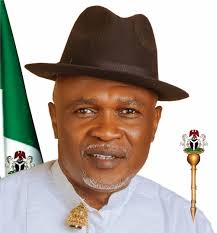
The political atmosphere in Rivers State took a dramatic turn after the ruling All Progressives Congress (APC) selected House of Representatives Minority Leader, Hon. Kingsley Chinda, as its governorship candidate for the 2027 election, setting the stage for what many observers believe will be one of the fiercest political contests in the state in recent years.
Chinda’s emergence followed days of consultations, internal party moves and withdrawals by some key political figures, developments that changed the shape of the governorship race and strengthened his position within the party. His selection has already sparked reactions across Rivers politics, with supporters describing him as experienced and capable, while critics insist the road to Government House will still be tough.
The Rivers political environment has remained tense and unpredictable over the last few years, especially after the fallout between Governor Siminalayi Fubara and former governor and Minister of the Federal Capital Territory, Nyesom Wike. That disagreement changed political alliances in the oil-rich state and caused deep divisions among political camps.
For many political watchers, Chinda’s emergence reflects the growing influence of a political structure linked to Wike, who remains one of the most powerful figures in Rivers politics despite serving outside the state government. Although the minister did not publicly declare support for any candidate at the early stage of the process, political observers had repeatedly linked Chinda to his political camp because of their long-standing relationship.
Before becoming the APC governorship candidate, Chinda had already attracted attention after successfully passing the party’s screening process for the governorship race. His appearance before the APC panel generated public discussion because he had been widely known as a major figure in opposition politics and a prominent lawmaker representing Obio/Akpor Federal Constituency. His movement into the governorship contest further increased speculation about shifting political alliances in Rivers State.
His emergence did not happen without major political changes. Governor Fubara, who had earlier shown interest in the governorship race under the APC platform, eventually withdrew from the contest. In a statement announcing his withdrawal, the governor said his decision was taken after careful reflection and consultations, stressing that peace and unity in Rivers State were more important than personal ambition.
Shortly after the governor stepped aside, another major aspirant, Alabo George-Kelly, also withdrew from the race. Former governorship candidate Tonye Cole had equally pulled out earlier, leaving the political path clearer for Chinda to emerge as the party’s preferred candidate. These withdrawals significantly altered the political equation within the APC and removed major obstacles standing in his way.
Chinda is not new to politics in Rivers State. Over the years, he has built a reputation as a vocal lawmaker at the National Assembly and has remained active in state political matters. As Minority Leader in the House of Representatives, he gained national attention for his role in legislative debates and oversight functions.
Supporters believe his experience at the federal level gives him an advantage, especially at a time when Rivers State faces economic, environmental and security concerns. They argue that his background in lawmaking may help him negotiate better deals for the state and improve governance if elected.
However, critics say winning the APC ticket is only the first step in a difficult political journey. Rivers politics has traditionally been highly competitive, and governorship elections in the state are often shaped by strong grassroots mobilisation, local alliances and political loyalty.
Political analysts believe the 2027 election could become a battle of influence between old political allies and emerging power blocs. While Chinda may enjoy backing from established political structures, opposition forces are expected to regroup and present strong alternatives before the general election.
The political situation in Rivers has remained unstable since the conflict between Fubara and Wike became public. Their disagreement led to divisions within political institutions, tension among supporters and concerns about governance in the state. Though several peace efforts have been discussed, political observers say the relationship between both camps remains fragile.
For ordinary residents of Rivers State, the focus remains on governance and development rather than political rivalry. Many citizens continue to complain about unemployment, rising living costs, insecurity in some riverine communities and environmental problems linked to oil exploration.
Community leaders have repeatedly urged politicians to avoid violence and focus on issues affecting the people. Rivers remains one of Nigeria’s biggest oil-producing states and plays an important role in the country’s economy. Because of this, every governorship election in the state usually attracts national attention.
The emergence of Chinda is already reshaping political discussions across Rivers. Political groups have started consultations, while stakeholders are quietly positioning themselves for alliances ahead of the election season.
Within the APC, party loyalists believe the candidate can unite different political interests and strengthen the party’s chances. But others warn that internal divisions could still create challenges if not properly managed.
Observers also point out that Rivers politics has a history of surprises. Candidates considered strong at the beginning have sometimes struggled during campaigns, while unexpected alliances have changed election outcomes.
For now, Chinda appears focused on consolidating support and preparing for the next phase of the political journey. His supporters see his emergence as proof that patience and political experience still matter in Nigeria’s democratic process.
Yet, the bigger contest lies ahead. With campaigns expected to gather momentum in the coming months, Rivers State may once again become one of Nigeria’s most closely watched political battlegrounds.
As political actors continue to make moves behind closed doors, many residents are waiting to see whether the coming election will bring unity and development or deepen divisions in a state already marked by intense political rivalry.