
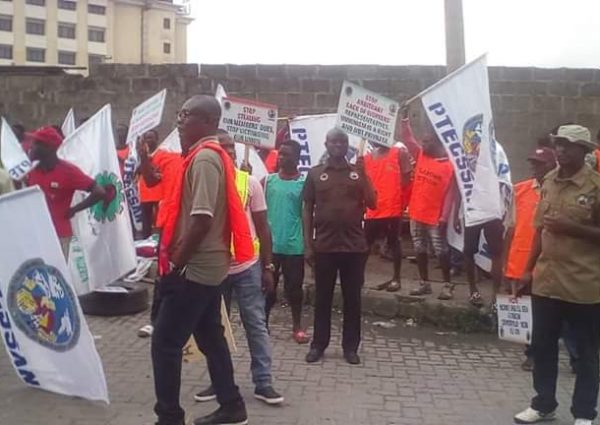
The planned nationwide protest by the Nigeria Labour Congress (NLC) against the recent 50% increase in telecommunications tariffs has sparked division within the labour movement, as telecoms workers have openly rejected the action.
The Private Telecommunications and Communications Senior Staff Association of Nigeria (PTECSSAN), the body representing workers in the telecom industry, has strongly opposed the protest, arguing that the tariff hike is a necessary move to prevent the collapse of the sector.
In a letter dated January 27, 2025, addressed to the NLC leadership, PTECSSAN’s General Secretary, Okonu Abdullahi, expressed disappointment over the decision to mobilize for a protest without prior consultation with key industry stakeholders.
Economic Pressures Pushing the Telecom Industry to the Brink
The NLC had earlier condemned the tariff hike, describing it as an additional financial burden on Nigerians who are already struggling with the rising cost of living. The union subsequently directed its affiliate organizations to mobilize members for a nationwide protest set for February 4, 2025.
However, telecom workers argue that the increase is unavoidable due to the overwhelming economic pressures facing the industry. They highlighted the sharp rise in operational costs, which have been worsened by the removal of fuel subsidies, escalating diesel prices, and a weakening naira.
“The telecom industry cannot continue to bear the brunt of these economic realities without adjusting pricing structures,” Abdullahi stated. “If the current situation persists, it will only be a matter of time before service providers begin shedding services, leading to network failures and communication breakdowns.”
According to PTECSSAN, diesel, which is essential for powering telecom base stations, has seen a drastic price increase from N842.25 per litre in May 2023 to an average of N1,441.28 as of January 2025. Petrol prices have also surged from N198 per litre to over N1,030, significantly increasing the cost of maintaining and servicing telecom infrastructure across the country.
Exchange Rate Woes and Rising Maintenance Costs
Another critical factor behind the tariff increase is the skyrocketing cost of foreign exchange. Telecom operators rely heavily on imported equipment to maintain and expand their networks, but the drastic depreciation of the naira has made this increasingly unaffordable.
In May 2023, the exchange rate stood at N460 to $1. By January 2025, it had plummeted to around N1,700 to $1. This sharp devaluation has placed immense financial pressure on telecom companies, forcing them to find ways to remain operational.
PTECSSAN warned that if telecom operators are unable to cover their costs, they may be left with no choice but to cut back on services, leading to massive disruptions in communication. Such an outcome, the union noted, would have ripple effects on critical sectors such as banking, security, and emergency services, which all rely heavily on telecommunications infrastructure.
Implications for Jobs and Workers’ Welfare
Beyond the operational challenges, PTECSSAN also expressed concerns about the welfare of telecom workers. The union pointed out that while other industries have adjusted salaries in line with the new minimum wage, telecoms workers have been left behind due to the financial struggles of their employers.
“The inability of telecom firms to keep up with rising operational expenses has made it difficult for them to increase salaries,” the union stated. “This has left thousands of workers vulnerable, and if the situation worsens, companies may be forced to downsize.”
Abdullahi further emphasized that PTECSSAN does not want to see telecom workers losing their jobs due to an unsustainable business environment. “If this situation continues unchecked, employers will resort to job cuts, and we are sure that neither the NLC nor the Congress leadership would want that,” he warned.
Labour Division: A House Divided Against Itself?
The growing disagreement between the NLC and PTECSSAN has exposed underlying tensions within the labour movement. While the NLC insists that the tariff hike is an unfair burden on Nigerians, telecom workers argue that opposing it without considering the broader economic realities is shortsighted.
Critics fear that the division could weaken labour’s collective bargaining power at a time when workers across different industries are struggling with inflation, high utility costs, and economic instability. Some observers have also pointed out that the NLC’s failure to consult PTECSSAN before announcing the protest could be seen as a lack of coordination within the labour movement.
A telecommunications analyst, Adebayo Olatunji, weighed in on the dispute, noting that while consumers will naturally resist price increases, the realities of the industry cannot be ignored.
“There is no doubt that Nigerians are struggling under the weight of inflation and rising living costs, but if telecom operators cannot sustain their operations, the long-term consequences will be far worse,” Olatunji said. “It is a delicate situation that requires dialogue, not division.”