
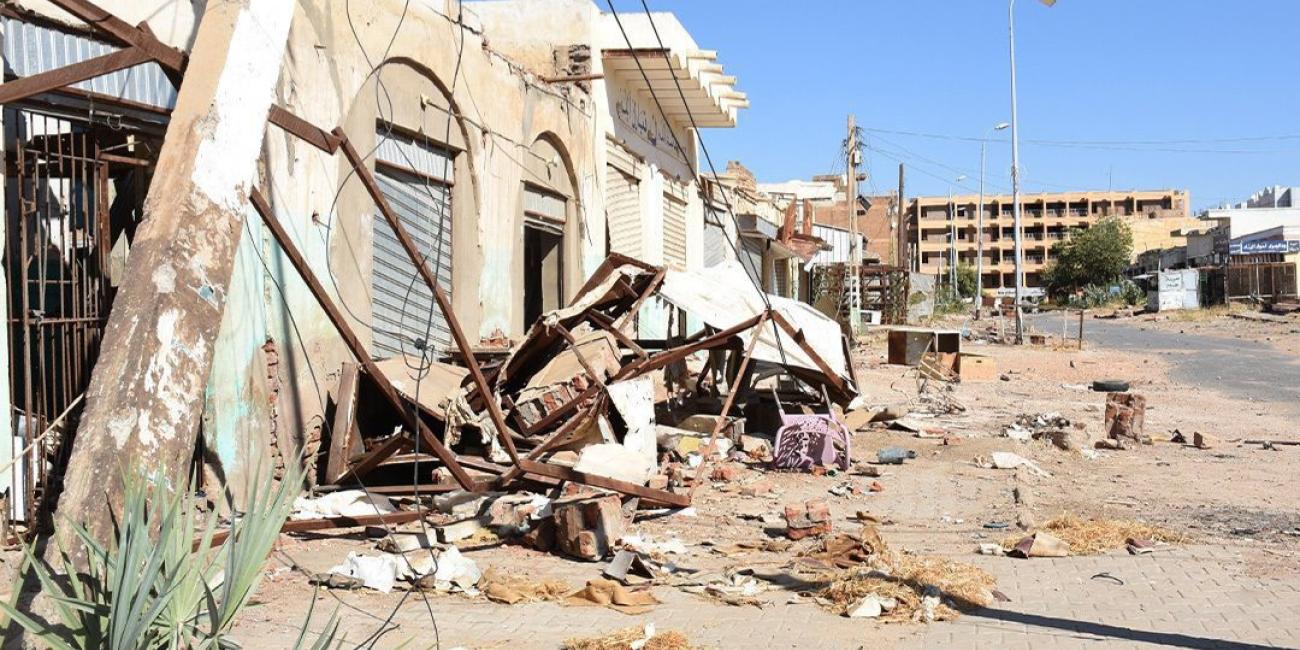
As Sudan’s brutal civil war enters its second year, the Sudanese army is making significant strides in its push to reclaim the capital, Khartoum, from the clutches of the powerful paramilitary group, the Rapid Support Forces (RSF). The army’s advancing troops are securing key territories within the capital, while military leader General Abdel Fattah al-Burhan is now seeking global diplomatic backing for a new government in the wake of these victories.
At a recent gathering with pro-army politicians, General Burhan announced plans to establish what he called a “technocratic” wartime government. His goal is to take charge of the country’s future once control of the capital is fully secured. The army chief made it clear, however, that no negotiations would take place with the RSF, emphasizing that military action would continue unabated until Sudan was “freed from these rebels.”
“We can call it a caretaker government or a wartime government, but one thing is certain — it will help us finish the job we started,” Burhan told his supporters during the meeting held over the weekend. “We will not rest until Sudan is free of the RSF and the chaos they’ve caused.”
A War-Torn Nation
The conflict, which has seen millions displaced and left countless Sudanese citizens without food or shelter, began in April 2023. It arose from a bitter falling-out between General Burhan and RSF leader, General Mohamed Hamdan Dagalo, over the future structure of Sudan’s government. What followed was a rapid escalation of hostilities between the army and the RSF, with both sides engaging in violent power struggles that have devastated the nation.
As the fighting continues, Sudan faces one of the world’s worst humanitarian crises, according to international agencies. The war has displaced over 12 million Sudanese citizens, with millions more living in fear of the ongoing violence. In the worst-affected regions, hospitals, schools, and entire communities have been decimated.
Despite the immense human suffering, the Sudanese army claims it is making progress. In the past few weeks, the army has scored significant victories, forcing RSF forces to retreat from key positions in both Khartoum and Gezira state. Analysts point to the army’s growing air superiority and strategic partnerships with local militias as key factors driving the RSF’s retreat.
“We are steadily winning back territory, and our mission remains clear,” said Burhan. “We will not stop until Sudan is free from the clutches of the RSF and the chaos they have caused.”
International Diplomacy: A Call for Support
In an effort to legitimize its new government plans, the Sudanese army has called on the international community for support, particularly from the United Nations, the African Union, and the Arab League. On Sunday, Sudan’s Ministry of Foreign Affairs issued a formal statement urging diplomatic bodies to back the army’s roadmap for peace and stability, which it claims will guide Sudan into a post-conflict era.
“We are reaching out to the international community for support,” the statement read. “This plan is a call for national consensus and will pave the way for a peaceful and stable future for Sudan.”
However, the army’s stance has drawn criticism from some factions within Sudan and abroad, with many questioning the legitimacy of a government formed under military rule. Critics argue that without a political solution involving all parties, including the RSF and civilian groups, any peace agreement would be fleeting.
“A government led by the army without meaningful negotiation or inclusivity will not bring lasting peace to Sudan,” said Ahmed Al-Sayed, a prominent Sudanese political analyst. “The country needs a transition that involves all sectors of society, including civilian representatives. A military government risks further entrenching divisions and prolonging the suffering.”
The Role of the RSF
Though the Sudanese army has regained substantial ground in recent weeks, the RSF has not been easily defeated. The paramilitary group, once an ally to the army in the ousting of Sudan’s long-time dictator Omar al-Bashir in 2019, has proven to be a formidable opponent. Despite losing several strongholds, the RSF still controls large parts of Sudan, particularly in the western regions, where intense clashes continue.
The Darfur region, which has long been a hotbed of conflict, remains under heavy RSF influence. The RSF’s brutal tactics have drawn the ire of the international community, with accusations of genocide in Darfur being leveled against the paramilitary force. While both the army and RSF have denied these accusations, their conduct has been heavily scrutinized by global human rights organizations.
“The RSF’s presence in Darfur has led to widespread destruction, displacement, and suffering for the civilian population,” said Marie Juma, an analyst at the International Crisis Group. “It is critical that any future peace talks address these human rights abuses and create a foundation for real reconciliation.”
Despite these challenges, General Burhan remains resolute in his mission. The army leader insists that the RSF must be completely defeated before any real talks of peace can take place. “We will not negotiate with criminals. We will only discuss peace once Sudan is safe and free from rebel control,” he asserted.
The Path Forward
The Sudanese people remain caught in the crossfire of a conflict that shows no sign of abating. With both sides committing atrocities and the humanitarian situation worsening by the day, the prospects for peace remain uncertain. While the Sudanese army continues its offensive, the future of the nation hangs in the balance.
Observers suggest that while the army’s victories are significant, the path to lasting peace in Sudan will require more than just military action. In order to rebuild the nation and provide for its people, a comprehensive political solution is needed — one that includes the voices of civilians, rebel groups, and international actors.
For now, Sudan’s military government appears determined to forge ahead, despite the heavy toll the war has taken on the nation and its people. As Burhan declared, “Our mission will not end until Sudan is free from the threat of the RSF.”