
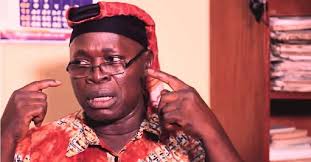
The Muslim Rights Concern (MURIC) has vehemently rejected claims made by former military ruler General Ibrahim Babangida (IBB) in his newly released memoir, A Journey in Service. The group condemned Babangida’s attempt to shift blame for the annulment of the June 12, 1993, presidential election to the late General Sani Abacha, branding it as a deliberate attempt to escape responsibility for one of the darkest chapters in Nigeria’s democratic history.
In a strongly worded press statement issued on Sunday, February 23, 2025, Professor Ishaq Akintola, the Executive Director of MURIC, sharply criticized the former dictator’s assertions during the launch of his book at the Transcorp Hilton in Abuja on February 20. Babangida’s memoir, spanning over 400 pages, revisits his tumultuous time as the nation’s military president, with a heavy focus on the controversial annulment of the June 12 election — an event that would go on to shape the political landscape of Nigeria for decades.
The June 12, 1993, election, widely regarded as the fairest and most peaceful in Nigeria’s history, saw the late Moshood Kashimawo Abiola (MKO) of the Social Democratic Party (SDP) win by a landslide. However, in an unprecedented move, Babangida’s government annulled the results, sparking national outrage and widespread protests that ultimately led to his resignation later that year.
In his memoir, Babangida attempts to distance himself from the annulment, attributing the decision to Abacha, his then Chief of Defence Staff. According to Babangida, he had no prior knowledge of the annulment, which was declared by his press secretary in Katsina while he was away. He claims that Abacha led the opposition against the June 12 election, even plotting a violent coup against his government. The ex-leader also recalls reaching out to Abiola with an offer for an interim leadership role, only for his plans to unravel due to the subsequent national unrest.
Babangida described the annulment as an “accident of history” and expressed regret over the episode. However, his attempt to absolve himself of responsibility was met with swift and vehement criticism from MURIC, which called for the full accountability of Babangida for the decision that “robbed Nigeria of its brightest democratic moment.”
In its statement, MURIC declared that the “buck stops at IBB’s table,” firmly rejecting his claims of innocence. The organization accused Babangida of attempting to rewrite history to cover his own tracks and evade the consequences of his actions.
“We assert emphatically, unequivocally and categorically that IBB is responsible for the annulment of June 12,” the statement read. “He cannot shift the blame to others. We reject his alibi in the strongest terms.”
MURIC did not mince words in its condemnation of the former military president’s actions during his rule, citing his role in the eventual military dictatorship of Abacha, which saw the country descend into an even darker period of authoritarian rule.
“Babangida’s actions set Nigeria on a path of political instability that led to years of military misrule. His toppling of the Buhari-Idiagbon regime in 1985 marked the beginning of the end for Nigeria’s fledgling democracy,” MURIC continued. “He is directly responsible for the violence and bloodshed that followed under Abacha’s brutal regime. Lives were lost, political opponents were silenced, and the people of Nigeria suffered immeasurably.”
The group also highlighted the deaths of key individuals, including journalists and political activists, who were victims of the military regime’s crackdown on dissent. Among them were Clement Akpangbo, Bagauda Kaltho, and Justice Ikpeme, all of whom MURIC claimed were victims of Babangida’s reign of terror.
MURIC’s statement did not stop at Babangida’s alleged complicity in the annulment but also targeted the controversial book launch itself, calling it a “provocative” and “insensitive” public display of impunity. The event, which saw Babangida surrounded by a number of political allies and admirers, was described as a “sickening show of hero-worship for a tyrant.”
“February 20, 2025, was a sad day for Nigeria,” MURIC declared. “It was the day that a group of leaders chose to honor a dictator who stands as the primary architect of the destruction of our democracy. The same leader who annulled the election that would have liberated the Nigerian people and set the stage for true democratic governance.”
The group went further, denouncing Babangida for displaying the original election results in his book — a symbolic gesture that, according to MURIC, only deepened the wounds of Nigerians still grappling with the consequences of June 12. The revelation of Abiola’s clear victory in the election did little to bring solace to those who had long demanded justice for the tragedy.
The group also expressed disappointment that those responsible for the annulment of the June 12 election were Muslims, as were many of the key figures involved in the military regime. MURIC’s statement lamented that the principles of justice and fairness upheld by Islam had been flagrantly violated by the actions of Babangida and his cohorts, undermining the moral authority of the faith in Nigeria.
MURIC paid tribute to those who fought for the restoration of democracy, particularly the late MKO Abiola, his wife Kudirat Abiola, and others like Dr. Beko Ransome Kuti, who lost their lives in the struggle. The group also acknowledged the contributions of living heroes of the democratic movement, including Professor Wole Soyinka, President Bola Tinubu, and Governor Uba Sani of Kaduna State.
While MURIC rejected Babangida’s efforts to rewrite history in his memoir, it called for continued remembrance of June 12 as a pivotal moment in Nigeria’s journey towards democracy. The group stressed the need for healing and reconciliation, although it acknowledged that the scars of the past remained deeply ingrained in the national consciousness.
As Nigeria continues to grapple with its democratic ideals, the debate over the June 12 annulment remains as relevant as ever. Babangida’s latest attempt to justify his actions, however, has only served to reignite the anger and frustrations of many Nigerians who continue to yearn for justice, accountability, and closure on one of the most tragic episodes in the nation’s political history.