
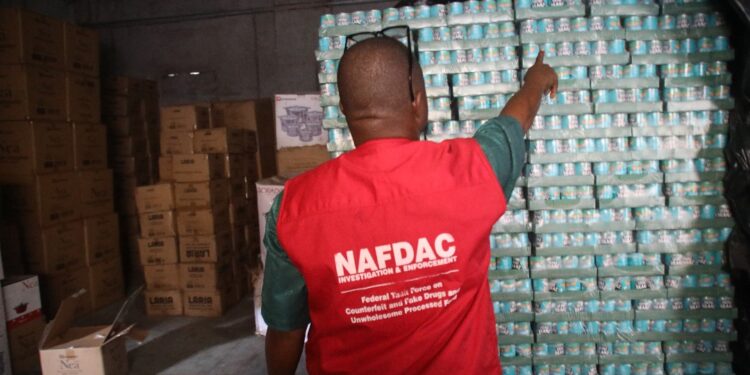
The National Agency for Food and Drug Administration and Control (NAFDAC) has successfully dismantled a large network of secret warehouses in Lagos used for storing counterfeit and banned medicines. Officials said more than 10 million doses of fake drugs, worth over ₦3 billion, were seized in a major crackdown on illegal pharmaceutical operations.
The raid took place around the Trade Fair–Navy axis in Lagos State, an area reportedly used by operators to hide their illicit activities under the guise of residential properties. According to NAFDAC’s Director of Investigation and Enforcement, Mr Martins Iluyomade, the operation marks a major public health victory.
“This is a significant victory for public health in Nigeria,” Iluyomade told journalists. “These dangerous products will not make it into circulation.”
The enforcement action followed intelligence gathered during a NAFDAC training session held on February 3. Suspicious activities in the area prompted operatives to launch a discreet investigation. The inquiry revealed multiple warehouse buildings carefully disguised as homes.
“The structures were built to look like homes, but they were used exclusively for storing fake medicines. The area is largely deserted, which explains how the operators avoided detection for so long,” Iluyomade said.
NAFDAC operatives discovered counterfeit injectable anti-malarials, antibiotics, sachet drugs, blister packs, and other medications. Shockingly, the raid also uncovered Analgin, a drug banned in Nigeria for more than 15 years.
Iluyomade warned that many of the seized drugs were critical emergency medicines. “What we found should worry every Nigerian. These are not just fake supplements. These are life-saving injections used in critical cases such as cerebral malaria. When fake drugs are administered in such situations, the outcome can be fatal,” he said.
Officials said the counterfeit products were so sophisticated that even pharmaceutical manufacturers sometimes struggle to distinguish them from genuine items.
The confiscated items were evacuated from the warehouses using eight trailers loaded with assorted fake medicines and cosmetics. NAFDAC officials emphasized that the operation will prevent dangerous drugs from reaching consumers.
Preliminary investigations indicate that the warehouses were part of an international counterfeit drug syndicate operating both within and outside Nigeria.
“They clone original products by taking samples of genuine medicines, reproducing them abroad to near perfection, and reintroducing them into our distribution system,” Iluyomade explained. “This is organized crime on a global scale.”
He added that several pharmaceutical companies had raised concerns about counterfeit versions of their products circulating in Nigeria for months. Traffickers often distribute the fake drugs in small quantities to avoid regulatory attention.
The NAFDAC official said the proliferation of counterfeit drugs represents a serious threat to Nigeria’s healthcare system.
“The country is under siege by individuals who prioritize profit over human lives, even if it means killing fellow citizens and damaging reputable pharmaceutical brands,” he said.
Iluyomade urged Nigerians to exercise caution when buying medications. He warned, “If a drug is unusually cheap, don’t assume you’ve found a bargain. It could cost you your life.”
He explained that fake medicines not only risk the health of patients but also undermine trust in the healthcare system and legitimate pharmaceutical companies.
Counterfeit drugs have long been a serious problem in Nigeria. The World Health Organization (WHO) has warned that substandard and falsified medicines cause thousands of deaths each year in Africa. Nigeria, as the continent’s largest pharmaceutical market, has been particularly vulnerable to this type of criminal activity.
These fake medicines are often smuggled into the country or produced locally by organized syndicates. They are typically sold in unregulated markets, roadside stalls, and even some legitimate-looking pharmacies.
NAFDAC has been leading the fight against counterfeit drugs for years, conducting raids, enforcing regulations, and educating the public on safe medicine practices.
Iluyomade emphasized that the raid is part of a broader enforcement strategy. By combining intelligence gathering, undercover operations, and collaboration with local communities, NAFDAC has managed to identify and dismantle complex networks of counterfeit drug operators.
The agency also works closely with pharmaceutical companies, law enforcement agencies, and international organizations to track and prevent the entry of fake medicines into Nigeria.
“The sophistication of these counterfeit products is alarming,” Iluyomade said. “They look exactly like genuine drugs, which makes them extremely dangerous. Consumers must remain vigilant.”
In light of the discovery, NAFDAC reiterated its advice to the public. Citizens are urged to:
Purchase medicines only from licensed pharmacies and retail outlets.
Check for proper labeling, packaging, and registration numbers on drugs.
Avoid medicines sold at unusually low prices.
Report suspected counterfeit drugs to NAFDAC immediately.
“The safety of every Nigerian is our priority,” Iluyomade stated. “We are committed to ensuring that substandard and fake medicines do not enter the market, but the public must also play their part.”