
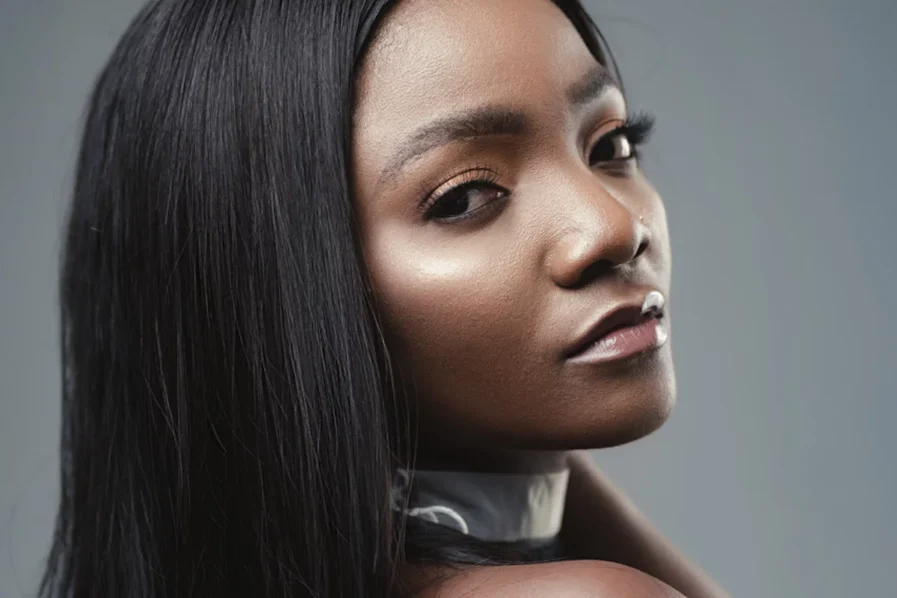
The Lagos State Government has referred the controversy surrounding resurfaced old tweets allegedly linked to popular singer, Simi, to the Commissioner of Police for preliminary investigation.
The development was confirmed on Thursday by the Executive Secretary of the Lagos State Domestic and Sexual Violence Agency (DSVA), Mrs Lola Vivour-Adeniyi, during an interview on Channels Television.
Vivour-Adeniyi said the agency could not ignore the public concerns raised over the resurfaced social media posts and had taken steps to ensure that the matter is properly examined.
The issue started after Simi made comments on social media about rape and sexual assault. In her post, she called on men to stop raping women. She also suggested that rapists should be castrated and claimed that “almost every woman she knows has been sexually assaulted.”
Her comments attracted wide attention and sparked heated discussions online. Many Nigerians supported her stance against sexual violence, while others debated her strong language.
However, shortly after her statement went viral, screenshots of old tweets believed to have been posted in 2012 and 2013 began circulating on social media.
Some of the tweets appeared to reference children at her mother’s daycare. Among them were comments such as “love to kiss d kids at my mum’s daycare – they’re super adorable and I’m crazy abt ’em” and another post referring to a four-year-old boy in a way that some social media users described as inappropriate.
The resurfacing of the tweets led to strong criticism from some members of the public. Many questioned the tone and content of the old posts, while others argued that they were being taken out of context.
The online debate quickly grew, with some users calling for an official investigation. The controversy was widely discussed under hashtags such as “Simi Gates” and “Simi Darlington.”
In response to the backlash, Simi addressed the matter on her social media page. She explained that the old tweets were written many years ago when she was younger and helping out at her mother’s daycare.
She said the posts were not written from any wrong intention and denied any form of perversion. According to her, critics had misunderstood and taken the tweets out of context.
The singer maintained that she had never harmed any child and insisted that the resurfaced posts did not reflect who she is today.
Simi, whose real name is Simisola Kosoko, is a well-known Nigerian artist with a strong fan base. Over the years, she has been vocal about social issues, including gender equality and protection of women from abuse.
Speaking on the matter, Vivour-Adeniyi said the Lagos State Domestic and Sexual Violence Agency had been monitoring the situation closely.
“In terms of Simi, some people have been asking what institutions are doing. I can speak for what Lagos State DSV is doing,” she said during the television interview.
She explained that the agency observed that the tweets being discussed were from as far back as 2012 and 2014. There were also claims in some quarters that certain tweets may have been doctored.
Despite this, the agency decided to escalate the matter for further scrutiny.
“What we’ve done is to refer the case to the Commissioner of Police to conduct some preliminary investigation,” she said.
She added that there were reports suggesting that the alleged incidents might have occurred at a creche managed by Simi’s mother. Because of this, issues of child protection and safeguarding were raised.
Vivour-Adeniyi noted that Lagos State has a safeguarding taskforce responsible for implementing child protection orders and ensuring the safety of minors.
She said the taskforce had been briefed and that preliminary investigations were ongoing.
According to her, the agency has a duty to act whenever allegations related to sexual abuse or child protection arise, especially when they attract public concern.
“We cannot act like we have not seen this. We have a duty to commence preliminary investigation,” she said.
However, she made it clear that prosecution would depend on the availability of a complainant or survivor.
“It’s going to be very difficult to prosecute without a survivor being present,” she explained.
She called on anyone who may have been affected to come forward and give a statement so that the matter can be properly investigated.
The Lagos State Domestic and Sexual Violence Agency was established to address cases of sexual and gender-based violence. In recent years, Lagos State has strengthened its laws and policies to protect women and children from abuse.
The state has also set up family courts and support services to help survivors of sexual violence seek justice and receive counselling.
Cases involving public figures often attract intense public attention, especially in the age of social media, where old posts can resurface many years later.
With the matter now referred to the Commissioner of Police, preliminary investigations are expected to determine whether there is any basis for further action.
As of the time of filing this report, no formal charges have been announced.
The situation continues to generate mixed reactions online, with some calling for accountability and others urging caution against rushing to judgment.
For now, the Lagos authorities say they will follow due process.
Vivour-Adeniyi stressed that the goal is to ensure that any genuine survivor is heard and protected, while also ensuring fairness in the handling of the case.
444444444444444444444
VIDEO: I didn’t kill any opposition — Tinubu
‘I Didn’t Kill Any Opposition,’ Says President Tinubu
President Denies Forcing Politicians to Join APC
Calls for Unity as Defections Stir Political Debate
President Bola Tinubu has dismissed claims that he is behind the recent wave of defections from opposition parties to the ruling All Progressives Congress (APC), saying he has not pressured or forced anyone to leave their political platforms.
The President made the remarks on Wednesday during an interfaith Iftar with senators at the Presidential Villa in Abuja. The event, which brought together lawmakers from different religious backgrounds, was part of activities marking the holy month of Ramadan.
Speaking at the gathering, Tinubu addressed accusations that his administration is working to weaken opposition parties by encouraging their members to cross over to the APC.
“Critics must talk,” the President said. “When they accused me of killing the opposition, but I didn’t have a gun. I could have given myself a licence when I have the authority. But I didn’t.”
Growing Political Tension
In recent months, several politicians from opposition parties have defected to the APC, the party that brought Tinubu to power in the 2023 general election. These defections have sparked debate across the country, with some opposition leaders alleging that pressure and intimidation may be involved.
Nigeria operates a multi-party system, with parties such as the Peoples Democratic Party (PDP), Labour Party (LP), and others providing opposition voices in the National Assembly and state governments.
Political defections are not new in Nigeria. Since the return to civilian rule in 1999, lawmakers and governors have switched parties for various reasons, including internal party disputes, political survival, and alignment with the party in power at the federal level.
However, critics argue that frequent defections can weaken opposition parties and reduce healthy political competition.
‘Sinking Ship’ Comment
While denying any wrongdoing, Tinubu said he could not blame politicians who decided to leave what he described as a “sinking ship.”
“But I can’t blame anybody for jumping out of a sinking ship if they did,” he said.
His comment appeared to suggest that some opposition politicians may have chosen to defect due to internal crises within their parties.
Several opposition parties have faced leadership disputes and court cases since the 2023 elections. Analysts say such internal challenges sometimes push members to seek stability elsewhere.
Tinubu, however, maintained that he has not used state power to force anyone to join the APC.
National Challenges
The President also used the occasion to highlight the security challenges facing the country. He mentioned terrorism and banditry as major problems affecting national stability.
“What we have faced in this challenging period of this country, the terrorism and banditry, is causing us havoc,” he said.
Nigeria has battled insecurity in different regions for over a decade. In the North-East, insurgency linked to extremist groups has led to thousands of deaths and displacement. In the North-West and parts of the North-Central, banditry and kidnapping have remained serious concerns.
Security challenges often create political tension, as citizens expect leaders to provide safety and stability.
Tinubu’s administration has repeatedly pledged to strengthen security operations and improve intelligence gathering. The government has also increased funding for security agencies and sought cooperation with neighbouring countries.
Call for Unity
At the Iftar gathering, Tinubu urged political leaders to focus on unity and cooperation instead of conflict.
He said Nigeria’s founding fathers envisioned a constitutional democracy that would bring people together, not divide them.
“And we should pull together, unite in a way that our forefathers contemplated to bring about a constitutional democracy and pull us together. They didn’t say we should fight. It’s a good thing that we are working in harmony,” he said.
Interfaith Iftar events are often used by Nigerian leaders to promote religious tolerance and national unity. Nigeria is a diverse country with large Muslim and Christian populations, and political leaders frequently stress the need for peaceful coexistence.
Reactions and Wider Context
Political observers say the President’s comments are part of efforts to calm growing concerns about the state of opposition politics in the country.
Some civil society groups have warned that a strong democracy requires a vibrant opposition that can question government policies and offer alternative ideas.
Others argue that defections are part of normal political processes and that politicians have the constitutional right to join any party of their choice.
The Nigerian Constitution guarantees freedom of association, including the right to belong to any political party. However, it also contains provisions that can affect elected officials who defect, depending on the circumstances.
In the past, court rulings have addressed whether lawmakers who defect should retain their seats, especially when their original parties are not divided.
Looking Ahead
As Nigeria moves closer to the midpoint of Tinubu’s first term, political realignments are likely to continue. Analysts say politicians often reposition themselves ahead of future elections.
For now, the President insists that he is not behind the movement of politicians into the APC.
His message at the Presidential Villa was clear: criticism is part of democracy, but accusations of wrongdoing must be backed by evidence.
With security challenges, economic reforms, and political shifts shaping the national conversation, Nigerians will be watching closely to see how the country’s democratic space evolves in the coming months.
Whether the defections strengthen the ruling party or reshape opposition politics, the debate over the balance of power in Nigeria’s democracy is far from over.