
Nigeria’s Minister of Finance and Coordinating Minister of the Economy, Wale Edun, has assured Nigerians that the Federal Government is working to keep food prices stable despite growing global economic uncertainties.
Edun gave the assurance on Wednesday while speaking during an interview on the programme Politics Today aired on Channels Televisaion.
During the interview, the minister addressed concerns about how global tensions and economic changes could affect Nigeria’s economy and the cost of living for citizens.
He said that although managing a modern economy involves many unpredictable factors, the government remains focused on policies aimed at keeping food affordable and reducing inflation.
“There are no guarantees,” Edun said while explaining the challenges of economic management.
“But what we can guarantee is that that is what we are focused on. That’s what we are working towards, and that’s what we have achieved to date,” he added.
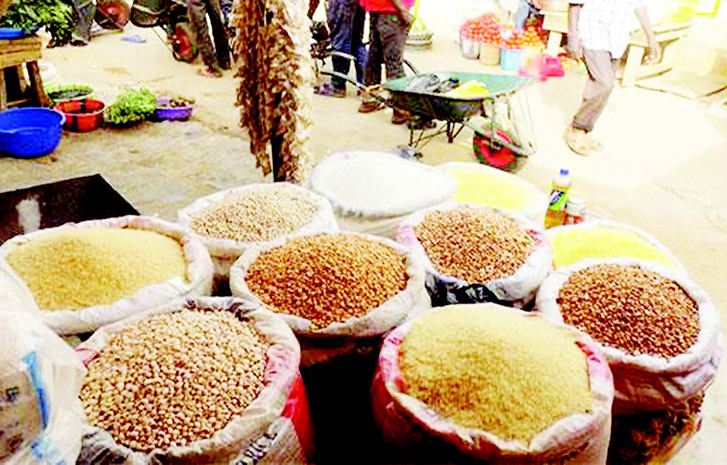
Food prices have been one of the major concerns for Nigerians in recent years as inflation and supply challenges pushed the cost of basic items higher.
Many households have struggled with rising prices of staple foods such as rice, maize, garri and cooking oil.
Edun said the government is aware of these challenges and is working to ensure that food prices remain stable.
According to him, recent economic trends show some positive signs.
He noted that food prices have started to decline in some areas and that inflation is beginning to slow down.
Inflation refers to the general rise in prices of goods and services over time.
When inflation rises quickly, the purchasing power of citizens decreases because the same amount of money buys fewer goods.
The finance minister said government policy is now focused on increasing food production within Nigeria.
He explained that improving domestic agriculture is one of the most effective ways to reduce the risk of food shortages and price increases.
According to him, when a country produces enough food locally, it becomes less vulnerable to disruptions in international supply chains.
“We are focusing on ensuring that there is adequate domestic production of food,” Edun said.
He explained that improving agricultural output will help ensure that food remains available and affordable for Nigerians.
Nigeria has one of the largest agricultural sectors in Africa, employing millions of farmers across the country.
However, the sector has faced challenges including insecurity in farming communities, climate change, poor infrastructure and high transportation costs.
Government officials say addressing these challenges is key to improving food supply and stabilising prices.
Edun also spoke about the impact of global developments on Nigeria’s economy.
In recent years, geopolitical tensions, conflicts and disruptions to international trade have affected food and energy prices across the world.
Countries that depend heavily on food imports have been especially vulnerable to these shocks.
Although Nigeria produces many of its own crops, the country still relies on imports for some food items and agricultural inputs such as fertiliser and machinery.
Because of this, global price changes can influence domestic markets.
Edun said the government is monitoring these developments closely while working to strengthen Nigeria’s economic resilience.
The minister also referred to broader economic reforms introduced by the administration of Bola Ahmed Tinubu.
Since taking office in 2023, the Tinubu government has introduced several policies aimed at stabilising the economy and encouraging investment.
These reforms include changes to fuel subsidy policies, exchange rate adjustments and efforts to increase government revenue.
While some of the reforms have led to short-term economic challenges, government officials say they are necessary to place the economy on a stronger footing in the long term.
Edun said early results from the reforms are beginning to appear.
According to him, the moderation in inflation and the improvement in some economic indicators show that the policies are starting to have positive effects.
Rising living costs have remained a major concern for many Nigerians.
Transport fares, electricity bills and food prices have increased in several parts of the country over the past two years.
Food accounts for a large portion of spending for most Nigerian families.
When food prices rise sharply, low-income households are often the most affected.
Because of this, government officials have repeatedly said that ensuring food security is a top priority.
The sector provides jobs for a large part of the population and contributes significantly to the country’s gross domestic product.
Major crops grown in Nigeria include rice, maize, cassava, yam, sorghum and millet.
In recent years, the government has introduced programs aimed at supporting farmers through access to credit, improved seeds and agricultural equipment.
These initiatives are designed to increase production and reduce Nigeria’s dependence on imported food.
Edun said strengthening agriculture will also help create jobs and support economic growth.
Despite the challenges posed by global economic uncertainty, the finance minister said the government remains committed to policies that protect Nigerians from rising prices.
He acknowledged that managing an economy involves dealing with many factors beyond government control.
However, he insisted that the administration’s focus remains on improving production, supporting farmers and stabilising prices.
“Our focus is to ensure that food remains affordable and available for Nigerians,” he said.