
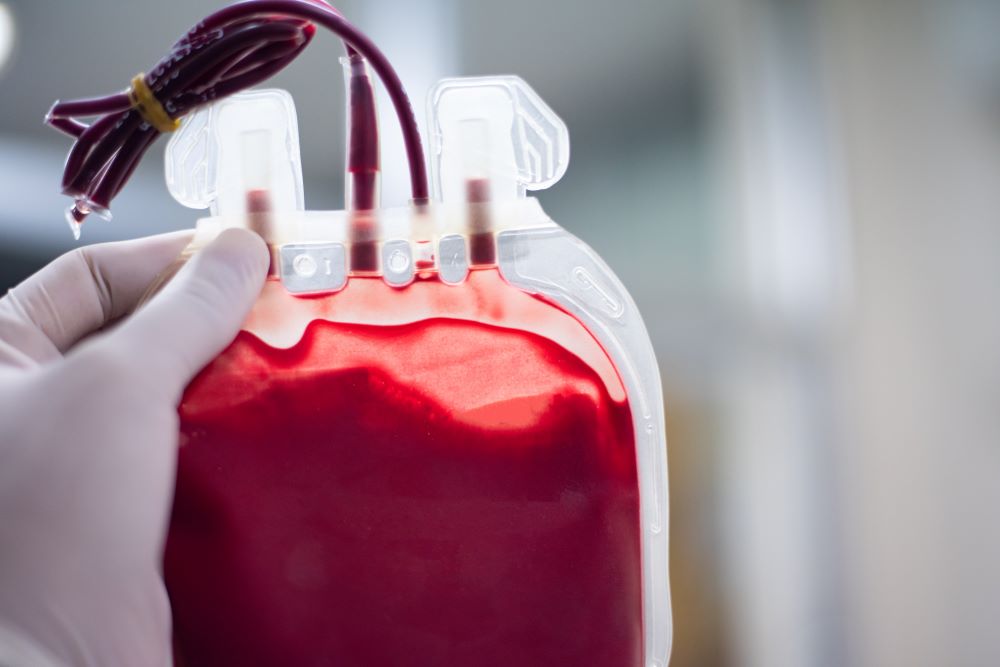
Jehovah’s Witnesses have announced a major clarification to their long-standing position on blood use, allowing members to decide whether their own blood can be used during medical procedures such as surgery.
The new guidance, shared in a video statement released on Friday, marks an important development for the global Christian group, which has for decades been known for rejecting blood transfusions based on religious beliefs.
While the group continues to forbid the use of another person’s blood, it now gives members personal choice when it comes to how their own blood is handled during treatment.
The announcement was made by Gerrit Lösch, a member of the religion’s Governing Body, who explained that the clarification is meant to give individuals more freedom in making medical decisions.
According to him, the Bible clearly instructs Christians to abstain from blood, but it does not specifically address whether a person can use their own blood in a medical setting.
“Regarding the use of one’s own blood, a Christian must decide for himself how his own blood will be handled in the course of a surgical procedure, medical test, or current therapy,” he said.
He added that after careful study of the Scriptures and prayer, the leadership decided to make the position clearer, allowing members to act according to their personal conscience.
Under the new clarification, members can now choose whether to allow their blood to be removed, stored, and later returned to their body during medical procedures. At the same time, some may still choose to reject such practices based on their understanding of their faith.
“This is a personal decision,” Lösch explained. “Some Christians may decide that they would allow their blood to be stored and then be given back to them. Others may object.”
The move reflects a balance between maintaining religious principles and recognising modern medical practices that can save lives.
Jehovah’s Witnesses have long accepted certain medical procedures involving their own blood, including blood tests, dialysis, and the use of machines such as heart-lung devices during surgery. Techniques like cell salvage, where a patient’s blood is collected and reused during an operation, have also been accepted by many members.
However, the use of donated blood from another person remains strictly forbidden.
This development has drawn attention in Nigeria, where discussions about faith and medical treatment have been ongoing, especially after the death of Mensah Omolola in December 2025.
Omolola, popularly known as AuntieEsther, was a cancer patient and social media figure who publicly rejected a blood transfusion recommended by doctors. She said her decision was based on her religious beliefs as a Jehovah’s Witness.
Her case attracted wide public attention, with many Nigerians debating the balance between faith and medical advice. Supporters raised more than ₦30 million to fund alternative treatments for her, even as medical experts warned about the risks of refusing blood transfusion in serious cases.
Despite facing possible disciplinary action from her religious community, she stood by her decision. Her eventual death sparked renewed national conversation about the challenges faced by patients who must choose between religious beliefs and medical recommendations.
Health professionals in Nigeria have often expressed concern about cases where patients refuse blood transfusions, especially in emergencies such as accidents, childbirth complications, or major surgeries.
Doctors say that while alternative methods are improving, there are still situations where blood transfusion remains the most effective or only life-saving option.
At the same time, religious leaders and members of Jehovah’s Witnesses have maintained that their stance is based on deep spiritual convictions, not a rejection of modern medicine.
In fact, the group has repeatedly stated that it supports the use of quality healthcare and encourages members to seek proper medical treatment. The main restriction applies only to blood transfusions from another person.
The belief is rooted in biblical teachings that view blood as sacred and symbolic of life. Jehovah’s Witnesses point to several passages in the Bible, including Genesis 9:4, Leviticus 17:10, Deuteronomy 12:23, and Acts 15:28–29, which instruct believers to abstain from blood.
According to a previous statement released by the group in 2019, “God views blood as representing life. So we avoid taking blood not only in obedience to God but also out of respect for him as the Giver of life.”
Over the years, this belief has shaped how members approach medical care. Many have worked with doctors to find alternative treatments that do not involve donor blood.
Advances in medicine have made this easier in recent times. Bloodless surgery techniques, improved surgical tools, and better planning have helped reduce the need for transfusions in some cases.
Procedures such as cell salvage, where blood lost during surgery is collected and returned to the patient, as well as the use of machines that circulate blood outside the body, have become more common.
These options have allowed Jehovah’s Witnesses to receive treatment while staying true to their beliefs.
The latest clarification is seen by observers as a step towards giving members more control over their personal health decisions, especially in complex medical situations.
It also highlights the ongoing effort by religious groups to respond to changes in science and healthcare while remaining faithful to their core teachings.
In Nigeria, where religion plays an important role in daily life, the issue of medical choice and faith continues to be a sensitive topic.
Many families face difficult decisions when dealing with serious illness, and the balance between spiritual beliefs and medical advice can be challenging.
For Jehovah’s Witnesses, the new guidance may help reduce some of the pressure faced by members who need surgery or other treatments involving blood management.
By allowing individuals to decide on the use of their own blood, the organisation is offering a degree of flexibility while still upholding its long-standing doctrine on transfusions.