
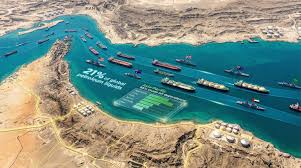
United States President Donald Trump has issued a 48-hour ultimatum to Iran, warning that the United States could launch strikes on Iranian power plants if the Strait of Hormuz is not reopened immediately.
The warning, delivered on Saturday through a post on Truth Social, marks a sharp increase in tensions between the two countries and has raised concerns about global security and economic stability.
In his message, Trump said Iran must fully reopen the Strait of Hormuz within 48 hours without any threat to shipping. He warned that failure to do so would lead to military action targeting Iran’s key infrastructure.
The Strait of Hormuz is one of the most important shipping routes in the world. It connects the Persian Gulf to the open sea and is used to transport about one-fifth of the world’s crude oil. Any disruption in this narrow waterway can affect global oil supply and lead to higher fuel prices across many countries, including Nigeria.
Reports indicate that traffic through the strait has been greatly reduced since early March, following the start of a conflict involving Iran. Oil tankers and cargo vessels have either slowed down operations or avoided the area due to safety concerns. This has already begun to affect global markets, with fears of supply shortages.
Speaking earlier to reporters, Trump described reopening the strait as a “simple military maneuver,” but noted that it would require significant support, including ships and coordination. His comments suggest that the United States may be preparing for possible military involvement if diplomacy fails.
The crisis has drawn attention from many countries that depend on oil imports from the Middle East. Experts warn that any attack on Iran’s power plants could lead to a wider conflict in the region, affecting neighbouring countries and disrupting international trade.
Iran has not officially responded to the ultimatum at the time of filing this report. However, the country has in the past defended its control over the strait, arguing that it has the right to protect its territory and respond to threats.
The tension between the United States and Iran is not new. The two countries have had a difficult relationship for decades, with disagreements over nuclear programmes, regional influence, and military activities. Over the years, there have been several close calls, but both sides have often avoided full-scale war.
The current situation appears more serious because of the importance of the Strait of Hormuz. A prolonged closure or continued disruption could have far-reaching effects, especially for countries that rely heavily on imported oil.
For Nigeria, a major oil-producing nation, the crisis presents both risks and opportunities. Higher global oil prices could increase government revenue, but instability in the global market may also create uncertainty for planning and investment.
International organisations, including the United Nations, have in the past called for calm and dialogue in similar situations. Diplomacy is often seen as the best way to resolve such conflicts, especially when global trade and security are at stake.
As the 48-hour deadline approaches, the world is watching closely to see how Iran will respond and whether the United States will carry out its threat. The outcome could shape global politics and economic conditions in the coming weeks.
For now, the focus remains on the Strait of Hormuz, a narrow but highly important waterway that continues to play a major role in global energy supply. The unfolding events highlight how conflicts in one region can quickly affect countries across the world.