
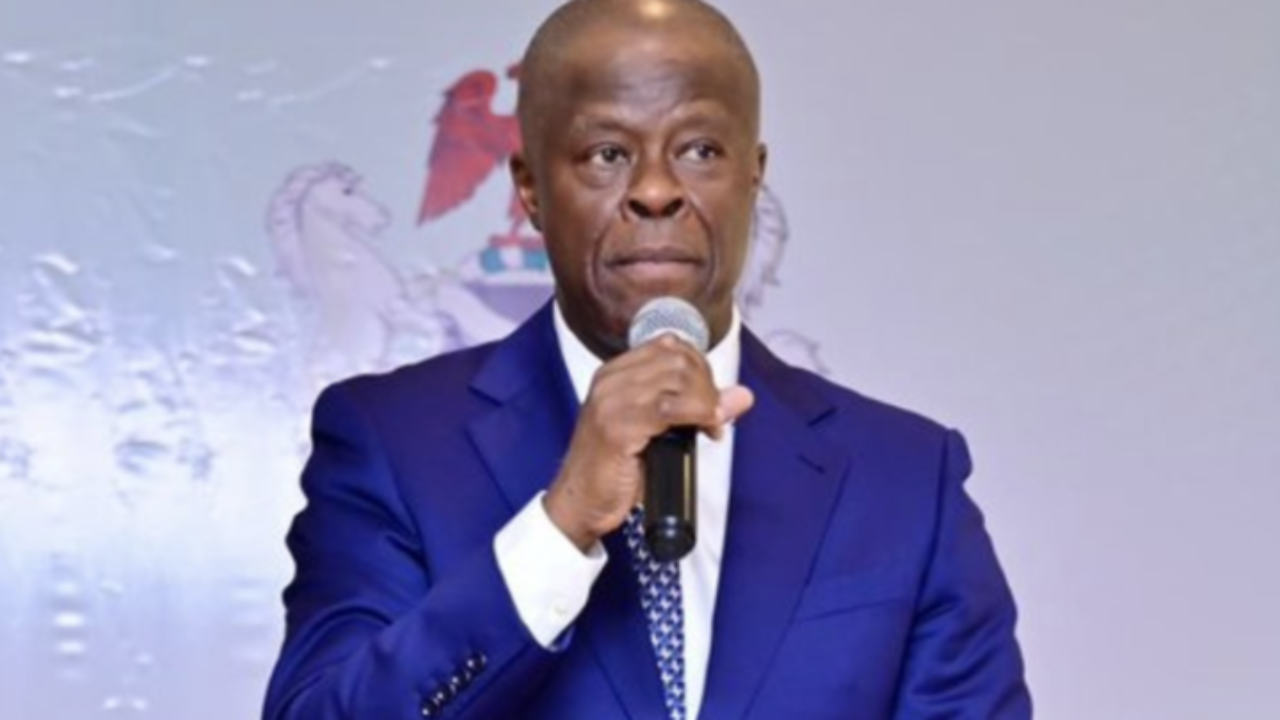
Nigeria’s Minister of Finance, Wale Edun, has said the ongoing tensions involving the United States, Israel and Iran have caused major disruptions in global energy markets, leading to rising fuel prices and fresh inflation pressures in Nigeria.
Speaking at the recent IMF/World Bank Spring Meetings, Edun explained that the conflict has created external shocks that are already affecting economies around the world, including Nigeria.
According to him, the crisis has tightened global financial conditions, disrupted oil supply routes and pushed up the cost of energy and food. These developments, he said, are now being felt directly by Nigerian households through higher living costs.
“The disruptions have led to high fuel prices, increased food costs and placed inflationary pressures on Nigerian households,” the minister said while addressing members of Nigeria’s delegation at the meeting.
One of the major concerns highlighted by Edun is the sharp rise in crude oil prices since the start of the conflict. He explained that global oil prices have been highly unstable, increasing by between 35 and 50 per cent in a short period. This, he said, is largely due to fears of supply disruption around the Strait of Hormuz, a key passage through which a large share of the world’s oil is transported.
Nigeria’s crude oil, known as Bonny Light, has also seen significant price increases. Edun noted that the price moved from about 70 to 73 dollars per barrel to as high as 110 to 120 dollars per barrel during the peak of the crisis.
While higher crude oil prices could mean more revenue for an oil-producing country like Nigeria, the minister explained that the situation has also brought serious challenges. This is because Nigeria still depends heavily on imported refined petroleum products, making it vulnerable to global price swings.
As a result, domestic fuel prices have risen sharply. Edun revealed that petrol prices increased by more than 50 per cent, moving from around N890–N900 per litre to between N1,260 and N1,330. Diesel prices rose even higher, jumping by over 70 per cent from about N1,100 per litre to around N1,550 at their peak.
These increases have had a direct impact on transportation, food supply and general cost of living. In many parts of the country, transport fares have gone up, while traders have passed higher costs on to consumers, leading to more expensive food items in markets.
However, Edun pointed out that Nigeria is in a better position now compared to those earlier periods. He said the country entered the current crisis with stronger economic fundamentals, following a series of reforms introduced by the Federal Government.
These reforms include efforts to stabilise the exchange rate, improve revenue generation and reduce wasteful spending. The government has also taken steps aimed at attracting both local and foreign investments into key sectors of the economy.
Despite these improvements, the minister admitted that Nigeria still needs support during this transition period. He told international partners at the meeting that the country would be seeking additional assistance to reduce fiscal pressure and help sustain ongoing reforms.
“We are working to improve our macroeconomic environment and attract investments required to lift millions of Nigerians out of poverty,” Edun said.
He stressed that while external shocks like the Middle East conflict are beyond Nigeria’s control, the government remains focused on policies that can protect the economy and support citizens.
There are also calls for increased investment in agriculture to reduce the impact of rising global food prices on local markets. By improving local production, Nigeria can better shield itself from external shocks.
For now, many Nigerians continue to feel the pressure of rising costs, with households adjusting their spending as prices of fuel, transport and food remain high.
As global tensions persist, attention will remain on how the government manages the economic challenges ahead. The Finance Minister’s message at the international meeting makes it clear that while Nigeria is making progress, global events still have a strong influence on the country’s economy.
The coming months will be crucial as authorities work to balance rising costs with ongoing reforms aimed at long-term growth and stability.