
The Lagos State Government has clarified why residents living in its housing estates must seek approval before installing solar panels, following public outrage triggered by a viral video showing officials confronting a homeowner.
The clarification was issued by the Lagos State Ministry of Housing after a widely shared clip captured officials questioning a resident at the Lagos State Millennium Housing Estate over what they described as an unauthorised solar panel installation.
The video, which circulated heavily on social media around April 21, showed members of the ministry’s Monitoring and Compliance Team asking the resident to explain why he installed solar panels without prior approval. The officials also directed him to regularise the installation in line with government guidelines.
The incident quickly drew criticism online, with many Nigerians expressing concern about what they believed was an attempt to restrict the use of renewable energy. However, government officials have now explained that the rule applies only to state-owned housing estates and not to privately owned homes.
In a statement released by the Permanent Secretary of the Ministry of Housing, Abdulhafis Toriola, the government stressed that the approval requirement is not new. According to him, it is clearly stated in the Letter of Allocation and Allottees Guide issued to residents when they purchase homes in government estates.
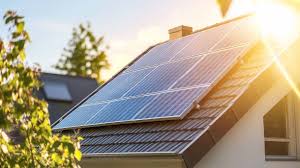
Toriola explained that any allottee who wishes to make changes to their apartment or building must first obtain official permission from the ministry. This includes the installation of solar panels, which often involves structural adjustments to rooftops and electrical systems.
“An allottee must obtain approval from the Ministry for any intended alteration to the flat allocated and the building, and this includes installation of solar panels,” the statement said.
The government says the rule is mainly about safety and proper management of shared facilities within housing estates. Unlike private homes, most government estates in Lagos are designed as shared structures where multiple families live in a single building.
According to the ministry, each block in these estates can house between two and 32 families, with shared infrastructure such as roofs, walls, staircases, and water systems.
This means that any structural change by one resident could affect others in the same building.
Toriola explained that the approval process helps ensure that installations are done safely and do not damage the building or create risks for other occupants.
He also noted that the policy helps to prevent disputes among residents, especially when several people want to install solar panels on the same roof space.
“This is to prevent disputes when multiple occupants in a block seek to install solar panels on the same roof,” he said.
The ministry revealed that the policy became more important in recent years due to rising safety concerns linked to poorly installed solar systems.
According to officials, there have been cases of leaking roofs and even fire outbreaks caused by substandard installations in some estates.
“In recent times, the Ministry had to intervene in fixing leaking rooftops and incessant fire outbreaks caused by solar panel installation by some residents,” Toriola said.
He added that many of these problems occurred because installations were carried out without proper technical knowledge or without using approved materials.
To address this, the ministry introduced guidelines covering the quality of cables, panel configuration, and the qualifications of installers.
Officials say these measures are necessary to protect not just individual residents but entire buildings.
Despite the explanation, the viral video has continued to generate debate across Nigeria, especially on platforms like Instagram, Facebook, and X (formerly Twitter).
In the video, the resident involved expressed frustration at the officials’ actions, questioning the basis of the approval requirement.
“They just showed up… saying because we installed solar that we must get permit and approval from them before we can use it. I’ve never heard of this in my life,” he said in the clip.
Many viewers reacted strongly, with some accusing the government of trying to discourage the use of solar energy at a time when Nigerians are increasingly turning to alternative power sources.
However, the ministry has insisted that the policy has been misunderstood and misrepresented online.
One key point highlighted by the government is that the approval rule does not apply to private property owners in Lagos.
Officials say individuals who own standalone houses or properties outside government estates are free to install solar systems without seeking permission from the ministry.
The regulation is limited strictly to state-owned housing schemes, where buildings and infrastructure are shared among multiple residents.
This distinction, according to the ministry, was lost in many of the online reactions to the viral video.
electricity costs and unstable supply from the national grid.
Frequent power outages and high fuel prices have made generators expensive to run, pushing many households to look for cleaner and more reliable alternatives.
Solar energy, in particular, has become popular because it offers a long-term solution to electricity challenges, despite the high initial cost of installation.
In Lagos, the country’s commercial hub, demand for solar systems has grown rapidly in recent years, especially among middle-income households.
Poorly installed solar systems can pose risks such as electrical faults, fire hazards, and structural damage to buildings.
For government estates, where multiple families share facilities, these risks can affect many people at once.
The Ministry of Housing has urged residents of state-owned estates to follow the proper procedures and seek approval before carrying out any modifications.
It also encouraged allottees to contact the ministry whenever they are unsure about the rules.
According to officials, the goal is not to stop residents from using solar energy but to ensure that installations are done safely and in a way that does not harm others.
“The guidelines are in place to ensure safety, structural integrity, and harmonious coexistence in all state-owned housing estates,” the statement said.
As discussions continue, many Nigerians are calling for clearer communication from the government to avoid future misunderstandings.
Some residents have also suggested that the approval process should be made faster and more transparent to encourage compliance.
For now, the Lagos State Government maintains that the rule is necessary and remains in force.
The viral video may have sparked controversy, but it has also brought attention to an important issue—how to safely manage the growing use of solar energy in shared living spaces.
As more Nigerians embrace renewable energy, authorities will likely face increasing pressure to create policies that support innovation while protecting public safety.