
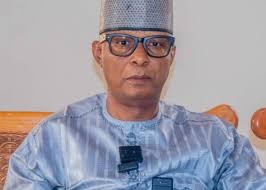
The Nigerian Senate has confirmed Muttaqha Rabe Darma as a minister of the Federal Republic of Nigeria, following his screening at the National Assembly in Abuja.
The confirmation came shortly after lawmakers considered his nomination and approved him to join the cabinet of President Bola Tinubu. Darma is expected to take over leadership of the Ministry of Housing and Urban Development, replacing Ahmed Musa Dangiwa.
Darma’s confirmation followed a screening exercise conducted by the Senate on Thursday. During the session, he appeared before lawmakers, answered questions, and outlined his readiness to serve.
After the screening, the Senate moved to deliberate on his nomination and subsequently gave its approval, clearing the way for his appointment as a minister.
The process began a day earlier when President Tinubu formally transmitted Darma’s name to the upper chamber for confirmation. The request was read during plenary by Senate President Godswill Akpabio, who then referred it to the Committee of the Whole for consideration.
Akpabio had directed the committee to review the nomination and report back as quickly as possible, a directive that was followed with the speedy confirmation.
Darma is a trained engineer with experience in public service. He previously served as the Executive Secretary of the Petroleum Technology Development Fund (PTDF), a key government agency responsible for developing local capacity in Nigeria’s oil and gas sector.
His time at the PTDF is seen by many as a period where he gained experience in managing government programmes and overseeing technical projects.
Darma’s appointment comes as part of ongoing adjustments within the Tinubu administration. He replaces Ahmed Musa Dangiwa, who had been in charge of the Ministry of Housing and Urban Development.
Although no detailed reason has been publicly given for the change, such cabinet reshuffles are not unusual in Nigerian politics. Presidents often make adjustments to improve performance or bring in new ideas.
The Ministry of Housing and Urban Development is considered a critical part of government efforts to improve living conditions across the country.
Nigeria’s housing sector faces several serious challenges. One of the biggest is the large housing deficit, which affects millions of Nigerians. Many families struggle to find affordable homes, especially in major cities.
Rapid urban growth has also placed pressure on infrastructure, leading to overcrowding and the expansion of informal settlements.
Other issues include high construction costs, limited access to mortgage financing, and problems with land ownership.
With his confirmation now secured, attention is shifting to what Darma will do in office. Many Nigerians expect him to bring fresh ideas and practical solutions to the housing sector.
Some of the key areas he may focus on include increasing the supply of affordable housing, improving urban planning, and strengthening partnerships with private investors.
There are also expectations that he will work to ensure that government housing projects are completed on time and delivered to the people who need them most.
The Senate plays an important role in Nigeria’s system of government by screening and confirming ministerial nominees. This process is meant to ensure that only qualified individuals are appointed to key positions.
During screening, nominees are assessed based on their education, experience, and plans for the sector they are expected to lead.
In Darma’s case, the Senate’s quick approval suggests that lawmakers were satisfied with his responses and credentials.
Darma’s confirmation comes at a time when the Tinubu administration is under pressure to deliver results in key areas of the economy.
Since taking office, the government has introduced several reforms aimed at improving economic growth and public services. However, many Nigerians are still facing economic hardship, including rising living costs.
Housing remains a major concern, as rent and building costs continue to increase.
For this reason, the performance of the new minister will be closely watched by both the public and policymakers.
Following his confirmation, Darma is expected to be sworn in by the President and formally assume office.
He will then take charge of the Ministry of Housing and Urban Development, where he will be responsible for shaping policies and overseeing projects aimed at improving housing across Nigeria.
As he begins his work, the focus will be on how quickly he can make an impact in a sector that is vital to the well-being of millions of Nigerians.
For now, his confirmation marks the end of the Senate process and the beginning of a new chapter in his public service career.