
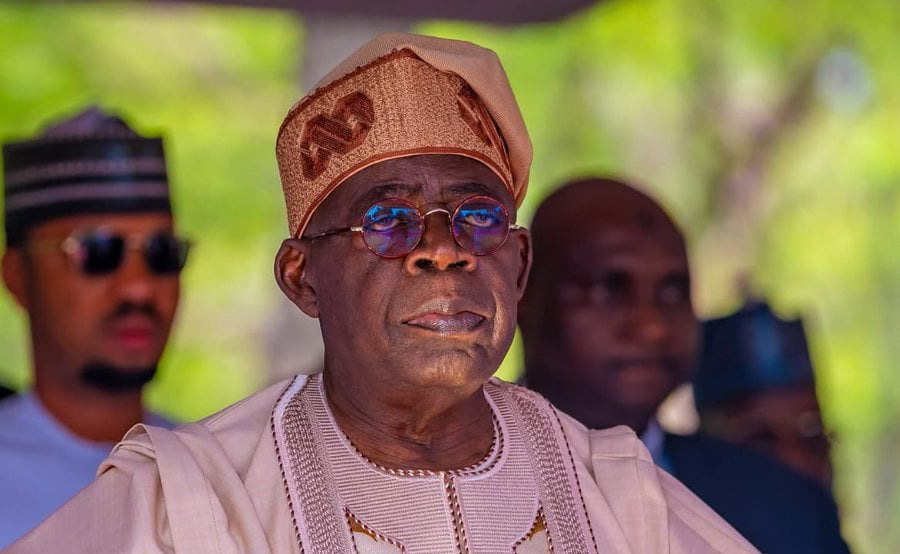
President Bola Ahmed Tinubu on Thursday defended the painful economic reforms introduced by his administration, saying they saved Nigeria from a deeper financial crisis and ended years of waste linked to fuel subsidy payments and foreign exchange rackets.
In a nationwide message to mark his third anniversary in office on May 29, 2026, Tinubu said Nigerians had made huge sacrifices since he became President in 2023, but insisted the country was now on the path to recovery.
According to him, the reforms stopped what he described as daily financial leakages of N18.4bn spent on petrol subsidy and trillions of naira lost through forex arbitrage and multiple exchange rate systems.
“I remain deeply conscious of those sacrifices, and I assure you: your sacrifice has not been in vain. Nigeria has stabilised and is moving forward again,” the President said.
Tinubu came into office on May 29, 2023, after winning the presidential election under the platform of the All Progressives Congress. On his first day in office, he announced the removal of petrol subsidy, a policy that immediately caused fuel prices to rise sharply across the country.
The government later unified the foreign exchange market, ending the multiple exchange rate system that had existed for years. While the reforms were praised by international financial institutions and investors, they also led to a sharp increase in inflation, transportation costs, food prices and the general cost of living.
Many Nigerians have continued to complain about economic hardship, rising hunger and unemployment since the reforms began.
However, Tinubu said the country had no choice but to take difficult decisions to avoid economic collapse.
“When this administration assumed office, Nigeria faced serious economic and structural problems,” he said.
He listed the problems to include unsustainable fuel subsidy payments, rising debt servicing costs, low government revenue, exchange rate distortions, insecurity, energy challenges and declining public confidence in government institutions.
According to him, Nigeria spent more than N4tn on petrol subsidy in 2022 alone.
“At the height of the subsidy regime, Nigeria was spending as much as N18.4bn daily to sustain petrol subsidies. These were resources that could have been invested in roads, healthcare, education and housing,” Tinubu stated.
The President also said the former forex system encouraged corruption and speculation.
“Multiple exchange rate windows and forex arbitrage created massive distortions, with Nigeria losing more than N8tn over three years to rent-seeking and speculative practices,” he added.
Tinubu argued that refusing to carry out reforms would have pushed the country into greater poverty and uncertainty.
“The easy choices would have been politically convenient. But leadership demands courage, especially when the right decisions are difficult,” he said.
He admitted that the reforms created hardship for millions of Nigerians.
“These decisions came with sacrifice. The rising cost of living placed enormous pressure on families, workers and businesses. Young people searching for jobs felt discouraged,” he said.
Despite the hardship, Tinubu insisted that signs of economic recovery were beginning to appear.
He pointed to the performance of the Nigerian stock market, saying the All Share Index rose from about 53,000 points in 2023 to 250,000 points in 2026.
He also said market capitalisation increased from N30tn to N160tn within the same period, while companies were declaring higher profits and dividends.
“Our economy is now more competitive and better positioned for sustainable growth than it was in 2023,” the President said.
He added that states and local governments were now receiving more funds from the Federation Account due to improved revenues after subsidy removal.
On infrastructure, Tinubu said his administration was currently handling more road projects than previous governments.
According to him, over 2,700 kilometres of roads and highways are under construction, reconstruction or rehabilitation across the country.
The projects include the Lagos-Calabar Coastal Highway, Sokoto-Badagry Super Highway, Abuja-Kaduna-Zaria-Kano Road and the East-West Road in the Niger Delta region.
Tinubu said the projects would improve transportation, reduce travel time, boost trade and create jobs for Nigerians.
He also said rail modernisation projects were ongoing to improve movement of goods and people across the country.
Speaking on the oil and gas sector, the President said reforms had restored investor confidence after years of uncertainty.
He disclosed that the $5bn NLNG Train 7 project was nearing completion and would increase Nigeria’s liquefied natural gas production and exports.
According to him, local refining capacity had also improved, helping to strengthen Nigeria’s energy security.
Tinubu also highlighted achievements in education and housing.
He said the Nigerian Education Loan Fund had supported more than 1.5 million students with loans worth over N282bn.
The student loan programme was introduced to help students from poor families continue their education without financial difficulties.
On housing, Tinubu said over 10,000 housing units were being developed in 14 states and the Federal Capital Territory under the Renewed Hope Housing Programme and the Federal Housing Authority.
He said the programme had already created more than 300,000 jobs.
The President further spoke about healthcare, saying primary healthcare centres were being upgraded across the country while health insurance coverage was expanding.
On electricity, Tinubu admitted that Nigeria’s power sector remained troubled due to years of debt, poor investment and weak infrastructure.
However, he said his administration was working to improve electricity supply by expanding transmission infrastructure, investing in renewable energy and strengthening the national grid.
“No modern economy can grow in darkness,” he stated.
Tinubu also said the telecommunications sector was recovering after facing operational difficulties and declining investments in recent years.
According to him, telecom companies are now expanding their networks, investing in infrastructure and employing more Nigerians.
On security, the President admitted that insecurity was still a major challenge in some parts of the country.
However, he said the Armed Forces and security agencies had intensified operations against terrorists, bandits, kidnappers and oil thieves.
“Many communities and highways are becoming safer and more economically active,” he said.
Tinubu stressed that his third anniversary should not be seen as a celebration of complete success, but as a sign that the country was gradually recovering.
“We have not solved every problem, and we are not yet where we want to be. But the foundation for recovery has been laid,” he said.
The President urged Nigerians to remain patient, united and hopeful despite current challenges.
“History teaches us that great nations are built through sacrifice, resilience and courage,” he said.
He added that the world was beginning to pay attention to Nigeria again because of reforms taking place in agriculture, infrastructure, power, technology and manufacturing.
“Let us reject cynicism and division. Let us move forward together, united in purpose and confident in the greatness that lies ahead,” Tinubu appealed.