
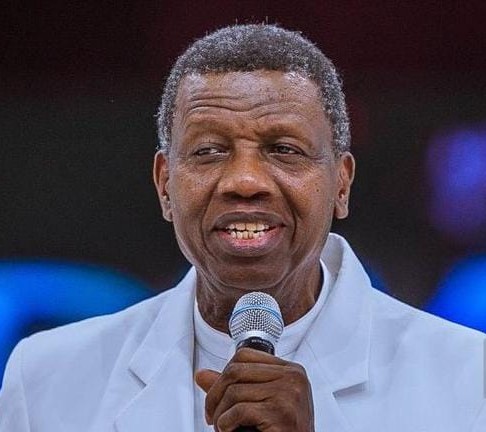
The National Democratic Congress flagbearer, Peter Obi, has defended the General Overseer of the Redeemed Christian Church of God (RCCG), Pastor Enoch Adeboye, amid growing criticism over his silence on the worsening insecurity in the country, warning Nigerians against attempts to fuel ethnic and religious divisions.
Obi made the remarks in a statement posted on his X account on Thursday, where he urged young Nigerians not to allow themselves to be used in campaigns that could undermine national unity and distract citizens from the real challenges facing the country.
The former Anambra State governor spoke against the backdrop of a wave of social media attacks directed at Adeboye. The attacks followed calls by some Nigerians for the respected cleric to publicly condemn the current security situation or lead protests against the Federal Government.
Many of those criticising Adeboye pointed to a viral photograph that appeared to show him carrying a placard during a protest against the administration of former President Goodluck Jonathan. The image was widely circulated online and used as evidence by critics who questioned why the pastor had not taken a similar public position under the current administration.
However, the RCCG later dismissed the claim, explaining that the photograph had been wrongly interpreted. According to the church, the image was taken during a peaceful walk organised under the administration of former President Muhammadu Buhari and had no connection to any political protest or demonstration against the Jonathan government.
Reacting to the controversy, Obi said Nigerians should be careful not to become tools in campaigns designed to divide the country along ethnic, religious or identity lines.
According to him, recent political developments in Nigeria, especially the 2023 general elections in Lagos State, showed how public debates can easily shift away from issues of governance, development and accountability to matters of ethnicity and identity.
He said politicians who cannot compete on the basis of ideas, competence, character and performance often exploit existing divisions within society for political gain.
“Throughout history, whenever politicians find it difficult to compete on ideas, performance, character, or vision, some resort to exploiting the fault lines of ethnicity, religion, and identity. Their calculation is simple: a divided people are easier to manipulate than a united people,” Obi stated.
The former presidential candidate said similar efforts were beginning to emerge again, although in more subtle forms. He noted that narratives are sometimes deliberately created and amplified to stir emotions and create divisions among citizens.
According to him, many people unknowingly participate in such campaigns because they believe they are defending a legitimate cause, without recognising the larger political objectives behind the narratives.
Obi urged Nigerians, especially young people who dominate discussions on social media, to be more careful about the information they consume and share. He advised citizens to question narratives, verify facts and resist attempts to manipulate public opinion through misinformation and identity politics.
In a strong defence of Adeboye, Obi described the cleric as one of the most respected religious leaders in Nigeria, noting that he has spent decades promoting peace, love, reconciliation and national unity.
He said Adeboye’s life and ministry have consistently reflected humility, wisdom and restraint, even in situations where he faced criticism or provocation.
“Let me state clearly that Pastor Enoch Adeboye remains one of the foremost fathers of faith in our nation. For decades, he has consistently preached the virtues of peace, prayer, love, reconciliation, and national unity. Even when faced with provocation, his response has always reflected humility, restraint, wisdom, and grace,” Obi said.
The former governor further argued that it would be unfair for young Nigerians to place on the shoulders of an 84-year-old religious leader responsibilities that rightly belong to them.
He stressed that the responsibility of building a better Nigeria lies primarily with the younger generation, who have the energy, strength and numbers needed to push for reforms and hold leaders accountable.
“At 84 years of age, it would be unfair for young and able-bodied Nigerians to transfer to him responsibilities that properly belong to them,” he stated.
Obi added that young Nigerians must take ownership of the country’s future by leading conversations on governance, demanding accountability and driving positive change through peaceful and democratic means.
His comments come at a time when insecurity remains one of the most pressing challenges facing Nigeria. Several parts of the country continue to experience incidents of banditry, kidnapping, terrorism and communal violence, leading to growing frustration among citizens.
Religious leaders, traditional rulers and civil society groups have increasingly been called upon to speak out on national issues, particularly those affecting security and economic wellbeing. This has led to public debates over the role influential figures should play in addressing governance challenges.
Adeboye, one of Africa’s most influential Christian leaders, has often used his platform to preach peace and encourage prayers for the nation. While he occasionally comments on national matters, he has generally avoided direct political activism, preferring spiritual interventions and appeals for unity.
Obi’s intervention appears aimed at calming tensions surrounding the controversy while redirecting attention to broader national concerns. He warned that division and hatred would only weaken the country’s ability to confront its challenges.
“The Nigeria of our dreams can only be built by citizens who refuse to be divided, who choose unity over hatred, and who place our collective future above narrow interests,” he said.
As debates continue over insecurity and the role of public figures in national affairs, Obi’s message adds to growing calls for Nigerians to focus on unity, responsible citizenship and constructive engagement rather than ethnic and religious differences.