
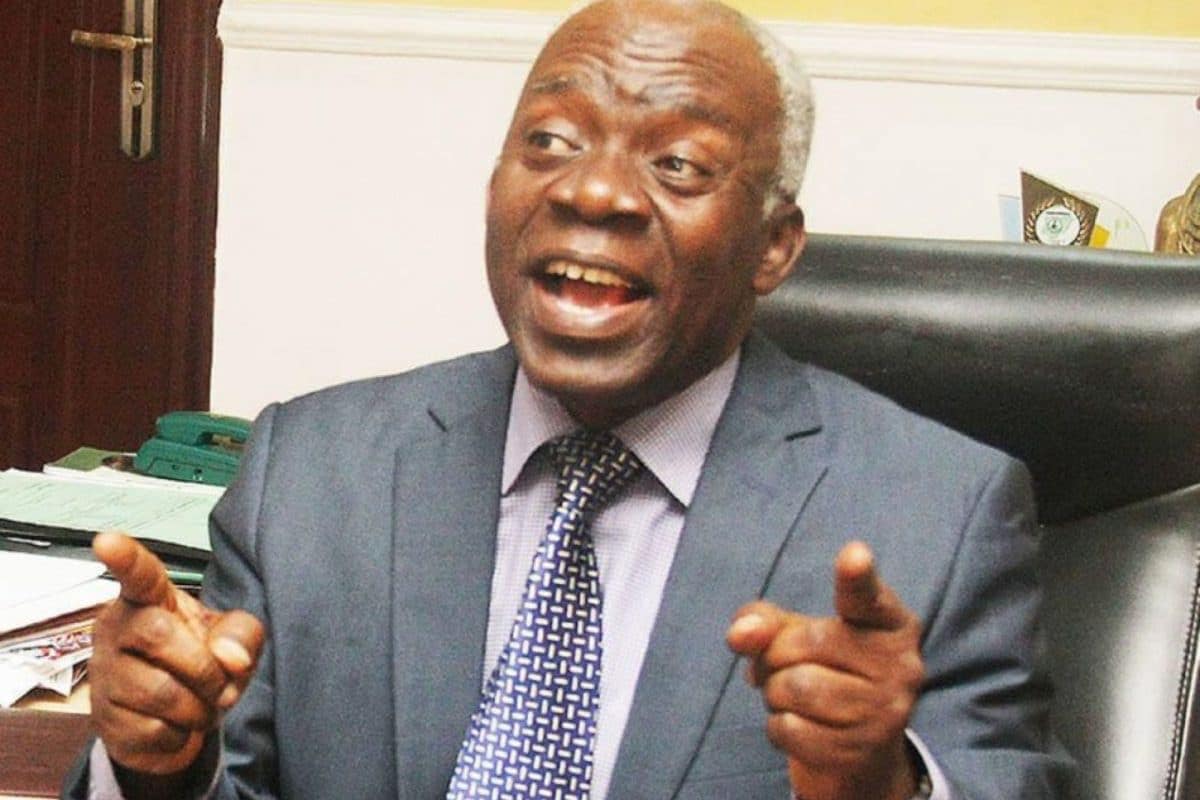
Human rights lawyer and Senior Advocate of Nigeria (SAN), Femi Falana, has opposed any fresh increase in electricity tariffs in Nigeria, insisting that power distribution companies must first improve service delivery before asking consumers to pay more.
Falana said it would be unfair to place additional financial burdens on Nigerians at a time when many households and businesses are already struggling with rising living costs, inflation, and economic challenges.
The senior lawyer argued that electricity consumers deserve reliable and stable power supply in exchange for the tariffs they currently pay. According to him, increasing electricity charges without a corresponding improvement in service would amount to asking Nigerians to pay more for inadequate performance.
His comments come amid ongoing debates over electricity pricing and the quality of power supply across the country. Many consumers have continued to complain about frequent blackouts, estimated billing, damaged infrastructure, and poor customer service despite previous tariff adjustments.
Falana maintained that the electricity sector must focus on improving efficiency, reducing outages, and ensuring that consumers receive value for their money before any discussion about higher tariffs can be justified.
He noted that millions of Nigerians still experience erratic electricity supply and often rely on generators to power their homes and businesses. As a result, many citizens already spend significant amounts on alternative energy sources such as petrol, diesel, and solar systems.
According to him, raising electricity tariffs under such conditions would further increase the financial pressure on families and small businesses that are struggling to survive in a difficult economic environment.
The legal practitioner stressed that electricity is an essential service that affects every aspect of national life, including education, healthcare, manufacturing, commerce, and transportation. He said government agencies and electricity companies must place the welfare of consumers at the centre of their decisions.
Falana also called on regulatory authorities to ensure that electricity companies meet their obligations to customers before approving any request for tariff increases. He argued that service quality should be a major factor in determining whether consumers should pay higher rates.
Over the years, electricity tariffs in Nigeria have remained a contentious issue. While operators in the sector often argue that higher tariffs are necessary to cover operational costs and attract investment, consumer groups have repeatedly insisted that power companies must first improve service delivery.
The Nigerian electricity industry was privatised in 2013 with expectations that private-sector participation would improve power generation, transmission, and distribution. However, more than a decade later, many Nigerians still complain about inadequate electricity supply and poor infrastructure.
Although there have been improvements in some areas of the sector, challenges such as ageing equipment, vandalism, energy theft, inadequate investment, and transmission constraints continue to affect performance.
Businesses have been among the hardest hit by unstable power supply. Many manufacturers and small-scale entrepreneurs spend huge amounts on fuel and generator maintenance to keep operations running. Industry stakeholders have often warned that high energy costs reduce productivity and increase the prices of goods and services.
Households have also expressed frustration over what they describe as a mismatch between electricity bills and actual power supply. In many communities, residents complain about paying high charges despite receiving only a few hours of electricity daily.
Consumer rights advocates have consistently argued that any tariff review should be linked to measurable improvements in service. They believe electricity companies should demonstrate progress in areas such as metering, customer support, fault repairs, and power availability before seeking approval for higher rates.
Falana’s position reflects concerns shared by many Nigerians who believe that consumers should not be made to bear the cost of inefficiencies within the power sector.
He urged authorities to strengthen oversight of electricity companies and ensure compliance with service standards. According to him, transparency and accountability are necessary if public confidence in the sector is to improve.
The senior advocate further emphasised the need for policies that protect vulnerable consumers, especially low-income households that spend a significant portion of their earnings on basic necessities.
As discussions continue, many Nigerians will be watching closely to see whether electricity providers can deliver the improved service that consumer advocates such as Falana insist must come before any further increase in tariffs.