
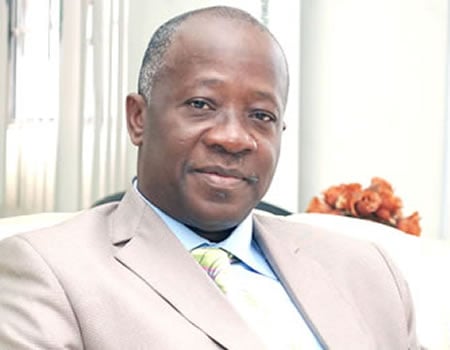
Nigeria’s academic community has been thrown into mourning following the death of former Vice-Chancellor of the University of Ilorin, Professor AbdulGaniyu Ambali, a respected veterinary medicine scholar, university administrator and education advocate.
Professor Ambali died in the early hours of Saturday at his residence in Oloje Estate, Ilorin, the Kwara State capital. He was 68 years old.
His death marks the end of a distinguished career that spanned decades in teaching, research, university administration and public service. Throughout his life, Ambali was widely regarded as one of Nigeria’s leading academics and a major contributor to the growth of higher education in the country.
The news of his death was confirmed in a statement issued by the Director of Corporate Affairs of the University of Ilorin, Mr. Kunle Akogun.
According to the statement, the Vice-Chancellor of the University of Ilorin, Professor Wahab Olasupo Egbewole, SAN, announced the passing of the institution’s ninth Vice-Chancellor, describing the development as a painful loss to the university community and the nation at large.
The statement noted that the former vice-chancellor died after a brief illness.
“Prof. Ambali, who headed the University from 2012 to 2017, died earlier this morning after a brief illness. He was 68,” the statement said.
Professor Egbewole expressed deep sadness over the death of his predecessor, saying that Ambali’s contributions to education and national development would remain unforgettable.
According to him, the late scholar played a major role in shaping the growth and reputation of the University of Ilorin during his years of service.
The vice-chancellor also sympathised with the family of the deceased, members of the Ilorin Emirate and the entire academic community.
He urged members of the university community and other sympathisers to participate in the Janazah prayer scheduled to take place at the late professor’s residence in Oloje Estate, Ilorin.
The death of Professor Ambali has attracted tributes from academics, students, former students, public officials and community leaders who described him as a humble, disciplined and visionary leader.
Many of those who worked closely with him recalled his commitment to academic excellence, administrative discipline and institutional development.
Before his death, Ambali served as Chairman and Pro-Chancellor of Kwara State University, Malete. He held the position after completing his tenure as Vice-Chancellor of the University of Ilorin.
His appointment as Pro-Chancellor reflected the confidence many stakeholders in the education sector had in his leadership abilities and experience.
During his time at Kwara State University, he was actively involved in policy formulation, governance and efforts aimed at strengthening the institution’s academic standards.
Born on November 29, 1957, in Ilorin, Kwara State, AbdulGaniyu Ambali began his educational journey at Pakata Primary School in Ilorin.
After completing his primary education, he attended Government Secondary School, Jalingo, where he obtained his secondary school education.
From an early stage, Ambali demonstrated exceptional academic ability and a passion for learning. These qualities would later shape his career and earn him recognition both within and outside Nigeria.
He proceeded to Ahmadu Bello University, Zaria, where he studied Veterinary Medicine.
In 1981, he graduated with a Doctor of Veterinary Medicine degree, laying the foundation for a career that would combine teaching, research and administration.
Determined to deepen his expertise, Ambali later travelled to the United Kingdom for postgraduate studies at the University of Liverpool.
There, he obtained both a Master’s degree and a Doctor of Philosophy (PhD) in Veterinary Medicine.
His advanced studies equipped him with the knowledge and skills that would later make him one of Nigeria’s most respected veterinary medicine scholars.
Following the completion of his education, Ambali began his academic career at the University of Maiduguri.
At the institution, he contributed to teaching and research while mentoring young scholars and students.
His commitment to academic excellence earned him recognition among colleagues and students alike.
He later joined the University of Ilorin, where he would spend a significant part of his professional life.
At UNILORIN, Ambali steadily rose through the academic ranks through hard work, dedication and scholarly achievements.
Over the years, he became a Professor of Veterinary Medicine and gained a reputation as a respected researcher and administrator.
One of his major contributions to the university was his role as the pioneer Dean of the Faculty of Veterinary Medicine.
The establishment and development of the faculty represented an important milestone for the university, and Ambali played a central role in ensuring its success.
As dean, he worked to strengthen teaching, research and professional training within the faculty.
His efforts helped position the faculty as one of the recognised centres for veterinary education in Nigeria.
In 2012, Ambali reached one of the highest points of his career when he was appointed Vice-Chancellor of the University of Ilorin.
His appointment came at a time when Nigerian universities were facing challenges related to funding, infrastructure development, research capacity and global competitiveness.
As vice-chancellor, Ambali focused on maintaining the university’s reputation for stability, academic excellence and uninterrupted academic calendars.
The University of Ilorin had already earned national recognition for its ability to avoid prolonged disruptions that frequently affected many public universities.
During his tenure, efforts were made to improve infrastructure, strengthen academic programmes and expand opportunities for research and innovation.
Under his leadership, the institution continued to attract students from different parts of Nigeria and beyond.
Many members of the university community remember his administration for promoting discipline, accountability and institutional growth.
His leadership style was often described as calm, firm and focused on results.
Beyond the University of Ilorin, Ambali also played important roles within regional and professional academic organisations.
He served as Chairman of the Association of West African Universities, a position that allowed him to contribute to discussions on higher education development across the region.
Through the association, he worked with university leaders from different countries to promote collaboration, research partnerships and educational advancement.
His influence extended beyond Nigeria as he participated in initiatives aimed at strengthening universities throughout West Africa.
Ambali was also a Fellow of the College of Veterinary Surgeons of Nigeria, one of the highest professional recognitions within the veterinary profession.
The fellowship reflected his contributions to veterinary science, professional development and academic scholarship.
Throughout his career, he published scholarly works, supervised students and contributed to the advancement of veterinary medicine in Nigeria.
His achievements earned him respect within academic and professional circles.
The late professor was also honoured with the national award of Officer of the Order of the Niger (OON), further recognising his contributions to education and national development.
His passing comes at a time when Nigeria continues to seek improvements in its education sector and greater investment in research and innovation.
As tributes continue to pour in from across the country, colleagues and former students say Professor AbdulGaniyu Ambali will be remembered not only for the offices he held but also for the impact he made on countless lives.
For many within the University of Ilorin and the wider academic community, his death represents the loss of a scholar, mentor, administrator and nation-builder whose contributions will remain part of the history of higher education in Nigeria.
Although he is no longer alive, his legacy is expected to endure through the institutions he helped build, the students he trained and the values of excellence and service that he promoted throughout his distinguished career.
With his passing, Nigeria has lost one of its respected education leaders, while the University of Ilorin has lost a former vice-chancellor whose influence helped shape the direction of the institution for years.